


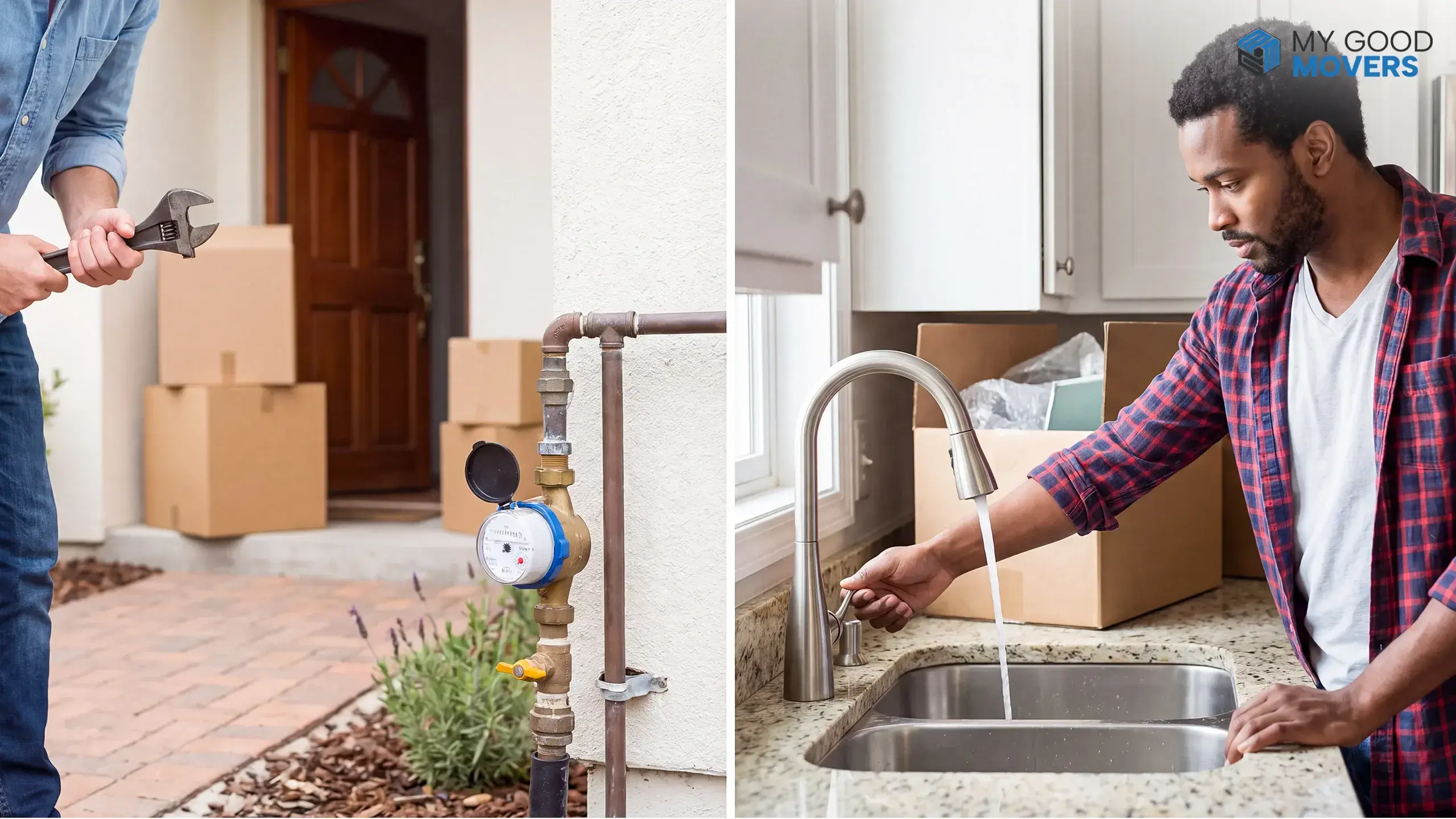
No one wants to unpack boxes in a home where even the kitchen tap doesn’t work.
Most people remember to update their address, book the movers, and switch their internet. Water service, however, stays off the checklist until the last minute. That’s when unexpected delays, extra fees, or a day without running water can quickly turn a smooth move into a frustrating one.
A few minutes of planning before moving day can save hours of stress after you arrive.
The good news is that handling water service is usually much easier than people expect. Once you know who supplies your new home, what documents you need, and when to schedule your start and stop dates, the entire process becomes straightforward.
Let’s go through each step so everything is ready when you move into your new home.
Can You Transfer Water Service to a New Address?
You can transfer water service to a new address only if the provider serves both properties and allows account transfers. Otherwise, “transferring” means closing one account and opening another.
Some municipal utilities offer online start, stop, and transfer options.
Portland, for example, separates these actions within its customer service system.
Philadelphia takes a different approach for renters moving between properties: tenants must end their old account and submit a new application for the next address.
Your housing arrangement also affects what happens next:
- Same provider: Request a transfer and provide both service addresses.
- Different provider: Schedule the old account to stop and create a new account.
- Water included in rent: The landlord or property manager may keep the account.
- Condo or HOA property: Water may be part of the monthly dues or building bill.
- Private well: There may be no municipal water account to open.
EXAMPLE
A family moving within Raleigh may remain in the same service area and use the provider’s transfer process. A move from Raleigh to another city may require a stop request in Raleigh and a separate application with the utility in the destination city.
When Should You Transfer Water Service before moving?
Contact the utility at least several business days before your move. One to two weeks is a sensible planning window when you have that much notice, but the actual processing time varies by provider.
Use this schedule:
| Time Before the Move | Recommended Action |
|---|---|
| 10 to 14 days | Identify the new provider and confirm who pays the bill |
| 5 to 7 business days | Submit the transfer, stop-service, or new-account request |
| 2 to 3 business days | Verify dates, fees, documents, and access requirements |
| Move-out day | Record the meter and complete the final property check |
| Move-in day | Test the water, toilets, pressure, and visible plumbing |
TIP
Ask whether the utility processes activations on weekends and public holidays. A late Friday request may not receive attention until the next business day.
What Do You Need to Transfer Water Service?
Utilities commonly request account information, proof of identity, property details, billing information, and evidence that you have the right to occupy the home.
Requirements vary, so use the table below as a preparation list rather than a universal application form.
| Information Category | Details That May Be Required |
|---|---|
| Existing account details | Account number, account-holder name, current address, phone number, and outstanding balance |
| New property details | Full service address, move-in date, property type, and requested activation date |
| Identity verification | Government-issued ID, Social Security number, or another approved verification method |
| Proof of occupancy | Lease agreement, deed, closing disclosure, settlement statement, or landlord authorization |
| Billing details | Payment method, billing preference, deposit information, and autopay instructions |
| Final account details | Stop-service date, forwarding address, and final-bill delivery method |
Before You Call
Place these items together:
- Current account number
- Photo ID
- Lease or ownership document
- New service address
- Requested start and stop dates
- Payment method
- Forwarding address
You will spend less time searching for documents while a representative waits on the line.
How to Transfer Water Service When Moving
The safest way to handle a water service transfer is to treat it as a short, documented process. Confirm the provider and billing responsibility first, then schedule both addresses and verify that each request was accepted.
Step 1: Find the Water Provider for the New Address
Start with the official city or county website. You can also check your lease, closing paperwork, HOA documents, property manager’s move-in packet, or a recent bill from the seller.
WATCH OUT
Do not rely only on sponsored search results or unofficial utility directories. Fraudulent sites can imitate public payment portals.
Step 2: Confirm Who Is Responsible for the Water Bill
Read the lease or ownership documents before opening an account.
A rental may use one of several billing arrangements:
- The tenant pays the city directly.
- The landlord keeps the account and bills the tenant.
- Water is included in rent.
- A management company bills usage through a submeter.
- The building divides a shared bill among residents.
Note: For a condo, water may appear in HOA dues even though electricity and internet remain the owner’s responsibility. Ask one direct question: “Should the water account be placed in my name?”
Step 3: Contact the Current Water Provider
Tell the provider when you are leaving and whether you are moving within its service area.
Ask about:
- Account transfer eligibility
- Stop-service instructions
- Final meter reading
- Final bill delivery
- Deposit refunds
- Outstanding balances
- Confirmation numbers
WATCH OUT
Do not stop water before the final walkthrough or move-out inspection. Raleigh warns that customers who fail to close an old account may remain responsible for charges until another account is opened or the utility receives notice.
Step 4: Request a Transfer or Open a New Account
Use the provider’s online portal, official phone number, email address, or customer service office.
Portland allows customers to open, close, or transfer accounts online, by phone, or by email. Raleigh also accepts service requests through its self-service system. Available methods differ by city, so use the option listed on the provider’s official website.
A new account requires identity verification, proof of occupancy, an activation charge, or a security deposit.
Step 5: Schedule the Start and Stop Dates
Choose dates that prevent a service gap without keeping the old account open unnecessarily.
EXAMPLE
Suppose you receive the new keys on Thursday and complete the final walkthrough of the old home on Friday morning.
Schedule the new water service for Thursday. Set the old service to end after Friday’s walkthrough. Confirm both requests earlier in the week rather than waiting until Thursday afternoon.
An overlap of one day is easier to manage than arriving at either property without water.
Step 6: Pay Outstanding Bills, Fees, or Deposits
The utility may require payment of an existing balance before closing or changing the account. A new provider may also request a deposit or activation fee.
Ask:
- Is the deposit refundable?
- Can it be waived based on payment history?
- Will the old deposit be applied to the final bill?
- Is a payment arrangement available?
- Does the quoted fee cover water and sewer?
Note: Never assume every customer pays the same amount. Local rules, account history, property status, and provider policies affect the final charge.
Step 7: Confirm the Service Request
A submitted form is not always the same as an approved request.
Save This Information
- Confirmation or reference number
- New account number
- Approved start and stop dates
- Provider name
- Representative’s name, if available
- Payment or deposit receipt
- Email confirmation
- Access instructions
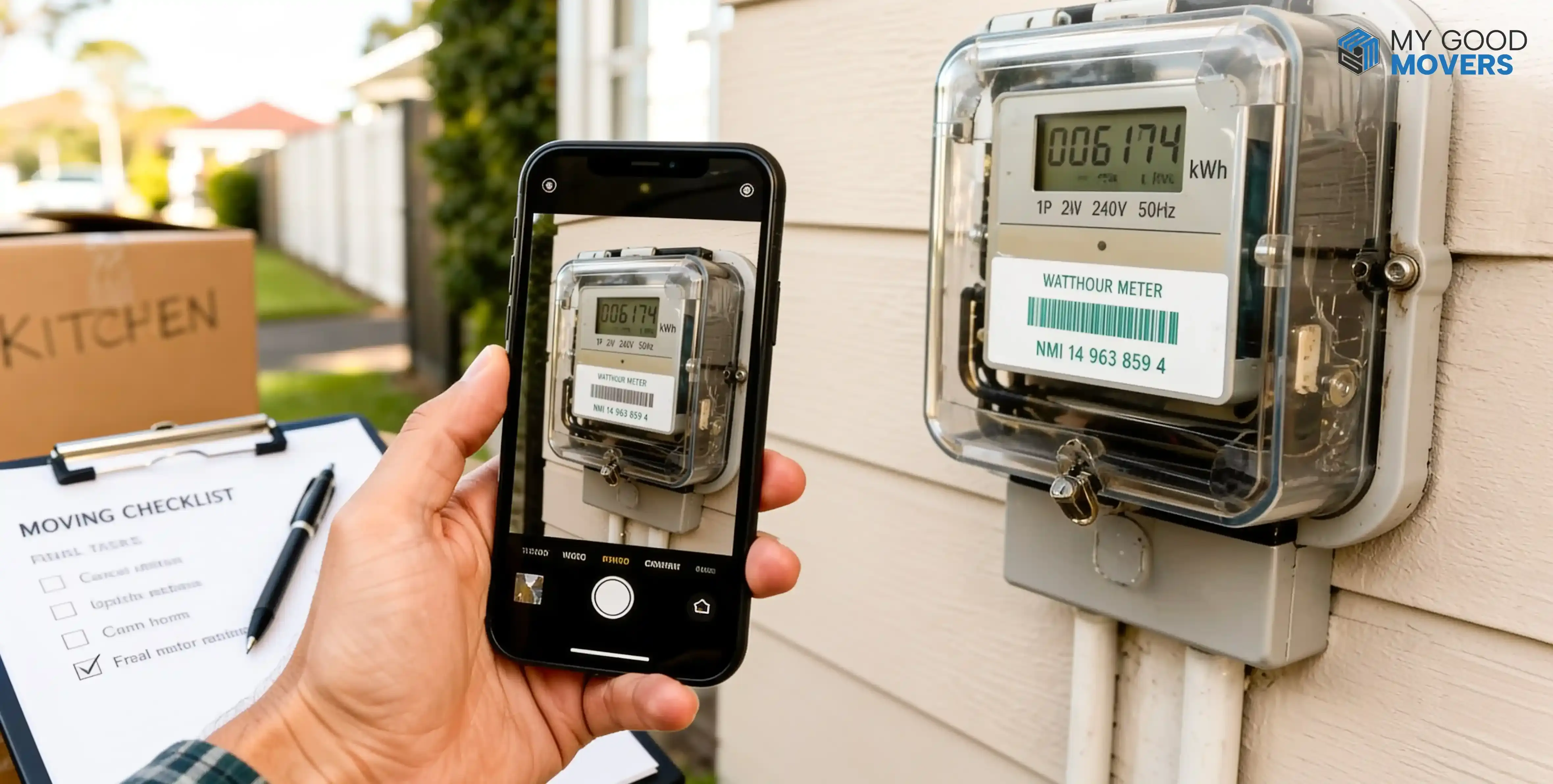
Step 8: Record the Final Meter Reading
Photograph the accessible water meter on move-out day. Take one close image showing the reading and another showing the surrounding location.
A date-stamped photo can help if the final bill includes usage you do not recognize.
SAFETY FIRST
Do not enter a locked, flooded, restricted, or unsafe meter area. Contact the provider if a utility employee must complete the reading.
Step 9: Test the Water at the New Home
Turn on hot and cold faucets, flush every toilet, and check the water pressure. Look beneath sinks, around the water heater, and behind water-connected appliances.
BY THE NUMBERS
The EPA reports that an average family can waste about 9,400 gallons of water each year due to household leaks. That makes an early move-in inspection more than a housekeeping task; it can prevent water waste, property damage, and an unexpectedly high bill.
Got This Utility Covered? Check the Rest
Transferring one service is only part of the process. See how to handle other utilities before you move.
How to Transfer Utilities When MovingWater Service Transfer Rules for Different Moving Situations
The process of transferring water service depends on where you’re moving and who manages the property.
A renter, homeowner, seller, or landlord may all have different responsibilities, so it’s important to confirm the billing arrangement before requesting service.
| Moving Situation | What You Should Do |
|---|---|
| Renting a Home | Check your lease first. Water may already be included in rent, or you may need to open an account in your name. |
| Buying a Home | Schedule water service to start on or before your closing or move-in date, and keep proof of ownership ready. |
| Selling a Home | Keep water active until the final walkthrough, then schedule the stop date and save the final meter reading. |
| Landlord or Property Manager | Ask if the utility offers an owner-reversion program to keep water active between tenants. |
| Apartment or Condo | Confirm with the landlord or HOA whether water is billed separately or included in rent or dues before opening an account. |
TIP
Never assume water service transfers automatically. Always confirm the process with the utility provider or property manager before your move.
How Much Does It Cost to Transfer Water Service?
Many providers do not charge a single fee labeled “water transfer.” Your cost may instead include account activation, a security deposit, an unpaid balance, or a prorated final bill.
| Charge | Average Cost |
|---|---|
| Transfer fee | $0–$30 |
| Account-activation fee | $15–$55 |
| Security deposit | $25–$215 |
| Outstanding water bill | Depends on the unpaid balance |
| Final prorated bill | Based on water usage until the stop date |
| Deposit refund | Remaining deposit after final charges are deducted |
You’ll only pay for the service you used up to your stop date. If you paid a refundable deposit, it may be returned to you or used toward your final bill.
What to Check on Move-Out and Move-In Days
Account setup handles the paperwork, but move-day checks protect you from billing disputes and hidden plumbing problems.
Take a few minutes at both properties before the day becomes crowded with boxes and movers.
Old Home — Move Out
✓ Photograph the final meter reading
✓ Check for running toilets and dripping faucets
✓ Confirm the stop-service date
✓ Save the confirmation number
✓ Verify the forwarding address
✓ Leave autopay active until the final bill is settled
New Home — Move In
✓ Confirm that water is running
✓ Locate the main shutoff valve
✓ Test hot and cold faucets
✓ Flush each toilet
✓ Check beneath sinks and the water heater
✓ Look for damp cabinets, walls, or flooring
MOVING-DAY CHECK
If the meter continues moving while every fixture and appliance is off, contact the utility or a qualified plumber. It may indicate active water use or a leak.
Common Mistakes When Transferring Water Service
Most water-service problems come from late requests, incorrect assumptions, and missing documentation.
These mistakes are easy to avoid once you know where they usually happen.
Waiting Until the Last Minute
Water providers need time to verify your account, process the request, and schedule service when required. A late request puts your move-in date at risk of starting without active water service.
Turning Off Water at the Old Home Too Early
Water is still needed for cleaning, repairs, and the final walkthrough. Ending service before you hand over the property creates unnecessary problems during the last days of your move.
Assuming Water Service Transfers Automatically
Moving to a new address does not automatically move your water account. You must notify the provider and complete its process for ending service at the old address and starting service at the new one.
Choosing the Wrong Stop Date
Your stop date determines when responsibility for water usage at the old property ends. Setting it before you leave interrupts service; setting it too late leaves the account active after you move out.
Skipping the Final Meter Reading
The final meter reading records how much water was used before you left. Without that record, you have less evidence to challenge incorrect usage on the final bill.
Ignoring an Outstanding Balance
An unpaid balance keeps money owed on your existing account and creates billing problems during the transfer. Review and settle the account before closing it.