


To pack a TV for moving, first turn off and unplug it, photograph its cable connections, and remove the stand or wall-mount hardware. Cover the screen with clean foam or another soft protective layer, add corner protectors, and wrap the television in a moving blanket. Place it upright inside its original box or an adjustable TV moving box, then fill every gap with soft padding.
On a long packing day, most of the house is boxed, the moving truck is almost ready, and your flat-screen TV is still hanging on the wall. It may look sturdy from across the room, but one awkward grip or loose corner inside the truck can put pressure on the panel.
A television does not have to fall to suffer screen damage.
A secure move starts with the right packing materials, a fitted box, and a careful wrapping order. So let’s learn how to protect the TV during a move.
Key Takeaways
✓ The original packaging is the best fit because its foam inserts were designed for that specific television.
✓ A TV should generally stay upright during carrying, loading, transportation, and unloading.
✓ Packing tape, adhesive labels, and rough materials should never touch the screen directly.
✓ A box that is too large can allow shifting, while a box that is too small can place pressure on the panel.
✓ Large televisions are safer to handle with at least two capable adults.
What You’ll Need to Pack a TV
The right packing materials for TV moving protect against four common problems: screen contact, damaged corners, box movement, and moisture or dirt during handling.
| Packing Supply | Purpose | Required? |
|---|---|---|
| Original TV box or TV moving box | Protects the TV during transport | Yes |
| Foam screen protector | Helps prevent scratches and screen contact | Yes |
| Foam corner protectors | Protects vulnerable corners from impact | Yes |
| Bubble wrap | Cushions the protected TV body | Yes |
| Moving blanket | Adds a soft protective layer | Yes |
| Stretch wrap | Holds protective materials in place | Yes |
| Packing tape | Seals and reinforces the box | Yes |
| Packing paper or foam sheets | Fills empty spaces inside the box | Yes |
| Zip bags | Stores screws and small parts | Recommended |
| Permanent marker | Labels cables and the box | Recommended |
| Screwdriver | Removes the TV stand or mount | As needed |
| Microfiber cloth | Cleans the screen and frame safely | Recommended |
How to Choose the Right TV Moving Box
A TV’s advertised size refers to the diagonal measurement of its screen. A 65-inch TV is not 65 inches wide, so never choose a box based only on the advertised screen size.
Measure the television’s:
- Full width from one outer edge to the other
- Full height after removing the stand
- Maximum depth, including any rear sections
- Protected dimensions after adding foam and blankets
WHY IT MATTERS
If the box is too big, the TV can move around inside and get damaged. If the box is too small, there won’t be enough space for proper padding to absorb bumps and pressure, which could damage the screen.
| Box Option | Best For | Main Advantage | Main Limitation |
|---|---|---|---|
| Original TV box | Anyone who kept the original packaging | Model-specific fit and molded inserts | Often unavailable |
| Adjustable TV box | Most flat-screen televisions | Widely available and size-adjustable | Requires careful padding |
| Custom crate | Oversized, premium, or highly fragile TVs | Strong structural protection | Higher cost and added weight |
A custom crate is built to fit a specific TV, and some packing and moving companies offer this option for oversized or high-value screens.
How to Prepare Your TV Before Packing
Before packing your TV, take a few simple steps to protect it from damage and make setup easier after the move.
1. Turn Off and Unplug the TV
Turn off your TV and unplug it from the power outlet. Let it cool before handling it to avoid damage to its internal components.
2. Take Photos of Cable Connections
Take clear photos of the cables connected to your TV before removing them. This helps you remember where each cable goes when setting up your TV again.
3. Remove and Label the Cables
Disconnect all cables and label them by device. When packing electronics for moving, keep TV cables separate from those for soundbars, gaming consoles, and other devices.
4. Remove the TV Stand
Remove the TV stand if the manufacturer's instructions allow it. This makes the TV easier to pack and prevents the stand from putting pressure on the screen during the move.
5. Keep Screws and Accessories Together
Place screws, the remote, and other small accessories in labeled bags. This keeps important parts from getting lost during the move.
6. Clean and Inspect the TV
Gently wipe the screen with a dry microfiber cloth and check for existing scratches or damage. Take photos of its condition before packing to keep a record in case of damage during the move.
How to Pack a TV for Moving (Step-by-Step)
The best way to pack a TV for moving is to build protection in layers. Each layer has a separate job.
Follow these steps to pack your TV while moving.
Step 1: Measure the TV and Choose the Right Box
Measure the TV after removing its stand. Record the width, height, and depth, then allow space for your foam, corner protectors, and blanket.
Use the original box if it remains dry, strong, and structurally sound. Check the original foam inserts for cracks or missing sections before relying on them.
Without the original box, choose an adjustable TV moving box that matches the protected dimensions.
EXPERT TIP
Test the basic box fit before adding every wrapping layer. This tells you whether the final protected television will fit without compression, making it much easier to fix now than after the TV is already wrapped in 4 layers.
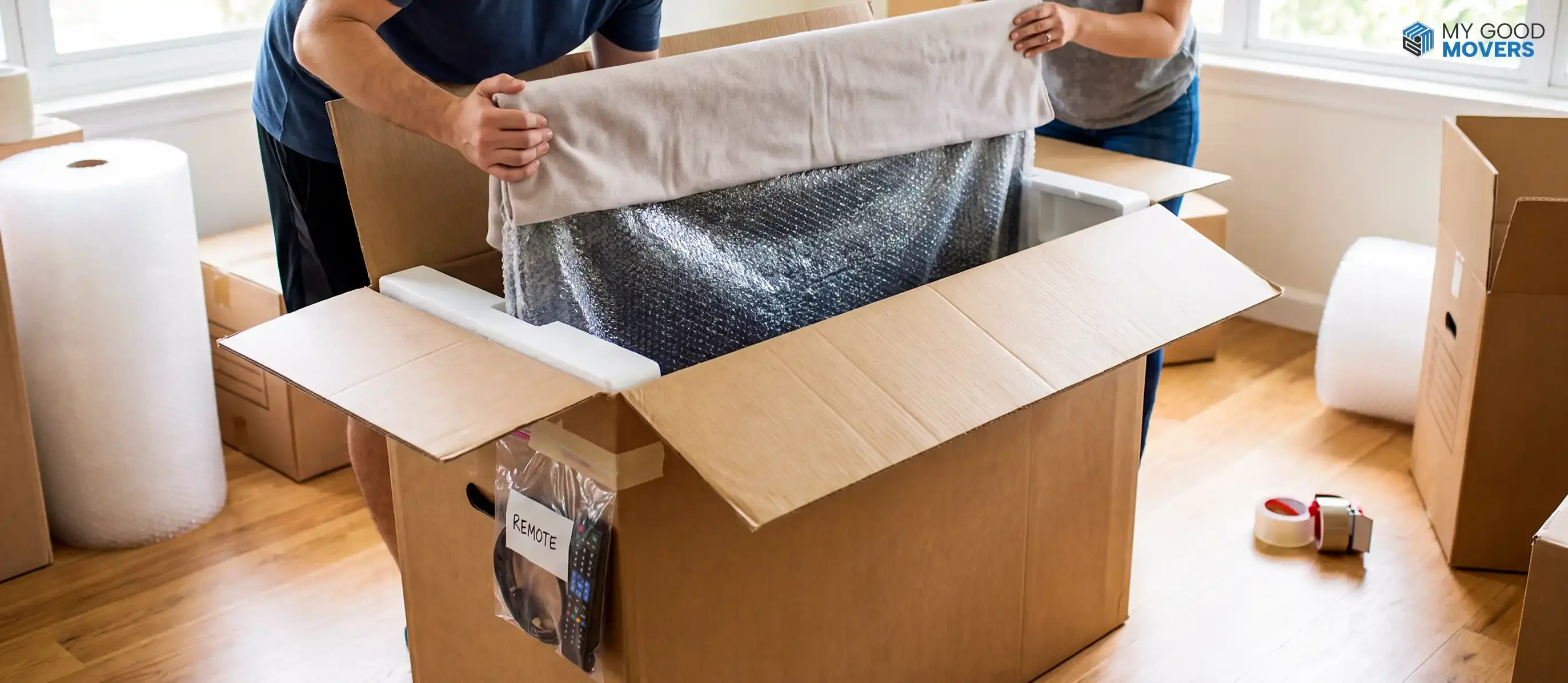
Step 2: Protect the TV Screen
Place a clean foam sheet or purpose-made screen protector across the entire panel. Make sure no rough seams, tape edges, or hard objects sit against the screen.
Do not tape the protector directly to the TV. Hold it in place with stretch wrap around the television’s body, or secure it to an outer blanket without allowing adhesive to touch the casing.
Avoid newspapers against the screen because ink and rough paper may transfer or rub against the surface.
WHY IT MATTERS
TV manufacturers recommend not putting too much pressure on the screen because it can easily get damaged. It's better to cover the screen with a soft layer first. This helps spread the pressure evenly and keeps the bumps on bubble wrap from pressing directly against the screen.
Step 3: Protect the Corners and Edges
Install foam corner protectors on all four corners. Check that each piece fits securely without pushing the screen inward.
Corners take the first hit when a box is lowered or moved through a doorway. The same goes for fragile items like mirrors and glass frames, which also need extra protection around their edges.
Add foam along exposed edges if the packing kit does not provide complete coverage. The protection should remain secure without bending the frame or squeezing the panel.
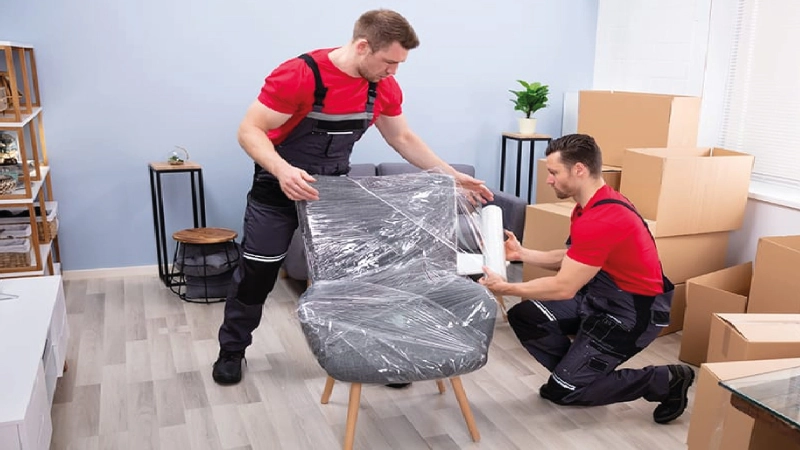
Step 4: Wrap the Entire TV Properly
Follow this order to wrap the entire TV properly:
- Cover the screen with a clean foam sheet.
- Fit foam protectors over the corners.
- Wrap the TV in a soft moving blanket.
- Add bubble wrap around the protected exterior when appropriate.
- Use stretch wrap to hold the layers in place.
The finished wrapping should be secured but not so tight as to put pressure on the screen. Loose layers may slide during lifting, while overly tight layers may compress the panel or frame.
WATCH OUT
Apply packing tape only to the outer blanket, stretch wrap, or box. Keep tape away from the TV’s surface entirely.
Step 5: Place the TV Inside the Box
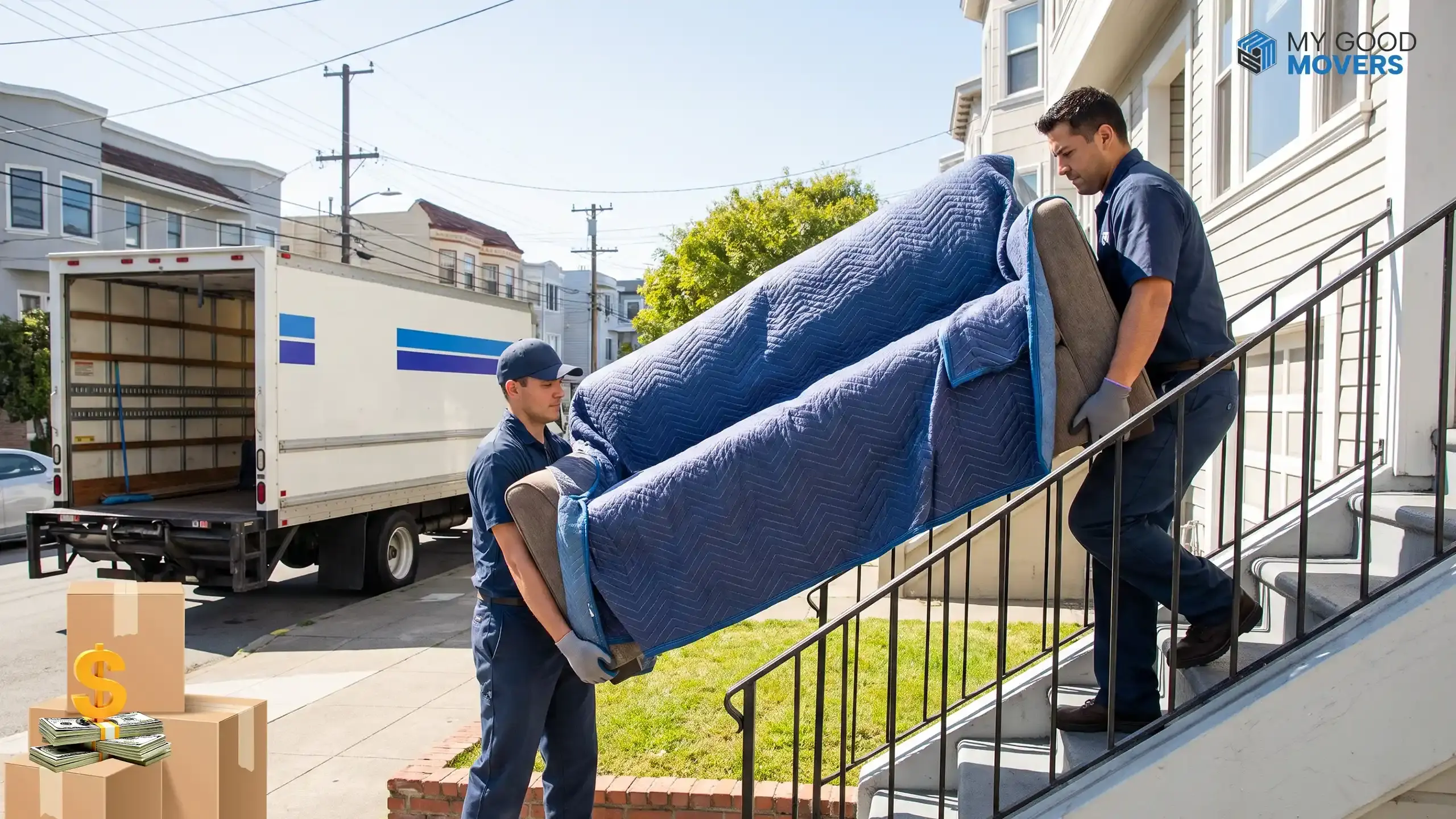
Moving a flat screen TV safely starts with how you lift it, not just how you wrap it. Keep the television upright as you lift it. A large flat-screen TV usually requires two people because its wide shape can be difficult to control, even when its total weight seems manageable.
Each person should support the bottom and outer frame. Never lift the television by gripping the screen.
Lower the TV slowly into the box. Check that the corner protectors remain in place and the screen does not face a hard internal surface.
GOOD TO KNOW
Do not force the television into a box. Resistance means the box is too small, the padding has shifted, or one protective layer is folded incorrectly. Stop and check before pushing harder.
Step 6: Fill Empty Spaces
Fill the remaining gaps with foam sheets, soft packing paper, or other clean cushioning material. Focus on the sides, corners, top, and bottom.
Padding should prevent movement without pressing against the center of the screen.
Before sealing the box, hold it upright and move it very gently. If you feel the television shifting inside, reopen the box and add more support.
WATCH OUT
Do not place loose tools, cables, screws, remotes, or other hard objects inside the TV box. Anything rigid can become the exact pressure point you spent the last five steps avoiding.
Step 7: Seal and Label the Box
Seal the bottom and top seams with strong packing tape. Reinforce weak seams, but avoid adding so much tape that the box becomes difficult to open safely.
Write the following on at least two visible sides:
- TV
- FRAGILE
- THIS SIDE UP
- KEEP UPRIGHT
- Destination room
Want a Complete Packing Plan?
Stop guessing what to pack next. Follow a clear packing plan that helps you move room by room without the usual last-minute chaos.
Read How to Pack for a MoveCommon Mistakes to Avoid When Packing a TV
These are the most common ways people accidentally undo good TV packing tips, and how to prevent TV damage during moving instead.
| Mistake | Why It Is Risky |
|---|---|
| Choosing the wrong-sized box | A loose TV can shift, while a tight box can compress the screen |
| Applying tape directly to the TV | Adhesive may damage the finish or screen |
| Skipping corner protection | Corners absorb impacts first |
| Wrapping too tightly | Compression transfers pressure to the panel |
| Leaving space | The TV can move and strike the box walls |
| Carrying the TV by the screen | Direct pressure can damage the panel |
| Lying the TV flat | Vibration and flex may stress the screen |
| Placing boxes on top | Weight can compress the panel |
| Using a damaged box | Weak cardboard may collapse or tear |
| Packing loose hardware with the TV | Screws may scratch or press against surfaces |
| Forgetting labels | Handlers may place the box flat or stack it |