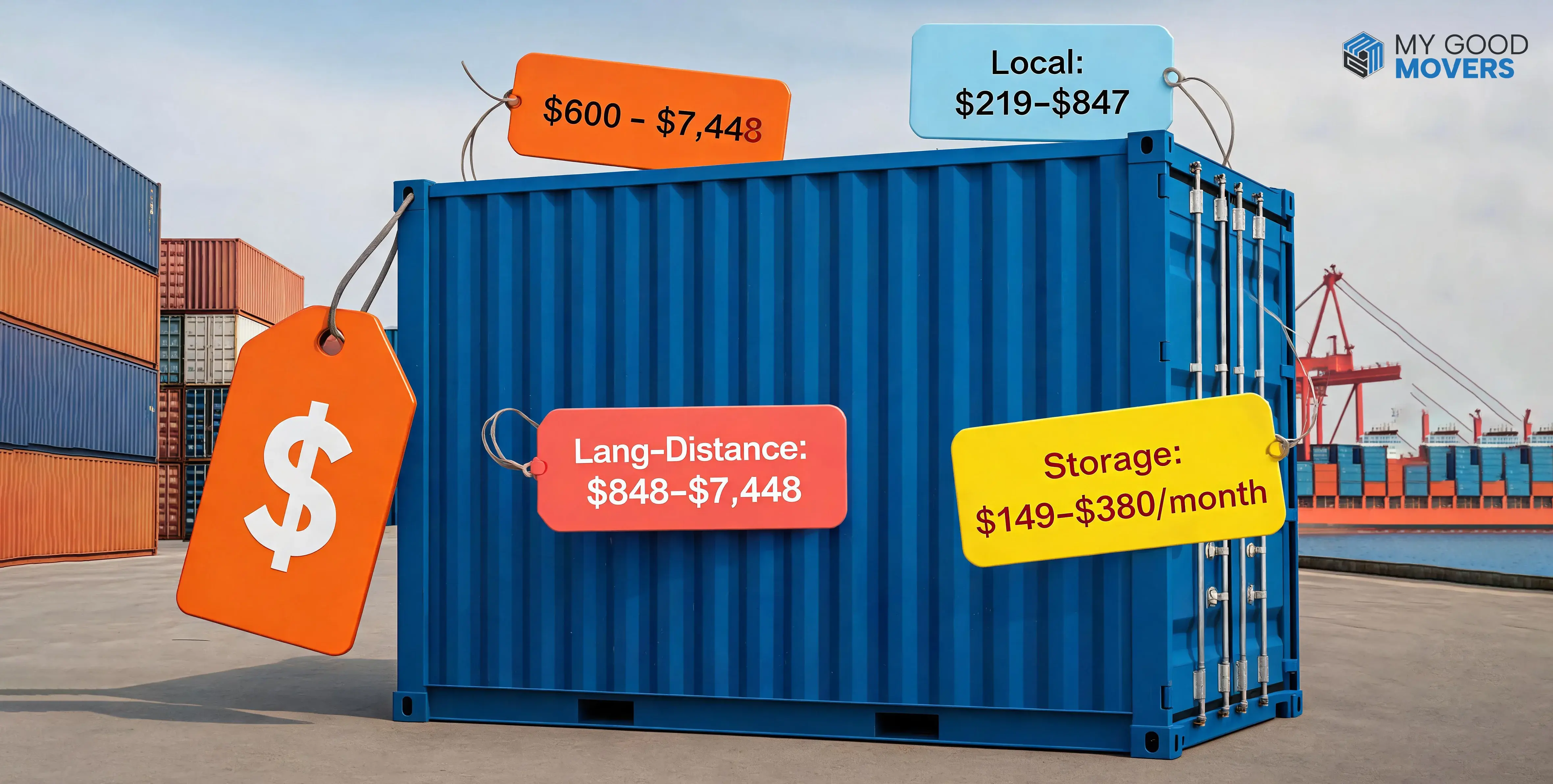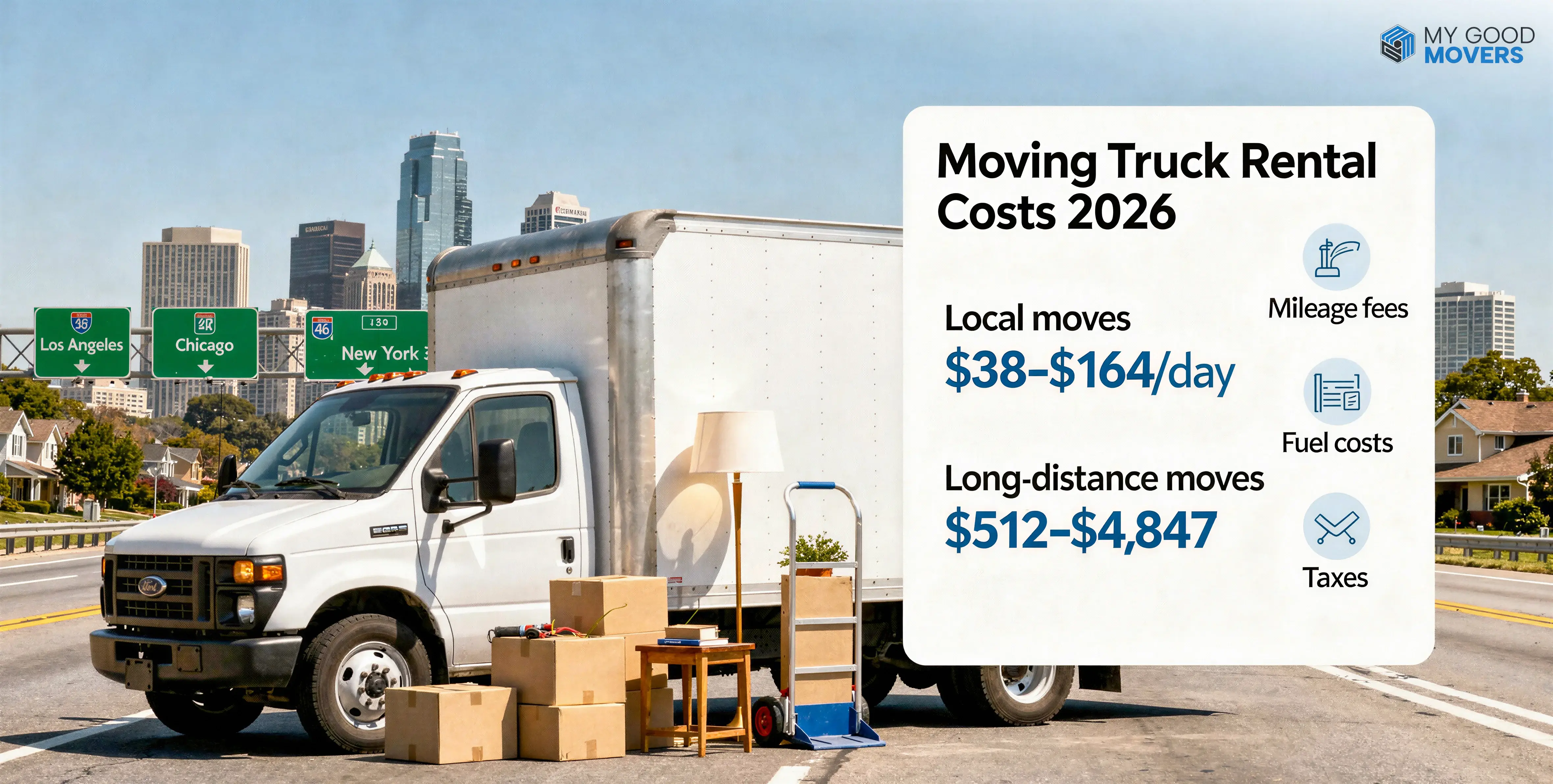




In 2026, the average cost to hire movers in the U.S. is about $1,692 for a local move and $4,401 for a long-distance move. The final price depends on the size of your move, distance, crew size, and extra services.
Overview
A moving quote gives you a number. What it does not always tell you is whether that number is actually fair.
That is usually where the confusion starts.
You get one price from one company and a much higher price from another. The confusing part is that both sound fair when they explain why.
So when you search for the cost to hire movers, you want to know what you should realistically expect to pay, what is pushing the price up, and whether the quote in front of you makes sense.
If you already know the basic details of your move, a moving cost calculator can give you a more personalized estimate before you start comparing quotes.
So let’s discuss what movers charge for different types of moves, how pricing changes, what extra services add to the bill, and where unexpected fees usually show up.
Average Cost to Hire Professional Movers in 2026
The average cost of movers can vary a lot depending on how much you're moving and how far you're going, but these average prices give you a good idea of what to expect.
| Moving scenario | Estimated cost | Pricing method |
|---|---|---|
| Small local move | $879–$1,158 | Hourly |
| Standard local household move | $1,158–$1,480 | Hourly |
| Larger local household move | $1,625–$2,300 | Hourly |
| Long-distance professional move | $2,400–$6,900 | Shipment and route-based |
Don’t Guess Your Moving Budget
See what people usually pay for different types of moves within the U.S. before you make your final decision.
How Much Does It Cost to Move in the USA?How Do Moving Companies Calculate Their Prices?
The easiest way to understand a moving quote is to look at the formula behind it. Local and long-distance movers do not calculate prices the same way.
How Local Moving Companies Calculate Their Charges
For most local moves, the calculation starts with time.
That means the moving company hourly rate is only one part of the price. The final amount also depends on how long the job takes and whether the mover adds travel, packing, stairs, or other service charges.
Crew hourly rate
The hourly price for the movers and, in many cases, the truck.
Billable moving hours
The time spent loading, transporting, and unloading your belongings.
Travel & extras
Travel fees, packing, difficult access, or other services are added when applicable.
📖 For a deeper breakdown, see How Much Do Local Moves Cost in the USA?
How Long-Distance Movers Calculate Their Charges
Long-distance movers use a different model because transportation becomes a much bigger part of the job.
The base transportation charge is usually built from your shipment size or weight and the distance or route. Movers then add any services included in your move.
Shipment size or weight
More belongings usually mean a higher transportation charge.
Distance & route
Mileage, route conditions, tolls, and delivery location affect transportation pricing.
Services & fees
Packing, storage, crating, access fees, and other requested services are added separately.
📖 For more detail, see long-distance moving costs.
Hourly Pricing vs. Flat-Rate Moving Charges
Hourly Pricing
- Price changes with the time worked
- Common for local moves
- Extra time increases the bill
Flat-Rate Pricing
- One price is agreed on for the listed work
- Often used when the job is easy to define in advance
- Changes to the move can change the quoted price
How Much Do Movers Charge Per Hour?
Before comparing quotes, check whether the moving company hourly rate covers one mover, the full crew, or the crew plus a truck.
Is the Hourly Rate Per Mover or for the Entire Crew?
Moving companies usually present hourly rates in one of these three ways:
Per Mover
The rate applies to each mover separately. Multiply it by the number of movers you hire.
Per Crew
One hourly price covers the entire moving crew. Check whether transportation is included.
Crew + Truck
One bundled hourly rate covers the crew, truck, and usually basic moving equipment.
How Much Does It Cost to Hire 2, 3, or 4 Movers?
If you’re hiring movers for a local move, here’s a rough idea of what a crew and truck usually cost in 2026.
| Crew Size | Estimated Hourly Crew Rate | 4-Hour Cost |
|---|---|---|
| 2 movers + truck | $118–$134/hour | $472–$536 |
| 3 movers + truck | $177–$201/hour | $708–$804 |
| 4 movers + truck | $236–$268/hour | $944–$1,072 |
If that is what you need, see How Much Do Labor-Only Movers Cost?
Do Moving Companies Have Minimum Hours and Travel Charges?
Yes. The hourly rate is only part of the bill. Many movers use a 2 to 4-hour minimum, and travel time or a separate travel fee is common.
1. The billing clock starts
Some movers start charging when the crew reaches your home, while others include travel from their facility.
2. Minimum booking hours apply
If your mover has a 3-hour minimum and the job takes 2 hours, you still pay for 3 hours.
3. Travel can be billable
A company might charge drive time at the hourly rate or add a separate travel fee.
4. The clock stops when the job is finished
After the minimum is met, some companies bill additional time in 15 or 30-minute increments.
What Does a Standard Moving Service Include?
A standard moving service usually covers the core work needed to move your belongings from one home to another. Services such as packing, unpacking, storage, and specialty handling are charged separately, and these extras make up a large part of the final full-service move cost.
Loading your belongings
Movers carry your boxes, furniture, and other items onto the truck. This is included because loading is one of the main parts of the moving job.
Transportation
The moving company drives your belongings from your current home to the new location. This is included because the mover is responsible for getting your shipment safely from point A to point B.
Unloading at the new home
The crew removes your belongings from the truck and brings them inside. This is included so the move is completed at your destination, not just at the curb.
Basic moving equipment
Movers usually bring items such as dollies, hand trucks, moving blankets, and straps. These tools are included because they help move heavy items safely and reduce the risk of damage.
Basic furniture protection
Many movers wrap larger furniture with moving blankets or protective covers. This is included to help prevent scratches, dents, and other damage during loading and transportation.
Basic furniture handling
Movers usually handle standard furniture that can be moved without special preparation. This is included because carrying and positioning everyday household furniture is part of the normal moving process.
What Extra Fees Can Increase Your Moving Bill?
The advertised rate is not always the amount you end up paying. Extra charges appear when the crew needs more time, equipment, or services that were not included in the original estimate.
Stairs, Elevator & Long Carry
Average cost: $75–$500+
Packing & Packing Materials
Average cost: $270–$2,200 for professional packing
Specialty Items
Average cost: $150–$400 per bulky item
Travel or Fuel Surcharge
Average cost: about 8%–15% of transportation charges
Storage-in-Transit
Average cost: about $0.50 per cubic foot per month
Shuttle Service
Average cost: $0.08–$0.12 per pound, often with a $200 minimum
What Does a Professional Moving Company Bill Look Like?
A moving estimate becomes much easier to understand when you see each charge separately.
Example 1: Cost of Hiring Movers for a Local Move
Scenario: A couple is moving from a 2-bedroom apartment to another home in the same city. They packed their own boxes, but the apartment is on the second floor with no elevator.
- 3 movers + truck
- $189/hour
- 6 billable hours
- second-floor walk-up
- no professional packing
| Charge | Cost |
|---|---|
| Moving crew + truck: 6 hrs × $189 | $1,134 |
| Travel fee | $128 |
| Stair carry charge | $96 |
| Mattress bags and protective materials | $58 |
| Estimated total | $1,416 |
Example 2: Cost of Hiring Movers for a Long-Distance Move
Scenario: A family is moving a furnished 3-bedroom home about 1,200 miles. The shipment weighs roughly 7,500 pounds; they want full packing, and their belongings need 30 days of temporary storage before delivery.
- 7,500-lb shipment
- about 1,200 miles
- full packing
- 30 days of storage
- additional valuation coverage
| Charge | Cost |
|---|---|
| Transportation / linehaul | $4,287 |
| Origin and destination handling | $642 |
| Full packing service | $836 |
| Additional valuation coverage | $229 |
| 30 days of storage-in-transit | $257 |
| Estimated total | $6,251 |
How Can You Reduce the Cost of Hiring Movers?
You do not always need to choose the cheapest company to spend less. A few smart choices before moving day can lower the final bill without making the move harder.
Move fewer items
Sort through your belongings before getting quotes. Fewer boxes and less furniture mean less loading time, less truck space, and lower labor or transportation costs.
Pack your own boxes
Professional packing adds labor and material costs. Packing everyday items yourself helps reduce the final price, especially on larger moves.
Move during an off-peak time
Weekends, month-end dates, and summer are usually busier. Moving on a weekday or during a slower season often gives you more pricing flexibility.
Get several written estimates
Compare at least three detailed quotes. This helps you spot high charges and major differences in what each mover includes. Once you know your expected price range, best moving companies near me can help you find options to compare.
Ask what is included in the quote
Check whether the rate already covers the truck, fuel, equipment, travel time, and basic protection. This can help you avoid paying twice for services you thought were already included.
Use the right crew size
A smaller crew is not always cheaper. The right number of movers can finish the job faster and reduce total billable hours.
Choose only the services you need
Full-service moving is convenient, but you may not need packing, unpacking, storage, or specialty handling. You can lower the final cost quite a bit by removing services you don’t really need.
How We Determine Our Moving Cost Estimates
We do not choose moving prices from a single national average. Each estimate in this guide is built from current U.S. pricing data, federal moving rules, labor data, and clearly defined move scenarios.
Our main data sources include:+
- Federal Motor Carrier Safety Administration (FMCSA): We use FMCSA guidance to verify how interstate movers handle written estimates, shipment weight, binding and non-binding estimates, accessorial charges, and final billing.
- U.S. Bureau of Labor Statistics (BLS): We review current wage and employment data for material-moving workers to understand the labor costs behind professional moving services.
- Current U.S. moving-market data: We compare published rates and cost data from professional moving sources to establish realistic 2026 ranges rather than relying on one company or one national figure.
How we build the estimates:+
Local-move estimates consider crew size, hourly rate, working time, truck use, and common additional charges.
Long-distance estimates consider shipment size or weight, distance, route, handling, and selected services.
When we show a worked example, we state those assumptions so you can see exactly how the total was calculated.
For a full explanation of how we research, compare, and update pricing, see our moving pricing methodology.