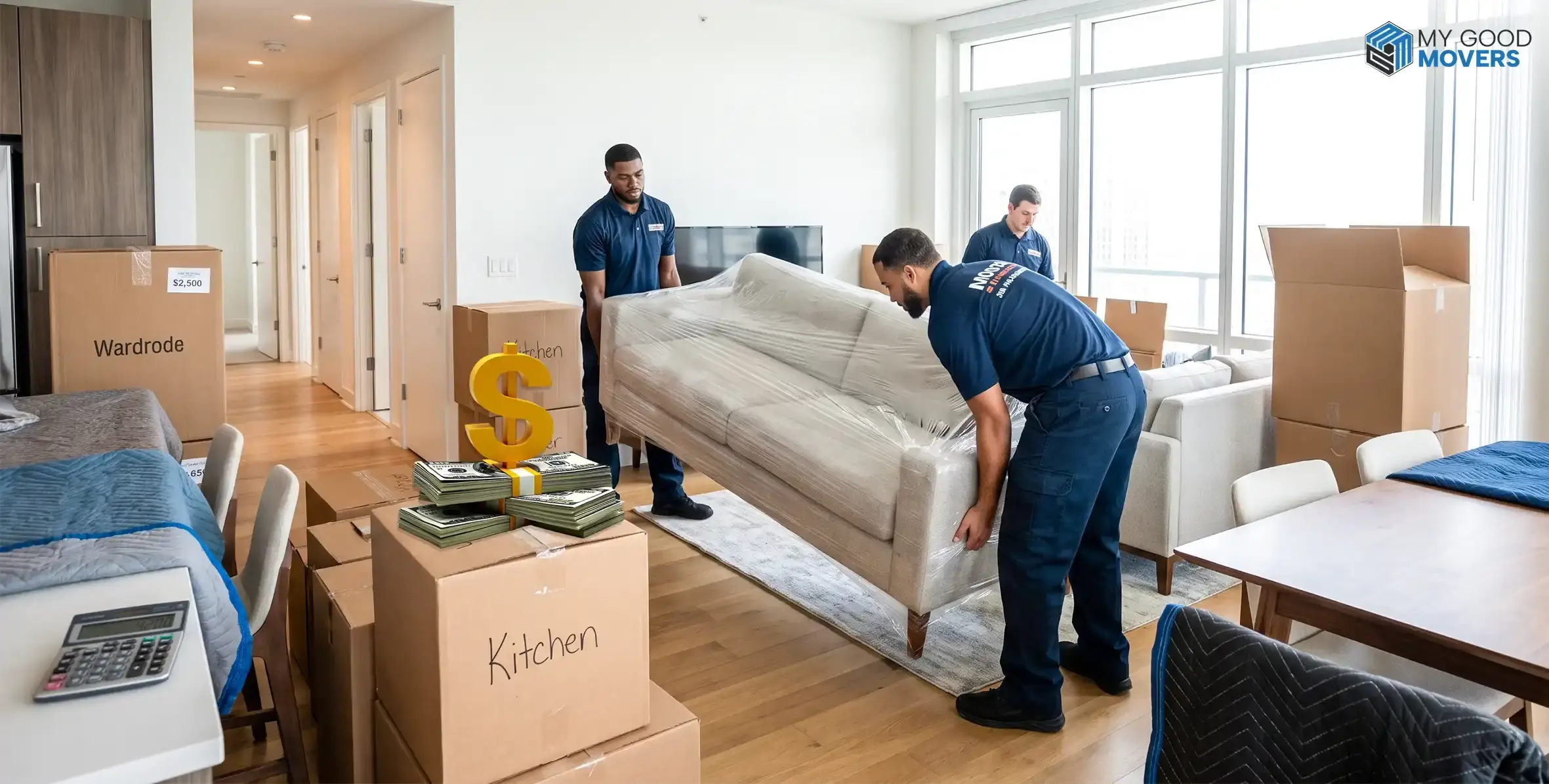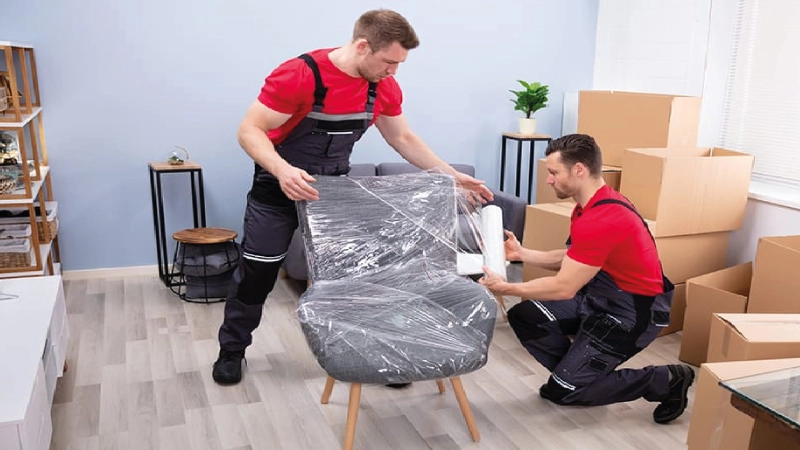




Most moving disasters are not loud. They are quiet little scratches, dents, and cracked corners you notice after the truck door closes.
If you are here, you are probably trying to avoid that exact moment. Because it is not just about money. It is that sinking feeling of watching your favorite table, sofa, or dresser take a hit because of one rushed turn through a doorway.
That is why you need to use moving furniture pads early in your moving plan.
Damage during moves is common, even when people try their best. One recent survey found that 48% of people experienced at least one item broken or damaged during a house move. Another survey reported that 36% of respondents had broken or damaged items after using professional movers.
When something does go wrong, the protection included with most moving services is very limited. In many cases, movers are only responsible for about $0.60 per pound for each item under released value coverage in U.S. rules, which rarely comes close to covering real damage.
If you care about furniture protection during moving, then let’s discuss what these pads are, what they actually prevent, and when they are genuinely worth it.
What Moving Furniture Pads Are
Moving furniture pads are thick protective covers designed to sit between your furniture and everything that can damage it during a move. That includes walls, door frames, stair railings, truck floors, and even other furniture. Their main job is to reduce impact, prevent surface damage, and keep items stable while they are being carried or transported.
When movers say, "We'll pad the furniture," this is usually what they mean. These pads wrap around items so that when something bumps, slides, or shifts, the force hits the padding first, not the furniture itself.
People confuse them with regular blankets, but furniture moving pads are built to handle weight, friction, and repeated movement.
You can expect them to help with things like:
- Preventing scratches on wood and painted surfaces
- Protecting corners and edges from chipping
- Reducing dents caused by pressure or drops
- Limiting movement inside the truck
What they are made of
The effectiveness of furniture pads comes from how they are constructed, not just how thick they look.
Most moving pads are made using a layered design:
- An outer fabric layer, usually durable cotton or polyester, that resists tearing
- An inner padding layer, often recycled cotton, foam, or felt, that absorbs shock
- Quilted stitching to keep the padding evenly distributed and prevent bunching
Some pads are lighter and designed for basic surface protection, while others are thicker and better suited for long-distance moves or high-value furniture. Many people also look for reusable moving furniture pads because they can be folded, stored, and used again.
Types of Moving Furniture Pads
When people hear the word “moving pad,” they assume there is just one standard option. In reality, there are several types, and each one serves a slightly different purpose.
Standard quilted moving pads
These are the most commonly used moving furniture pads, and they are what most professional movers rely on every day. They are thick, flexible, and stitched in a quilted pattern to keep the padding evenly spread.
They work well for:
- Sofas, chairs, and mattresses
- Wooden tables, dressers, and cabinets
- General moving pads for furniture protection during short and long moves
Heavy-duty moving pads
Heavy-duty pads are thicker, denser, and designed for maximum impact absorption. If you are moving solid wood furniture, antiques, or commercial-grade items, these are the best moving pads for furniture in those situations.
They are especially useful for:
- Large wardrobes and armoires
- Pianos, safes, and gym equipment
- Appliances and oversized furniture
Lightweight moving pads
Lightweight pads are thinner and easier to handle. They are not meant for heavy impact but work well for surface-level protection.
They are commonly used for:
- Preventing scuffs and light scratches
- Separating items inside a truck
- Short-distance moves with minimal handling
Waterproof or water-resistant pads
Some moving pads include a moisture-resistant outer layer. These are helpful if you are dealing with rain, snow, or damp storage environments.
They are a smart choice when:
- Loading or unloading outdoors in bad weather
- Storing furniture temporarily
- Protecting upholstery and mattresses
What Moving Furniture Pads Protect Against
Most people think furniture damage only happens when something is dropped. In reality, damage usually comes from small, repeated moments of contact.
These moving furniture pads protect your furniture against:
Surface damage you notice too late: Scratches, scuffs, and worn edges are some of the most common moving-related issues. Wood furniture, painted finishes, and laminate surfaces are especially vulnerable. Furniture pads create a soft barrier that absorbs that friction before it reaches the surface.
Corner and edge damage: Corners, legs, and edges take the most abuse during a move. These are the first points of contact and the easiest areas to chip or crack. These pads help cushion these high-impact areas and spread the force across a larger surface.
Damage to walls, floors, and door frames: Unpadded items can easily scrape walls, dent drywall, or gouge hardwood floors during carry-out and carry-in. Pads help reduce accidental marks and damage as items pass through tight spaces.
Shifting and impact during transport: Inside a moving truck, furniture rarely stays perfectly still. Moving pads act as buffers between items, minimizing impact and preventing surface-to-surface contact.
Noise, vibration, and pressure stress: This is the kind of damage people rarely think about. Continuous vibration and pressure can loosen joints, weaken fasteners, and stress furniture frames. By adding padding, you reduce vibration and distribute weight more evenly.
When You Need Moving Furniture Pads
Not every move requires the same level of protection, but some situations clearly increase the risk of damage.
You should use them if:
- You are moving heavy or oversized furniture that is difficult to control once lifted.
- You are carrying furniture through stairs, narrow hallways, elevators, or tight doorways.
- You are using a rental truck or trailer with hard floors and exposed metal edges.
- You are moving long-distance or driving on uneven roads where items can shift during transit.
- You own solid wood, polished, antique, or high-value furniture that scratches easily.
- You are moving appliances or large electronics in the same truck space as furniture.
- You will be stacking or placing multiple large items close together inside the truck.
- You are moving during rainy, snowy, or damp weather conditions.
- You want to protect walls, floors, door frames, and stair rails during carry-out and carry-in.
- You want to minimize the risk of discovering scratches, dents, or damage after the move is complete.
When You Might Not Need Moving Furniture Pads
There are moves where the risk of damage is low and extra padding may not be necessary.
You might not need them if:
- You are only moving boxed items and do not have large furniture pieces.
- You are moving a very short distance with minimal carrying and no stairs.
- You have very few furniture items and can handle each one slowly and carefully.
- Your furniture can be fully disassembled and packed into boxes.
- Items already have built-in protection, such as removable covers or original packaging.
- You are moving lightweight furniture with no delicate surfaces.
- You are not using a moving truck and are transporting items in a personal vehicle.
- You are not concerned about minor cosmetic wear or small scratches.
- You have wide doorways, open layouts, and easy access throughout both locations.
- The move involves no stacking or close contact between furniture pieces.
Moving Furniture Pads vs Moving Blankets
People use these two terms interchangeably, which creates a lot of confusion. They are related, but they are not the same thing.
Key Differences
| Aspect | Moving Furniture Pads | Moving Blankets |
|---|---|---|
| Purpose | Designed specifically for furniture protection during moving | General-purpose covering and light protection |
| Padding thickness | Thicker, denser padding for impact absorption | Thinner and lighter |
| Structure | Quilted or layered to distribute pressure evenly | Usually single-layer or lightly stitched |
| Durability | Built to handle repeated use and heavy weight | Less durable under heavy loads |
| Protection level | High protection against dents, scratches, and impact | Basic protection against dust and light scuffs |
| Grip and stability | Stays in place better when wrapped and secured | More likely to shift or slide |
| Typical users | Professional movers and serious DIY movers | Homeowners using household supplies |
| Cost | Higher upfront cost, often reusable | Lower cost or already available at home |
Best Use Cases for Each Option
| Situation | What Works Best |
|---|---|
| Moving heavy furniture (dressers, wardrobes, appliances) | Furniture pads |
| Protecting polished wood or delicate finishes | Furniture pads |
| Long-distance or truck-based moves | Furniture pads |
| Short local move with light furniture | Moving blankets |
| Separating items inside a truck | Both together |
| Protecting floors and door frames | Furniture pads |
| Wrapping lightweight items temporarily | Moving blankets |
| Budget-focused move with low risk | Moving blankets |
| High-value or fragile furniture | Furniture pads |
| Mixed load with heavy and light items | Use both |
Which Items Should Be Padded
Not everything in your home needs padding, but certain items are far more vulnerable during a move.
If any of the items below are part of your move, using moving furniture pads is strongly recommended.
- Sofas, couches, and sectionals
- Armchairs and recliners
- Mattresses and box springs
- Bed frames and headboards
- Dressers and chests of drawers
- Wardrobes, armoires, and cabinets
- Dining tables and coffee tables
- Desks and office furniture
- Bookshelves and display units
- Solid wood furniture with finished surfaces
- Glass-top tables and mirrors
- Framed artwork and large frames
- Appliances such as refrigerators, washers, and dryers
- Large televisions and electronics
- Pianos and musical instruments
- Antiques and high-value furniture pieces
How Many Moving Furniture Pads You Need
One of the most common mistakes people make is underestimating how many pads they actually need. Let’s find out how many moving furniture pads you will need:
Estimating by home size
This is the quickest method and works well if your home has a fairly typical furniture setup.
| Home Size | Recommended Number of Pads | What This Covers |
|---|---|---|
| Studio / 1-bedroom | 10–15 pads | Bed, sofa, small tables, TV, light protection for walls |
| 2-bedroom | 15–25 pads | Beds, sofas, dressers, dining table, appliances |
| 3-bedroom | 25–35 pads | Multiple bedrooms, larger furniture, mixed loads |
| 4-bedroom | 35–50 pads | Heavy furniture, multiple large items, long truck loads |
| Large home (5+ bedrooms) | 50+ pads | Full-house protection, stacking, and truck buffering |
Estimating by item list (per-piece method)
This approach is more precise and is recommended if you have large, valuable, or awkward items.
| Furniture Item | Pads Needed Per Item |
|---|---|
| Sofa or sectional | 3–5 pads |
| Mattress or box spring | 2–3 pads |
| Bed frame / headboard | 2 pads |
| Dresser or chest of drawers | 2–3 pads |
| Wardrobe / armoire | 3–4 pads |
| Dining table | 2–3 pads |
| Coffee table / side table | 1–2 pads |
| Desk | 2 pads |
| Bookshelf | 1–2 pads |
| Appliance (washer, dryer, fridge) | 2–3 pads |
| Large TV | 1–2 pads |
| Piano or heavy specialty item | 4–6 pads |
Extra pads for floors, doorways, and stair protection
Most people forget this part, and it is where damage to the home itself usually happens. Pads used for surfaces cannot always be reused for furniture once they get dirty, so these should be counted separately.
| Area to Protect | Recommended Extra Pads | Why They Matter |
|---|---|---|
| Entryway floors | 2–3 pads | Prevent scratches and dirt transfer |
| Hallways | 2–4 pads | Cushion repeated passes with furniture |
| Door frames | 1–2 pads | Protect paint and trim from impact |
| Staircases | 3–6 pads | Reduce slipping and edge damage |
| Elevator floors or walls | 2–3 pads | Prevent dents and scuffs in shared spaces |
A simple rule to remember:
If you are unsure, add 20–30% more pads than your estimate. Leftover pads can always be reused.
How to Use Moving Furniture Pads Correctly
Pads only work when they are applied in the right order and for the right reason.
Step 1: Prepare the item before padding
Let’s suppose you are moving a wooden dresser from a second-floor bedroom.
Before you touch a pad, empty the drawers and remove anything loose. If drawers cannot be removed, close them and secure them lightly so they do not slide open during the move.
Wipe off dust or grit, because trapped debris can scratch surfaces once the padding is applied.
Step 2: Place the pad correctly around the furniture
Lay the pad flat and position the furniture in the center. Do not just throw the pad over the top.
In case of this dresser:
- Wrap the pad fully around the sides and front
- Fold excess padding over the top and bottom
- Make sure corners and edges are covered first
Step 3: Secure the pad without damaging the surface
Once the pad is in place, it needs to stay there.
Use stretch wrap, moving straps, or tape over the pad, never directly on the furniture surface. The goal is to keep the pad snug, so it does not slide during carrying.
Step 4: Carry with padding facing contact points
The padded side should face:
- Walls
- Railings
- Door frames
- Any surface you might brush against
Pads are not just for the truck. They protect during the most accident-prone part of the move, which is getting the item out of the house.
Step 5: Use pads strategically inside the truck
Once inside the truck, use padding as well.
Place padded furniture:
- Against the truck walls
- Between other large items
- With pads acting as buffers, not loose layers
For example, if a couch is placed next to a dining table, pads should separate them, so wood is never touching upholstery or hard surfaces.
Step 6: Use extra pads for surfaces, not just furniture
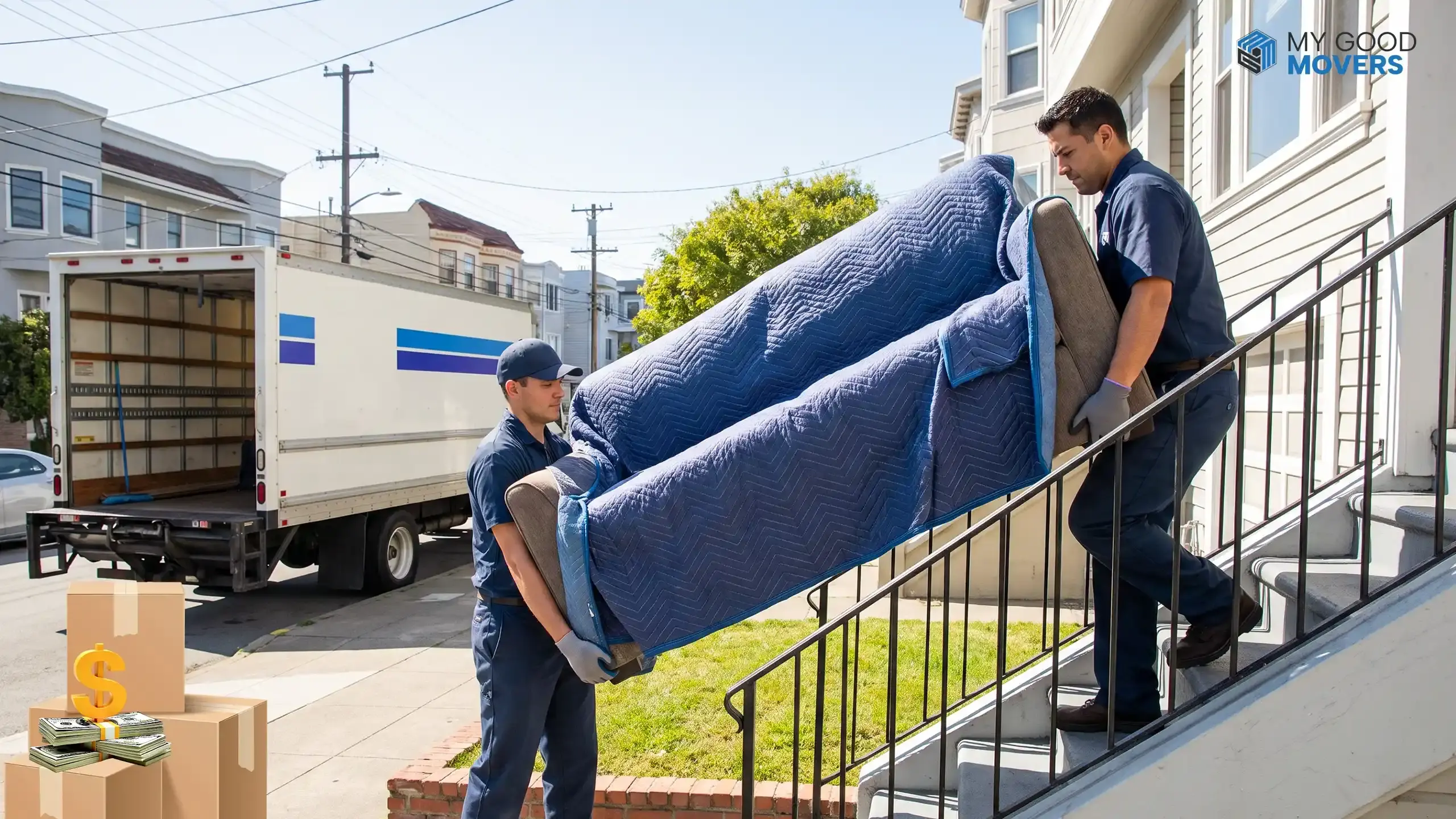
Professional movers always pad floors, doorways, and stairs during heavy moves.
If you are carrying that dresser through a narrow hallway, laying pads along the wall or floor adds another layer of safety.
Step 7: Remove pads last, not first
Once the item reaches its final spot, remove the padding carefully. Check corners and edges before unwrapping everything at once.
Common Mistakes to Avoid
Most furniture damage does not happen because people skip padding entirely. It happens because padding is used incorrectly or rushed.
If you want moving furniture pads to actually do their job, avoid these common mistakes.
- Using too few pads: One pad stretched across a large item is rarely enough. Thin or partial coverage leaves corners and edges exposed, which are the first areas to get damaged.
- Leaving corners, legs, and edges exposed: Flat surfaces are easy to protect. Corners and legs are not. Many people wrap the middle of an item and forget the most vulnerable points.
- Using tape directly on furniture surfaces: This is one of the most damaging mistakes. Tape can pull off finish, leave residue, or stain wood and upholstery. Tape should only go over the pad, never on the furniture itself.
- Not securing the pads tightly enough: Loose pads shift during carrying and transport. If the padding moves, it creates friction instead of protection.
- Padding furniture but ignoring truck movement: Wrapping furniture is only half the job. Inside the truck, unpadded items can still collide if they are not blocked or buffered.
- Using dirty or wet pads: Pads that are damp, greasy, or dirty can stain upholstery and light-colored finishes. Always check pads before use, especially if they are rented.
Alternatives to Moving Furniture Pads
If you do not have access to moving furniture pads, there are alternatives that can provide varying levels of protection.
| Alternative | Best Used For | Where It Works Well |
|---|---|---|
| Bubble wrap | Fragile and small items | Table legs, mirrors, framed art, glass edges |
| Foam sheets | Surface protection | Polished wood, electronics, flat panels |
| Cardboard sheets | Structural separation | Between stacked furniture, tabletops |
| Corner protectors | Impact points | Table corners, cabinet edges, frames |
| Household blankets | Light cushioning | Short moves, lightweight furniture |
| Towels and comforters | Temporary padding | Sofas, chairs, mattresses |
| Mattress bags | Moisture and dirt protection | Mattresses and upholstered items |
| Stretch wrap | Securing layers | Holding pads or blankets in place |
| Furniture covers | Dust and scratch prevention | Storage or clean environments |
Do Professional Movers Use Furniture Pads
Yes, professional movers do use furniture pads, and they use them consistently. In fact, padding furniture is considered a basic part of proper moving practice, not an optional extra.
Standard mover practice usually includes:
- Wrapping large furniture items with moving furniture pads before they leave the room
- Securing pads with stretch wrap or straps so they do not shift
- Padding high-contact areas like door frames, hallways, and stair rails during carry-out
- Using pads inside the truck to separate items and reduce movement during transit
For most professional crews, furniture pads are applied automatically to items like sofas, dressers, mattresses, tables, and appliances.

 Advanced Tracking
- Storage Solutions Available
- Protective Measures for Furniture

- Professional Staff
- Secure and Reliable
- Flexible and Customized Moving Solutions

- Global Expertise
- Personalized Service
- Transparent Pricing