


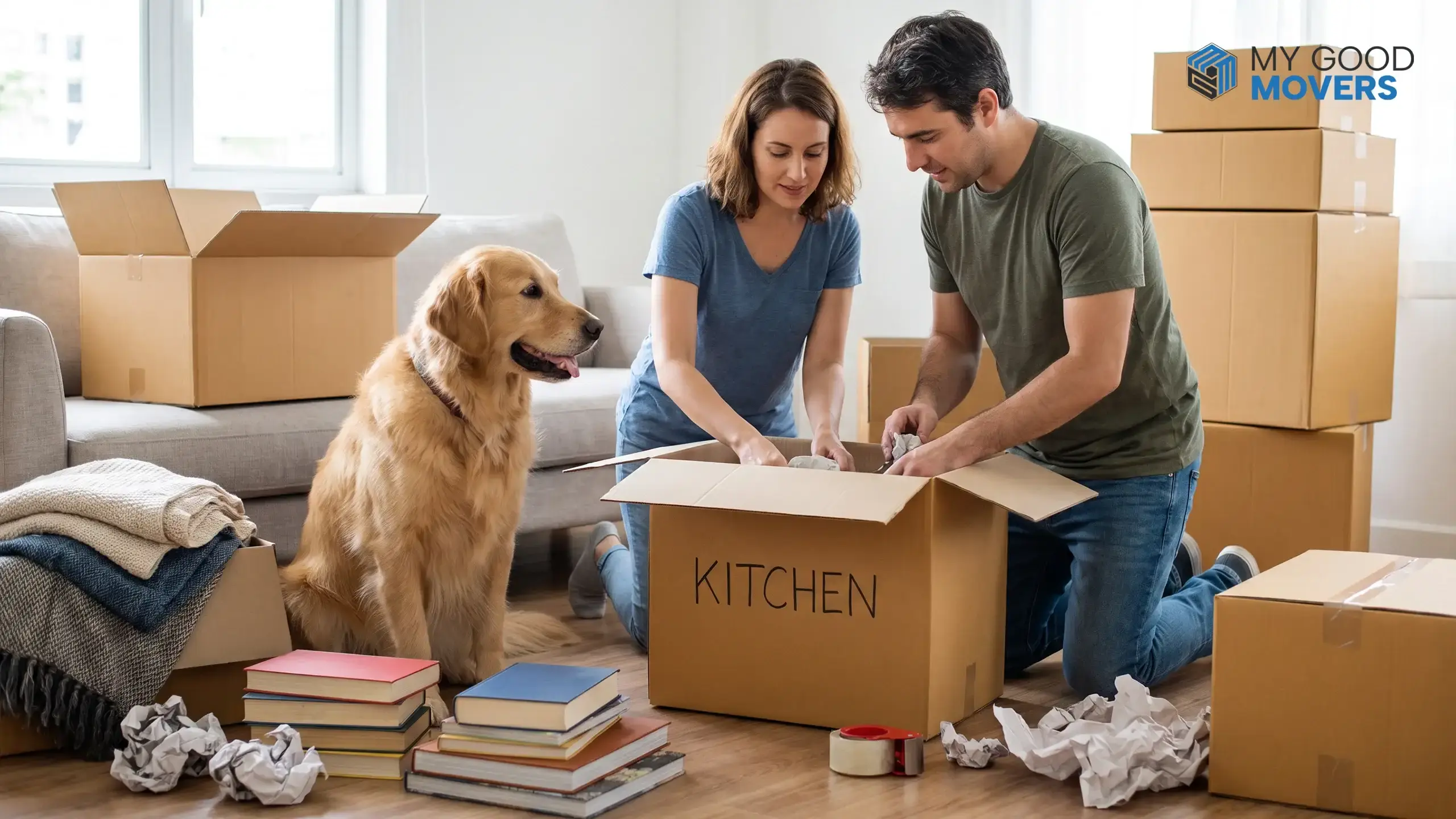
Moving is a big change for your dog, too.
The easiest way to handle moving with a dog is to prepare early, keep their daily routine as normal as possible, plan safe transportation, and give them time to adjust once you reach the new home.
During a move, boxes start appearing. Furniture disappears. Strangers come through the door. Your schedule gets messy. Your dog doesn't know that you're moving to a better apartment or another state. They simply notice that everything familiar is changing.
That can lead to pacing, barking, hiding, loss of appetite, clinginess, or attempts to escape. Dogs depend heavily on familiar routines and surroundings, so a move can feel confusing even when you're excited about it. The American Kennel Club recommends maintaining regular mealtimes, walks, play, and potty breaks as much as possible during the moving process.
Your dog doesn't need to understand the move. They need to feel safe while it happens.
That’s why you need a realistic timeline, a safe travel setup, familiar belongings, and a little patience once you arrive.
Note: The CDC recommends microchipping your pet and keeping your contact information and vaccinations up to date. Before traveling, check the rules for your destination and keep your pet safe on a leash or in a carrier.
How to Move with a Dog – Step by Step
Use these simple steps to make moving with your dog easier for both of you.
Step 1: Start Preparing Your Dog Before the Boxes Take Over
Dogs notice changes long before the moving truck arrives.
If possible, begin preparing a dog for a move a few weeks ahead rather than trying to change everything during the final two days.
You don't need to stop packing around your dog. Just avoid turning your home into chaos overnight.
Keep Their Routine Familiar
Try to keep these things happening at roughly the same times:
- Meals
- Morning and evening walks
- Bathroom breaks
- Playtime
- Training
- Bedtime
You may be packing until midnight, but your dog still expects dinner at 6:00.
Note: The AKC specifically recommends maintaining a dog's normal schedule during the moving process because disrupted routines and unfamiliar activity can increase anxiety.
Let Your Dog Get Used to Moving Supplies
Some dogs don't care about boxes. Others become uneasy as soon as half the living room disappears behind cardboard.
Bring boxes out gradually when possible.
Let your dog sniff them. Pack a few things while your dog relaxes nearby. Give them a favorite chew, toy, or treat during packing sessions if that helps them stay comfortable.
Don't Replace All Their Old Stuff Yet
Moving may seem like the perfect excuse for a new dog bed, new bowls, and new toys.
Wait a little.
Your dog's old blanket may look worn to you, but it smells like home to them. Familiar scents can be comforting in an unfamiliar house.
Bring their regular bed, blanket, crate, toys, and bowls with you and replace things gradually after your dog settles.
Step 2: Visit Your Veterinarian Before a Long-Distance Move
A vet visit is especially useful when you're relocating with a dog across state lines or traveling a long distance.
Ask your veterinarian whether your dog is healthy enough for the planned trip and whether you need:
- Updated vaccinations
- Prescription refills
- Copies of medical records
- Rabies documentation
- A health certificate
- Motion sickness treatment
- Anxiety management advice
- Preventive care based on your destination
Check Interstate Pet Requirements
Pet entry rules can vary from one state or U.S. territory to another. According to USDA APHIS, a destination may require items such as a health certificate, updated vaccinations, diagnostic testing, or specific treatments. APHIS advises pet owners to check destination requirements as soon as travel plans are known.
So, if you're moving from Texas to Florida, don't assume the rules will automatically be the same.
Check before you travel.
Moving overseas with a dog requires even more planning because documentation, vaccination timelines, microchip rules, treatments, and health certificates may depend on the destination country.
Step 3: Update Your Dog's ID and Microchip Details
The CDC recommends microchipping pets and keeping the owner's contact information current before travel.
Before the move, check:
- Microchip registration
- Phone number
- Email address
- Emergency contact
- Dog tag
- New address, if appropriate
A useful approach is to put your mobile number on the dog's tag instead of relying only on a street address. Your phone stays with you during the transition between homes.
Step 4: Decide How Your Dog Will Travel
The safest option depends on the distance, your dog's size and health, and whether you're driving or flying.
For many local moves, driving gives owners more control over breaks, food, water, and the dog's environment.
Moving With a Dog by Car
Don't let moving day become your dog's first long car trip.
Take a few practice drives beforehand if your dog isn't used to the car.
Start small:
- Sit in the parked car together.
- Take a five-minute drive.
- Try a slightly longer trip.
- Practice using the same restraint you'll use during the move.
Use an appropriate crate, carrier, or properly designed restraint rather than allowing your dog to wander freely around the vehicle.
Plan Breaks Before You Leave
For a long drive, identify safe stops along the route.
Use breaks for:
- Water
- Bathroom needs
- Short walks
- A little exercise
- Keep your dog leashed before opening the car door.
What About Flying?
Airline policies vary, so check directly with your airline well before departure.
Rules can differ based on:
- Dog size
- Breed
- Carrier dimensions
- Cabin eligibility
- Weather
- Destination
- Health paperwork
Note: An international move can also trigger government entry requirements. If you'll return to the United States later, CDC dog-entry rules may apply based on the countries your dog visited and its vaccination history.
Step 5: Pack a Separate Bag for Your Dog
Here's one of the most practical tips for moving with a dog: don't pack everything your dog needs inside the moving truck.
Keep them in the car or somewhere you can reach immediately.
Pack These Dog Essentials
| Item | Why You Need It |
|---|---|
| Food | Avoid changing diets during an already stressful move |
| Bottled or clean water | Useful during travel and stops |
| Food and water bowls | Keep meals familiar |
| Leash and harness | Essential for safe stops |
| Collar and ID tag | Helps identify your dog |
| Medication | Keep it with you, not in the moving truck |
| Waste bags | You'll need more than you think |
| Favorite toy | Provides familiarity |
| Bed or blanket | Familiar smell can help your dog settle |
| Towels | Useful for spills, rain, or accidents |
| Veterinary records | Helpful if you need veterinary care while traveling |
| Cleaning supplies | Accidents can happen |
| Crate or carrier | Provides secure transportation when appropriate |
Step 6: Keep Your Dog Away From Moving-Day Chaos
Moving day may be the riskiest part of the entire process. Doors stay open. Movers carry large furniture. People come and go. Your attention is split between ten different jobs.
Your dog doesn't need to be in the middle of that.
The Best Option: Give Your Dog Somewhere Quiet to Stay
If your dog is comfortable with someone you trust, consider having them stay with:
- A family member
- A friend
- A pet sitter
- Doggy daycare
- A familiar boarding facility
Don't Let the Moving Crew Be Responsible for Your Dog
Movers have enough to manage. Even the most careful moving crew can't watch a dog while carrying a sofa through an open doorway.
Assign one member of your family responsibility for the dog, or arrange pet care before the movers arrive.
Step 7: Make the Car Ride as Normal as Possible
A stress-free move with a dog doesn't mean your dog will sleep happily for eight straight hours.
It means you've reduced avoidable stress. Keep the vehicle calm and comfortable.
Avoid:
- Loud music
- Sudden changes in temperature
- Leaving your dog alone in a parked vehicle
- Feeding a huge meal immediately before a long drive
- Letting your dog roam loose
- Unnecessary interactions with unfamiliar animals at stops
Step 8: Dog-Proof the New Home Before Letting Them Explore
You've arrived; now what to do after moving into a new home?
Before your dog races through every room, spend a few minutes checking the property.
Look for:
- Open gates
- Broken fence panels
- Loose screens
- Cleaning products
- Pest-control products
- Exposed wires
- Nails or screws
- Packing debris
- Access to balconies
- Unsecured exterior doors
- Toxic plants
- Food left by previous occupants
Step 9: Introduce Your Dog to the New Home Slowly
You might want to unpack the entire house in six hours.
Your dog probably doesn't.
Start by giving them one quiet, comfortable area containing familiar belongings.
Place their things in that space, like:
- Bed
- Water
- Toys
- Crate, if used
- Blanket
Then let them explore gradually.
Take Them Outside on a Leash First
Before letting your dog loose in a new yard, walk the property with them.
Even if the fence looks secure, inspect it yourself. Dogs can find gaps that humans somehow miss.
Step 10: Rebuild Their Routine Right Away
Your old address changed. Breakfast doesn't have to.
Resume your usual schedule as quickly as possible:
| Routine | What to Do |
|---|---|
| Meals | Feed around the usual times |
| Walks | Keep a familiar frequency and length |
| Bathroom breaks | Establish the new potty area |
| Sleep | Use the same bed or crate |
| Play | Continue familiar games |
| Training | Use familiar cues and rewards |
| Alone time | Increase gradually if your dog seems anxious |
Step 11: Watch for Signs Your Dog Is Struggling
Some nervous behavior after moving to a new home with a dog isn't unusual.
You may notice:
- Pacing
- Whining
- Hiding
- Clinginess
- Changes in appetite
- Trouble sleeping
- Excessive barking
- Indoor accidents
- Reluctance to explore
- Increased alertness
Pet Moving Tip:
Give your dog time, routine, exercise, quiet, and familiar objects. But don't assume every health or behavior change is "just stress."
Contact your veterinarian if symptoms are severe, persistent, unusual for your dog, or involve concerns such as repeated vomiting, diarrhea, breathing problems, extreme lethargy, refusal to drink, signs of pain, or another health issue.
How Long Does It Take a Dog to Adjust After Moving?
There's no universal deadline.
Some dogs act at home within a day or two. Others need weeks or longer.
Instead of asking, "Should my dog be settled by day seven?" watch for gradual progress.
Good signs include:
- Normal eating
- Regular sleep
- Relaxed body language
- Interest in play
- Comfortable exploration
- Normal bathroom habits
- Ability to rest while you're nearby
- Growing comfort when left alone
A Simple Timeline for Moving With a Dog
A moving timeline keeps small tasks from becoming last-minute emergencies.
| Time Before Move | What to Do |
|---|---|
| 4–8 weeks | Check housing rules, destination requirements, and travel options |
| 3–6 weeks | Schedule a vet appointment if needed and request records |
| 2–4 weeks | Update microchip information and ID tags |
| 2–3 weeks | Practice car rides, crate use, or carrier use |
| 1–2 weeks | Pack your dog's travel bag and refill prescriptions |
| 2–3 days | Confirm pet care and transportation arrangements |
| Moving day | Keep your dog secure and away from open doors |
| Arrival day | Dog-proof the home and establish a quiet area |
| First week | Restore routine and explore the neighborhood gradually |
| Following weeks | Monitor behavior and adjust at your dog's pace |
Common Mistakes to Avoid When Moving With a Dog
Most moving problems aren't caused by one huge mistake. They're caused by small things that were easy to overlook.
Here are some common mistakes to avoid so the move is easier and safer for your dog.
Waiting Until Moving Day to Use the Crate
Don’t make moving day your dog’s first real experience with a crate or carrier. This common mistake can make an already stressful day even harder for them.
Packing Dog Supplies in the Moving Truck
Avoid packing your dog’s food, water, leash, medication, and other essentials with the rest of your belongings. You may not be able to reach them when needed.
Changing Your Dog’s Food During the Move
Switching to a new food while your dog is already dealing with a move is a mistake worth avoiding. A sudden change can upset their stomach and add more stress.
Leaving Doors or Gates Unsecured
One common mistake is forgetting how often doors and gates are opened on moving day. With movers and family members coming and going, your dog can easily slip outside.
Expecting Your Dog to Settle In Right Away
Don’t expect your dog to feel at home as soon as you arrive. The new smells, sounds, and surroundings can take time to get used to.
What If You're Moving With a Puppy or Senior Dog?
The basic plan stays the same, but some dogs need extra support.
Moving With a Puppy
Puppies may need:
- More bathroom breaks
- Extra supervision
- A controlled introduction to new spaces
- Continued crate and house training
- Care around public areas depending on vaccination status
Moving With a Senior Dog
Older dogs may find long travel and environmental changes harder.
Plan for:
- More frequent breaks
- Easier access to water
- Medication schedules
- Non-slip flooring
- Comfortable bedding
- Fewer stairs where possible
- Extra time to rest
How to Choose Movers When You Have a Dog
Most best long distance moving companies move your belongings, not your dog. You need a company that can handle your belongings while also making moving day easier and safer for your pet.
Look for Movers With Pet-Friendly Experience
Ask whether the company regularly works in homes with dogs. Movers familiar with moving with pets are more likely to understand concerns like open doors, noise, and keeping certain areas secure.
Compare Movers
If you are moving to another city or state, compare the best moving companies based on their services, availability, and delivery timelines.
Ask About the Moving-Day Schedule
Find out when the crew will arrive, how long loading may take, and when you can expect delivery. A clear timeline helps you decide where your dog should stay while movers are working.
Check How They Handle Entryways
Ask if doors or gates need to stay open during loading. This helps you plan to keep your dog in a separate room, with someone you trust, or away from the property.
Get a Clear Estimate Before Choosing
Compare quotes instead of choosing the first company you find. Use our moving cost calculator to estimate your moving costs and check if a mover’s estimate seems reasonable.