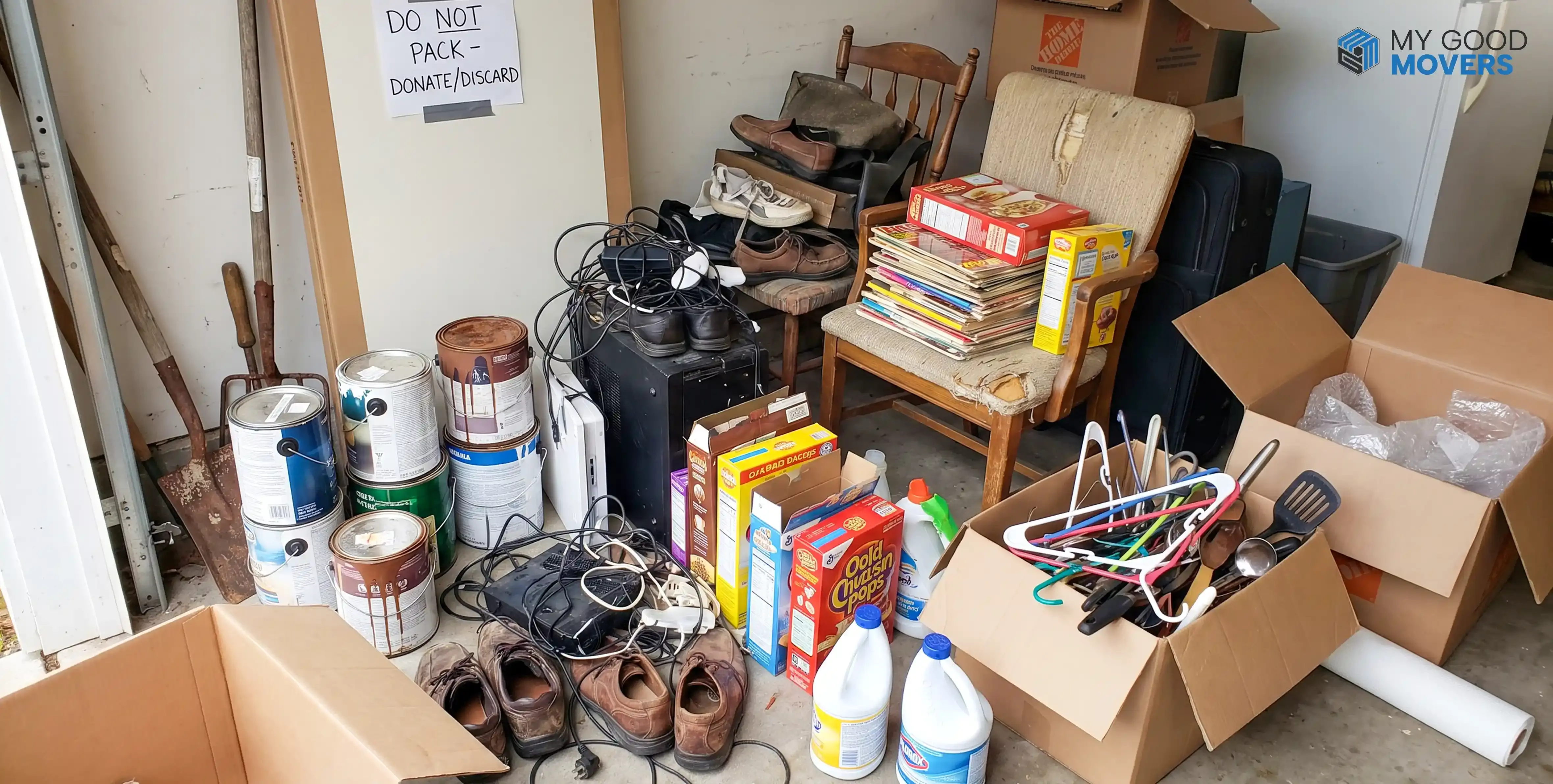



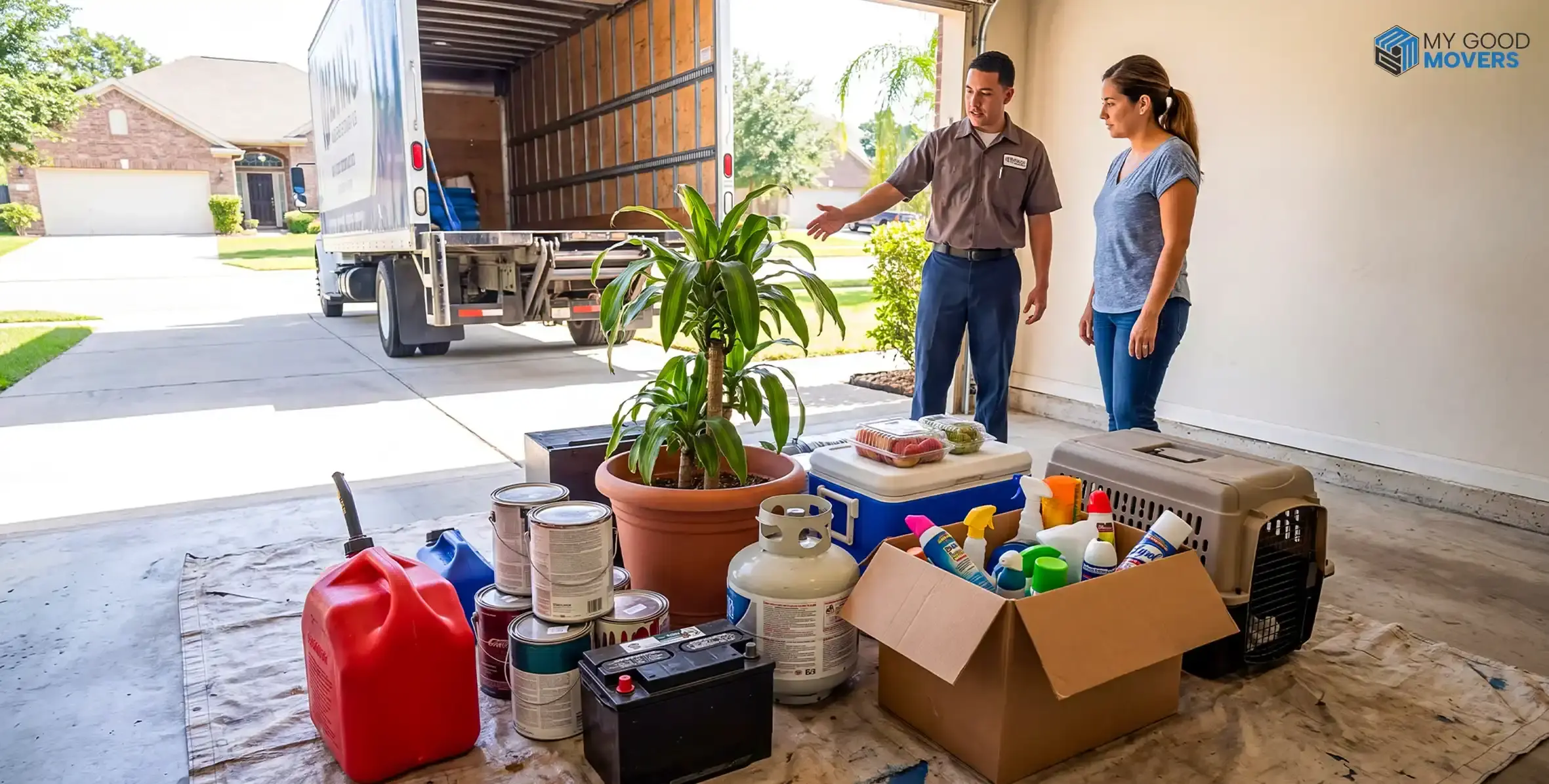
A lot of people find this out too late. The truck is outside, the boxes are stacked near the door, and suddenly the moving crew says they cannot load half-used cleaning sprays, frozen food, paint cans, or a fuel-filled lawn mower.
“Moving day gets easier when you know what not to pack before the first box is loaded.”
One rejected box can slow down the whole move.
Most movers are not trying to make packing harder. They refuse certain items because those items can damage your belongings, harm the crew, break transport rules, or create liability issues.
So, before you seal every box, let’s discuss what movers usually refuse and what you can do with those items instead.
Why Do Movers Refuse Certain Items?
Movers refuse certain items because they can pose safety risks, damage other belongings, violate transport rules, or cause insurance problems.
Here are the main reasons movers may say no:
Safety Risks
Some items can catch fire, burst, or release harmful fumes inside the truck. This includes gasoline, propane tanks, fireworks, aerosol cans, and strong chemicals.
Leakage and Damage
Open liquids, cleaners, paint, oils, and similar items can leak during transport. One small spill can damage clothes, furniture, books, or mattresses.
Spoilage and Bad Smell
Perishable foods can spoil quickly, especially during long-distance moves. Spoiled food can smell, leak, and attract pests.
Legal Restrictions
Some items are restricted by state, federal, or international rules. Movers may refuse to transport plants, firearms, ammunition, alcohol, or certain chemicals, as transport rules vary.
Insurance and Liability
Movers avoid items that are hard to protect or insure, such as pets, plants, cash, jewelry, documents, and fragile high-value belongings.
Crew and Truck Protection
Movers also need to keep their crew and truck safe. If an item can injure workers, stain the truck, damage equipment, or create extra risk, they may refuse to load it.
What Items Movers Won’t Move?
Policies can differ between packing and moving companies, but the list below covers the most common items movers refuse.
Note: Always ask your mover for their restricted-items list at least 1 to 2 weeks before moving day.
Many movers refuse houseplants, especially for long-distance, interstate, or international moves.
Plants are living items. They can die in transport, carry pests, leak soil, or break state and country rules.
Which Houseplants Movers May Refuse
Movers may refuse:
- Large potted plants
- Fragile indoor plants
- Soil-based plants
- Plants with insects or visible pests
- Plants crossing state lines
- Plants that cannot survive heat, cold, or long truck time
Why Movers Do Not Move Houseplants
Movers usually avoid houseplants because:
- Soil can carry insects or disease
- Plants can die during transport
- Heat or cold can damage them
- Pots can break
- Water can leak
Some movers accept small indoor plants for short local moves, but long-distance moves are different. A plant can sit in a truck for several days, and most moving trucks are not designed to protect living items.
Movers will not transport pets in a moving truck.
This includes short moves, long-distance moves, and international relocations. Pets need air, water, food, temperature control, and supervision. A moving truck cannot provide that safety.
Which Pets Movers Will Not Transport
Movers will not move:
- Dogs
- Cats
- Birds
- Fish
- Rabbits
- Hamsters
- Guinea pigs
- Reptiles
- Exotic pets
- Any live animal
A pet is not cargo. It needs personal care during the move.
Perishable foods are among the most common items movers won’t move.
Food can spoil quickly, especially during long-distance moves. It can also leak, smell, attract pests, or damage other boxes.
Which Food Items Movers Usually Refuse
Movers usually refuse:
- Fresh meat
- Seafood
- Frozen food
- Milk
- Cheese
- Yogurt
- Leftovers
- Fresh fruits
- Fresh vegetables
- Open food containers
- Refrigerated items
- Food that may spoil during transport
For local moves, some movers may allow sealed pantry items. For interstate and international moves, rules are usually stricter.
Perishable Food Items Movers May or May Not Accept
| Food Type | Mover Policy | Why |
|---|---|---|
| Fresh meat and seafood | Usually refused | Spoil quickly and can leak |
| Dairy products | Usually refused | Require refrigeration |
| Frozen foods | Usually refused | For long-distance or international moves |
| Open pantry items | Often refused | Can spill or attract pests |
| Sealed canned goods | Sometimes accepted | For local moves, policies vary |
| Dry unopened food | May be accepted | Confirm with the mover first |
| Fresh fruits and vegetables | Often refused | Especially for interstate/international moves |
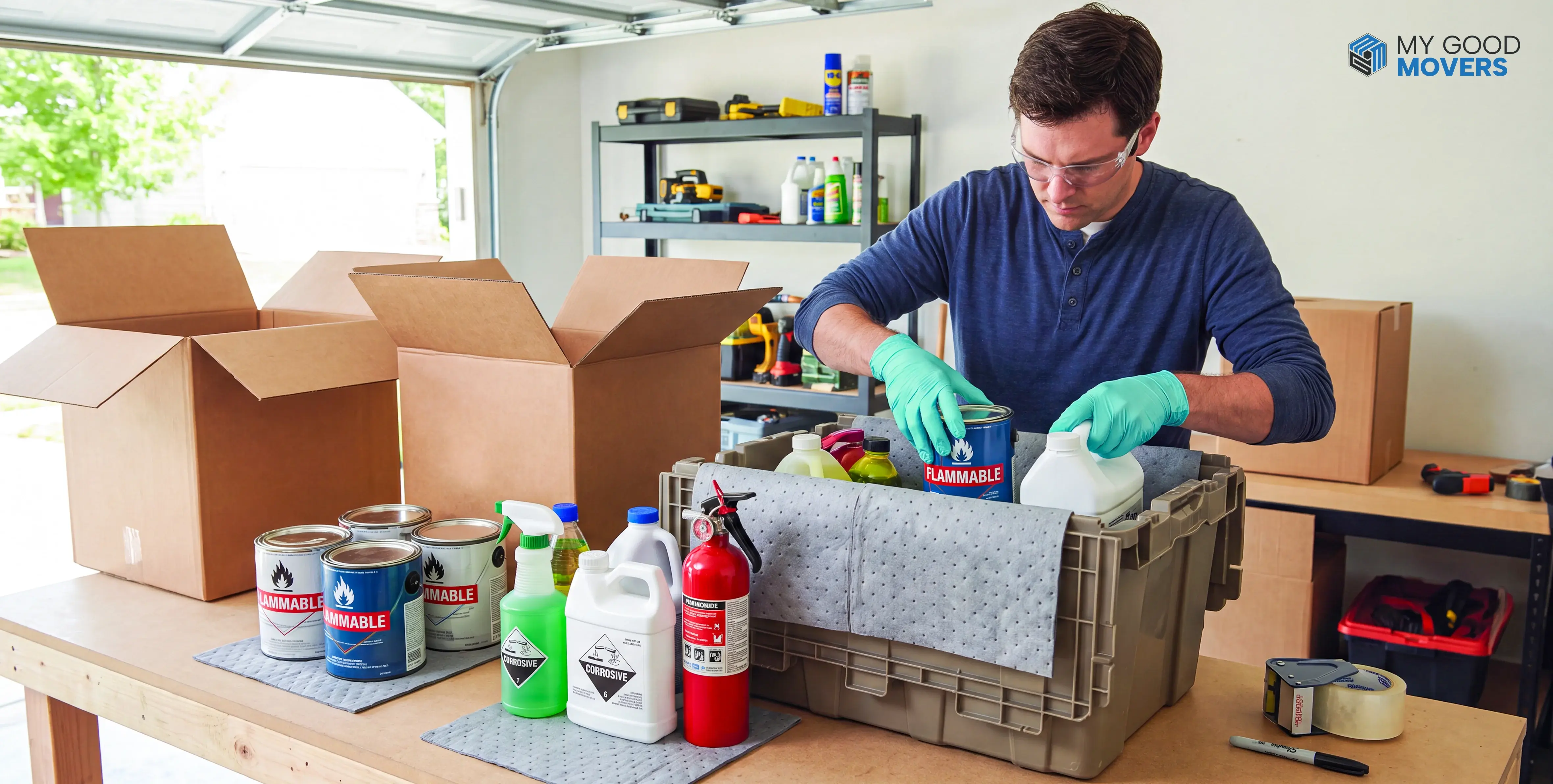
Cleaning products and hazardous materials are high-risk items that movers usually refuse to transport. Many household cleaners contain chemicals that can leak, burn, react, or release strong fumes.
Which Cleaning Products Movers Will Not Move
Movers may refuse:
- Bleach
- Ammonia
- Drain cleaner
- Oven cleaner
- Disinfectant sprays
- Aerosol cleaners
- Pool chemicals
- Pesticides
- Liquid cleaners in open bottles
- Strong bathroom or kitchen chemicals
Even if the bottle is half full, it can still spill inside a truck.
Common Hazardous Items Movers Will Not Move
| Examples | Hazard Type | Risk |
|---|---|---|
| Gasoline, lighter fluid, paint thinner, motor oil | Flammable liquids | Fire hazard |
| Propane tanks, oxygen tanks, aerosol cans | Pressurized containers | Can explode if damaged |
| Fireworks, ammunition and certain chemicals | Explosive items | Major safety risk |
| Bleach, drain cleaner, ammonia | Corrosive products | Can burn skin/damage items |
| Pesticides, pool chemicals, strong solvents | Toxic materials | Health hazard |
| Charcoal, matches and certain batteries | Combustible household items | Fire risk |
Firearms and ammunition require extra care because policies vary by mover, state, and destination.
Many movers refuse ammunition completely. Ammunition is treated as hazardous or restricted because it can create safety and liability concerns. Heat, pressure, impact, and improper packing can all create risk.
Some movers transport unloaded firearms under strict conditions, while others refuse firearms altogether.
Which Firearms and Ammo Items Movers May Refuse
Movers may refuse:
- Ammunition
- Gunpowder
- Reloading supplies
- Explosives
- Loaded firearms
- Unsecured firearms
- Certain firearm accessories, depending on policy
Why Firearms Depend on Moving Company Policy
Firearm rules vary by mover.
Some companies accept unloaded firearms if they are properly documented and packed in accordance with company policy. Others refuse them because of liability, legal restrictions, or destination rules.
Outdoor equipment can be tricky because it contains fuel, oil, dirt, sharp parts, or pressurized tanks. A lawn mower may look empty, but even a small amount of gasoline can create a fire or leak risk.
Which Outdoor Equipment Movers May Refuse
Movers may refuse:
- Lawn mowers with fuel
- Gas grills with propane tanks
- Weed trimmers with fuel
- Chainsaws with fuel or oil
- Pool chemicals
- Fire pits with ash or residue
- Outdoor heaters with tanks
- Garden chemicals
- Fertilizers
- Dirty outdoor tools
- Large equipment that has not been cleaned
Some equipment may be accepted after it is drained, cleaned, and prepared.
Liquor rules depend on the moving company, state laws, the distance of the move, and the destination country.
Some movers transport sealed bottles. Others refuse alcohol completely, especially for long-distance or international moves.
Which Alcohol Items Movers May Refuse
Movers may refuse:
- Open bottles
- Partially used bottles
- Homemade alcohol
- Expensive liquor collections without special handling
- Alcohol crossing state or country borders
- Bottles that may leak or break
If a bottle is rare or expensive, do not treat it like a normal kitchen item.
Scuba gear can be sensitive because tanks are pressurized. Movers accept some scuba equipment, but refuse filled or pressurized tanks. They can create pressure and heat, and the impact can create safety risks.
Which Scuba Gear Movers May Refuse
Movers may refuse:
- Filled scuba tanks
- Pressurized tanks
- Oxygen tanks
- Damaged tanks
- Tanks without proper inspection
- Diving chemicals or restricted accessories
What Scuba Gear Movers May Accept
Movers may accept:
- Masks
- Fins
- Wetsuits
- Snorkels
- Some regulators
- Empty tanks, only if allowed by company policy
Want a Complete Packing Plan?
Stop guessing what to pack next. Follow a clear packing plan that helps you move room by room without the usual last-minute chaos.
Read How to Pack for a Move