


“Your move does not start when the truck arrives. It starts with the first box you pack.”
Safe packing means using the right box, the right padding, the right weight, and the right label so your items can survive lifting, loading, travel, and unpacking without damage. These packing tips can help you protect fragile items, reduce stress, and avoid mistakes that often surface after the move is complete.
Nobody wants to open a box and find cracked plates, leaking shampoo, scratched furniture, or a missing folder with important papers. It happens more often than people expect, especially when packing is rushed.
What Does Safe Packing Mean When Moving?
Safe packing means protecting your belongings and making the move easier for everyone handling the boxes.
It is not only about avoiding broken dishes. It is also about preventing injuries, reducing confusion, and making sure your items arrive in a condition that makes unpacking less stressful.
A safe packing setup usually depends on five things:
| Packing Factor | Why It Matters |
|---|---|
| Box strength | Weak boxes can collapse or tear during lifting |
| Box size | The wrong size can make boxes too heavy or unstable |
| Cushioning | Padding stops items from hitting each other |
| Weight balance | Balanced boxes are safer to lift and stack |
| Labeling | Clear labels help movers and make unpacking easier |
Safe packing is especially important for:
- Glassware and dishes
- Electronics
- Mirrors and artwork
- Antiques
- Furniture
- Important documents
- Liquids and toiletries
- Sharp tools or kitchen items
Safe Packing Tips for Moving
Here are the 15 safe packing tips that you must follow:
A moving box looks fine at first, but small damage can become a bigger problem once the box is full.
Before you place anything inside, check the cardboard, corners, seams, and bottom.
Check These Parts First:
| What to Check | Safe to Use | Avoid the Box If |
|---|---|---|
| Bottom | Feels firm and stays flat | Feels soft, weak, or sags |
| Corners | Hold their shape | Crushed, split, or badly bent |
| Seams | Fully joined | Torn or separating |
| Cardboard | Dry and firm | Damp, soft, or peeling |
| Flaps | Close evenly | Missing, ripped, or badly warped |
| Sides | Stay straight | Bulging or heavily creased |
Box size and box strength are not the same thing.
Two boxes may be similar in size, but one may be much better at holding a heavy or fragile load. Dense items put more pressure on the bottom, seams, and corners, so they need a stronger box.
Use the strength of the box based on what will go inside.
Match the Box to the Load:
| Type of Load | Examples | Better Box Choice |
|---|---|---|
| Light | Pillows, towels, bedding | Standard moving box |
| Medium | Toys, kitchen items, small appliances | Sturdy moving box |
| Heavy | Books, tools, canned goods | Strong small moving box |
| Fragile | Dishes, glassware, collectibles | Reinforced or specialty box |
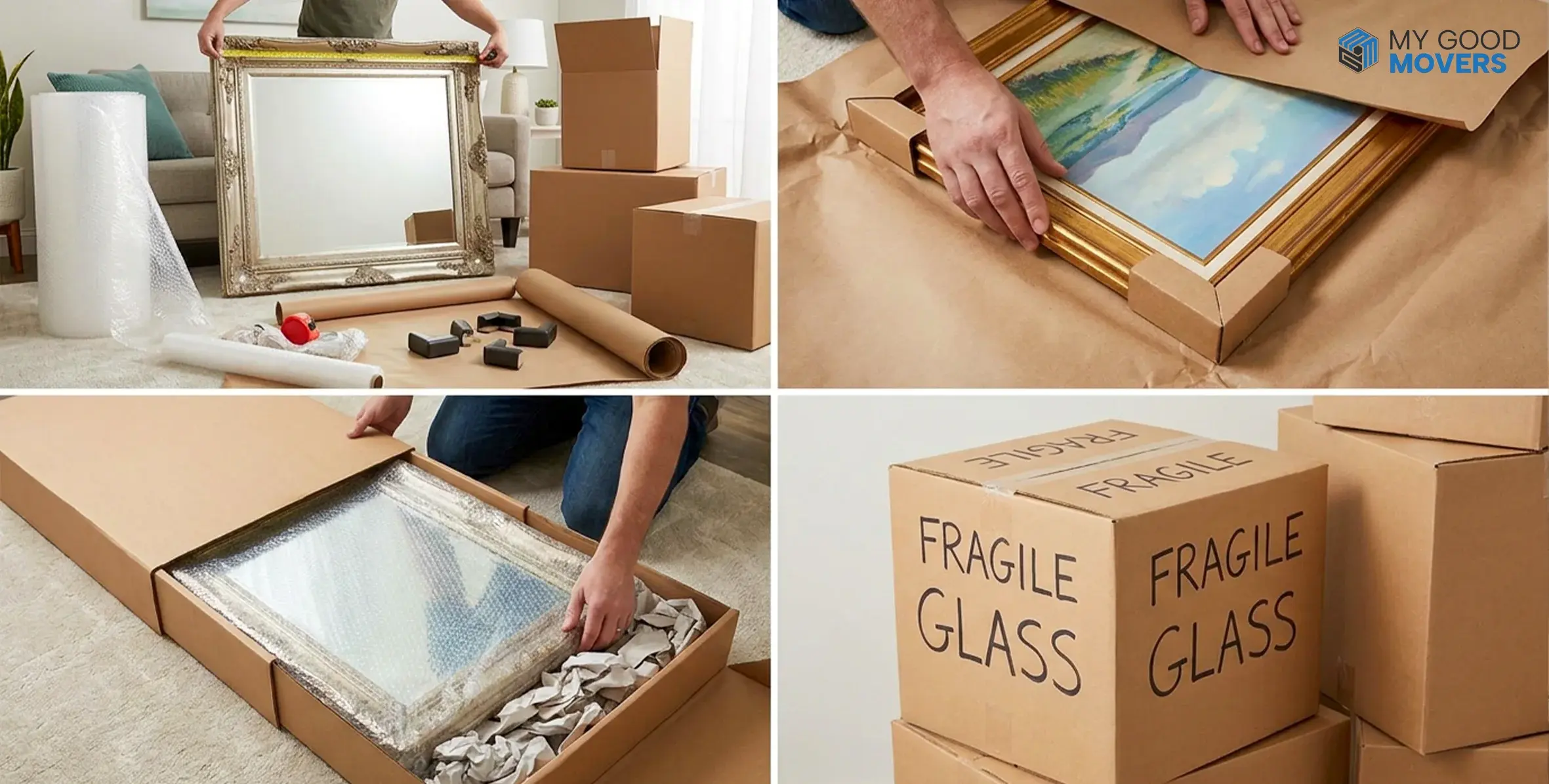
| Flat and delicate | Mirrors, pictures, artwork | Picture or mirror box |
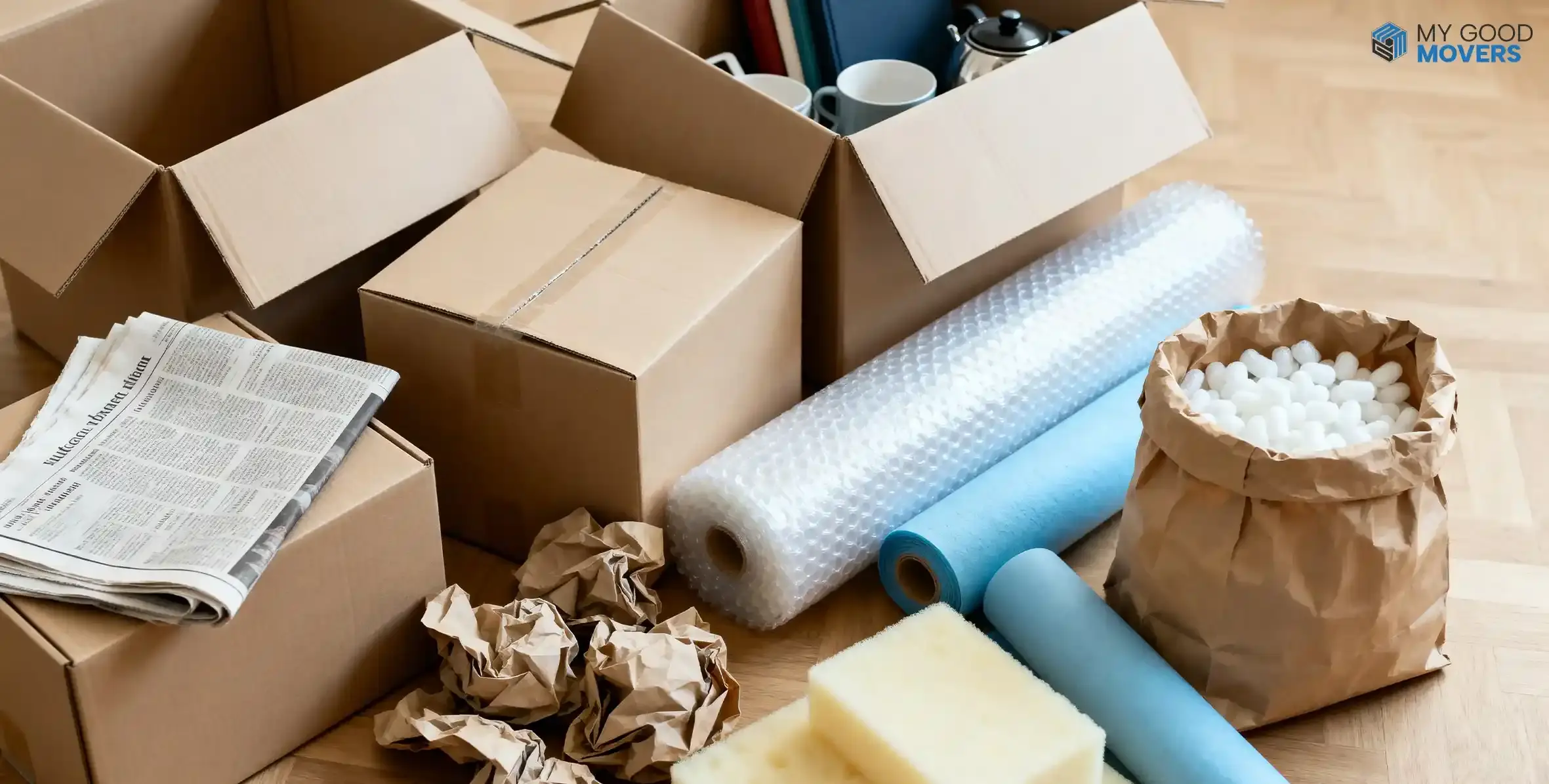
Protective packing materials do different jobs. Some prevent scratches. Others absorb impact, stop items from moving, or protect against leaks.
Using the right material for the right risk works better than wrapping everything the same way.
Choose Protection Based on the Risk:
| What You Need to Prevent | Useful Material |
|---|---|
| Scratches and surface marks | Packing paper, foam sheets, soft cloth |
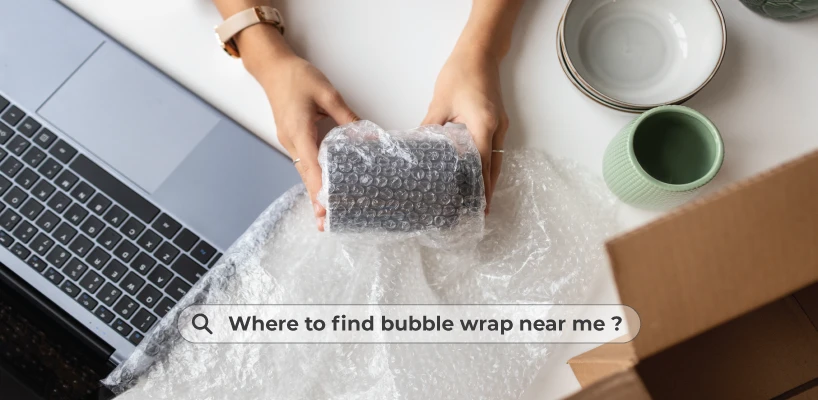
| Impact and breakage | Bubble wrap or protective foam |
| Items moving inside boxes | Crumpled packing paper or soft filler |
| Furniture rubbing or scratching | Furniture pads or moving blankets |
| Liquid leaks | Plastic wrap and sealed zip bags |
| Lost screws or small parts | Labeled zip bags |
| Dust and dirt | Covers, bags, or protective wrapping |
Do not leave hard items touching each other inside a box. Add a layer of protection between surfaces that could scratch, chip, or crack.
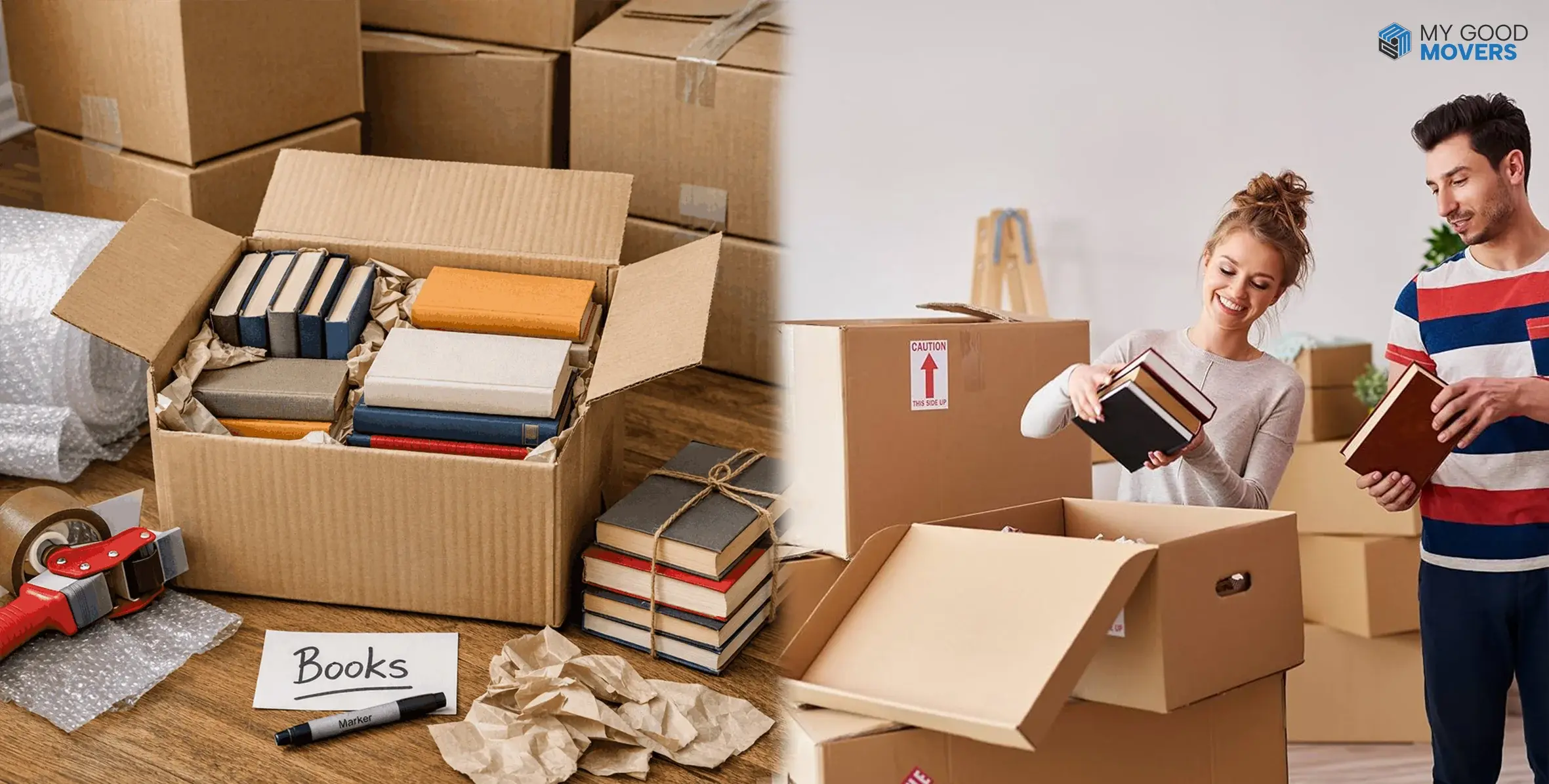
A common mistake is using large boxes for heavy items. For example, a large box full of books may look efficient, but it can become too heavy to lift safely. It may tear from the bottom or injure someone during the move.
Use small boxes for heavy items and large boxes for light items.
| Box Type | Best For |
|---|---|
| Small boxes | Books, tools, canned goods, small heavy items |
| Medium boxes | Kitchen items, toys, decor, small appliances |
| Large boxes | Bedding, pillows, towels, lampshades |
| Wardrobe boxes | Hanging clothes, coats and formal wear |
| Dish boxes | Plates, bowls, cups and fragile kitchen items |
| Picture boxes | Mirrors, artwork, framed photos, flat screens |
If you are not sure about how many boxes your move will need, use our moving box calculator to get an estimate based on your move.
A box may look strong when it is empty, but once it is full, the bottom carries all the weight. If the bottom is not reinforced, it can open during lifting, loading, or unloading.
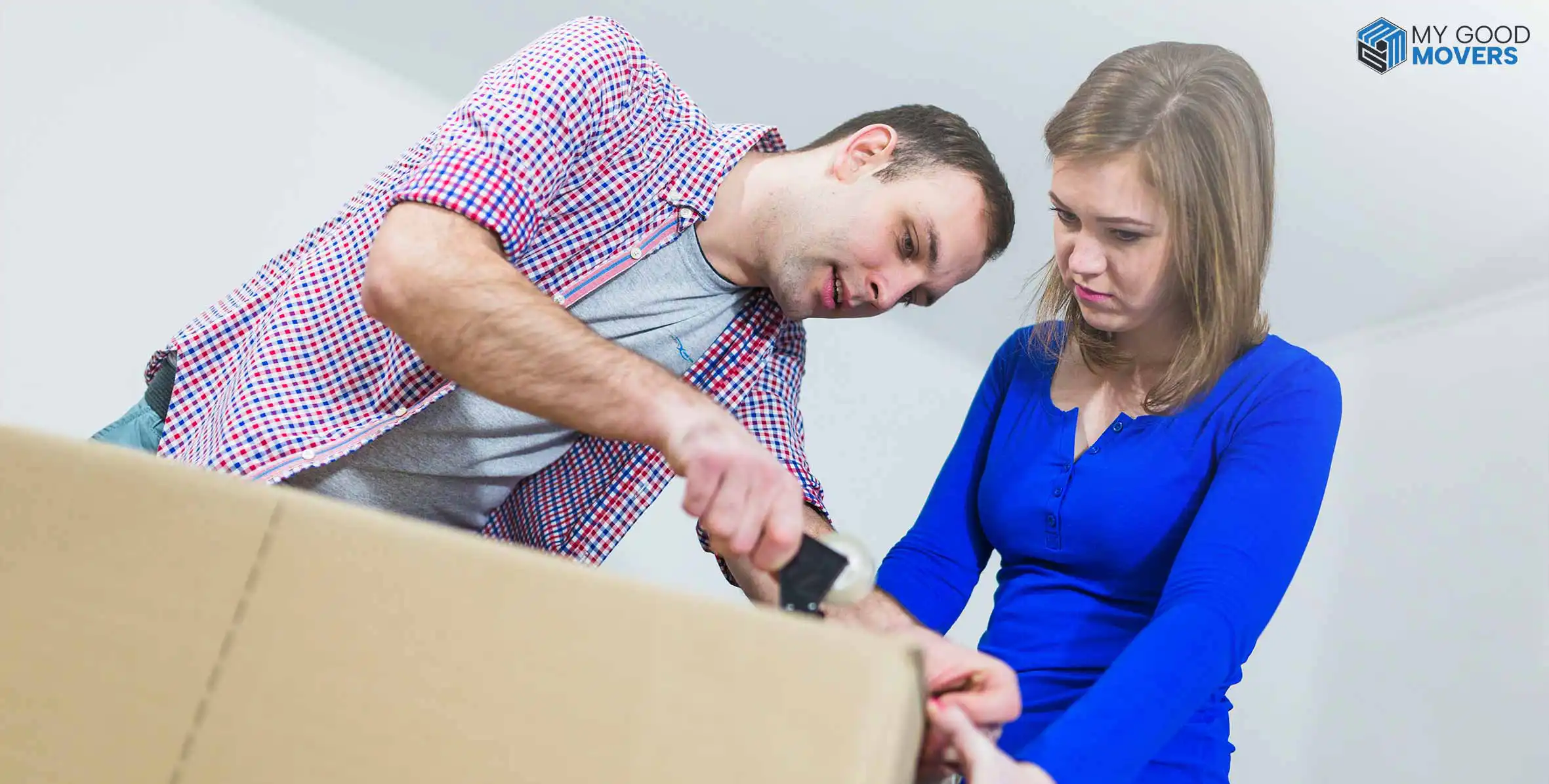
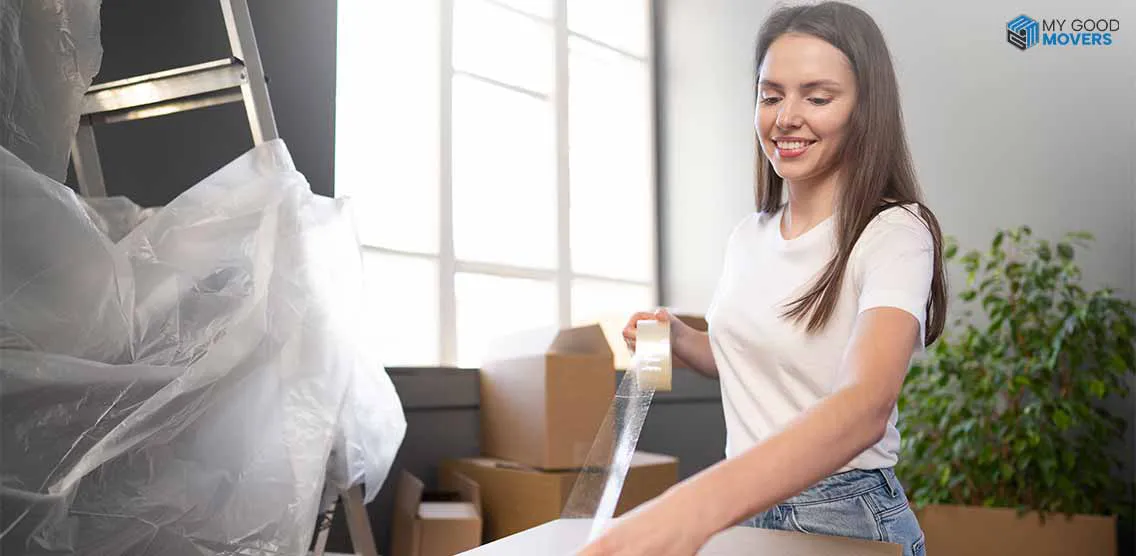
Before adding anything to a box, tape the bottom properly. Do not wait until the box is already packed.
For Stronger Support, Use the H-Taping Method:
- Tape the center seam of the box.
- Tape both side edges across the bottom.
- Add another strip of tape for heavy items.
This provides stronger support and reduces the risk of the box opening from the bottom.
You should reinforce boxes, especially when packing:
- Books
- Dishes
- Tools
- Small appliances
- Canned food
- Decor pieces
- Heavy kitchen items
The heavy-bottom, light-top rule means placing heavier items at the bottom of the box and lighter items on top. This keeps the box balanced and prevents heavy items from crushing delicate belongings.
If you pack light or fragile items under heavy objects, they can crack, bend, or break during transport.
Use This Order When Packing Most Boxes:
| Box Layer | What to Pack |
|---|---|
| Bottom | Heavy and sturdy items |
| Middle | Medium-weight items |
| Top | Light, soft, or delicate items |
Both overpacking and underpacking can damage your belongings.
An overpacked box is too full or too heavy. It may bulge, split, or become unsafe to carry. An underpacked box has too much space, which allows items to shift, hit each other, and break.
A properly packed box should feel firm, balanced, and easy enough to lift.
To Use This Tip Correctly:
- Do not force the box closed
- Keep the top flat before taping
- Fill empty gaps with paper, towels, or soft clothing
- Keep heavy boxes under control
- Avoid mixing too many item types in one box
- Gently shake the box before sealing it
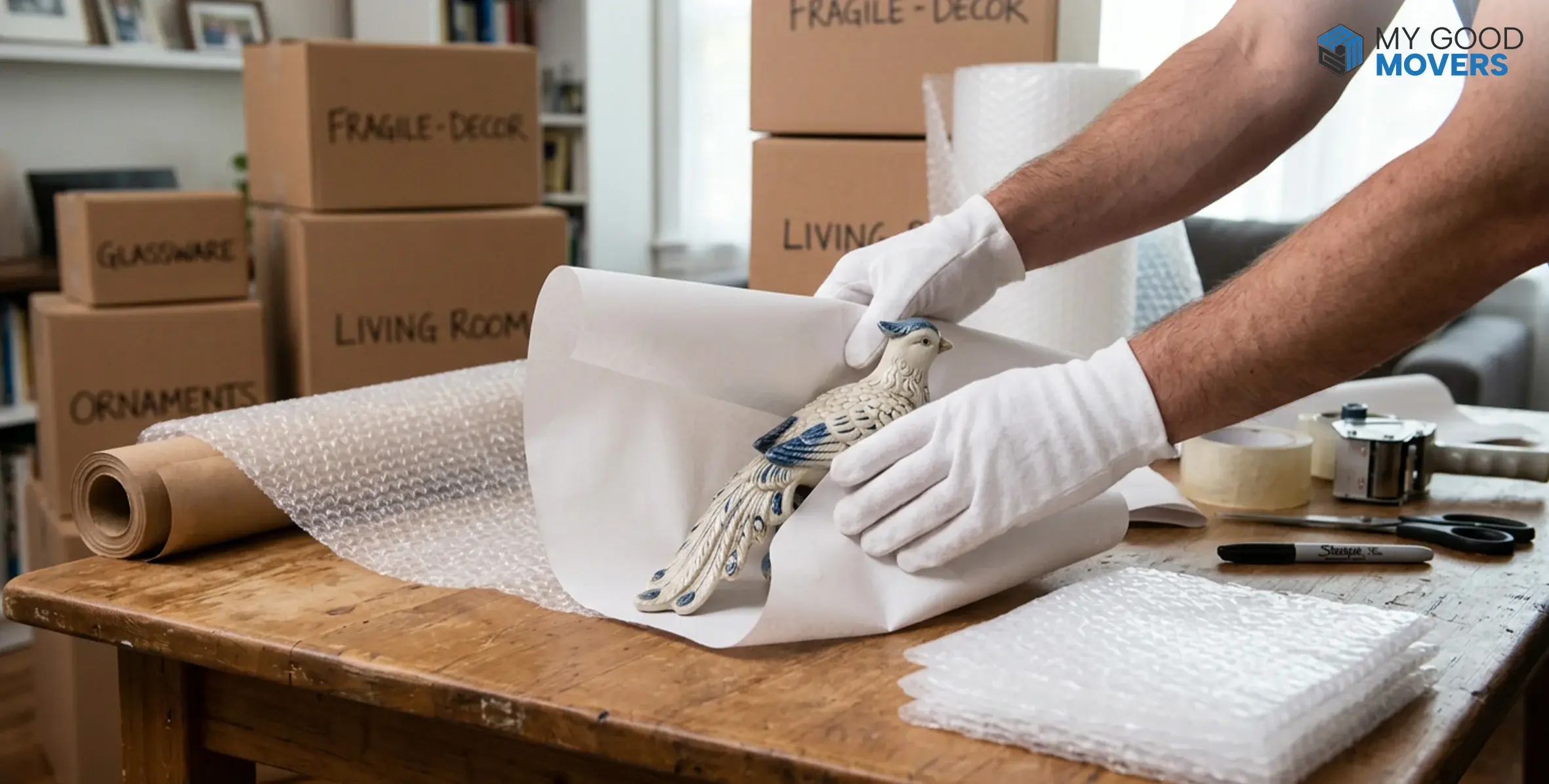
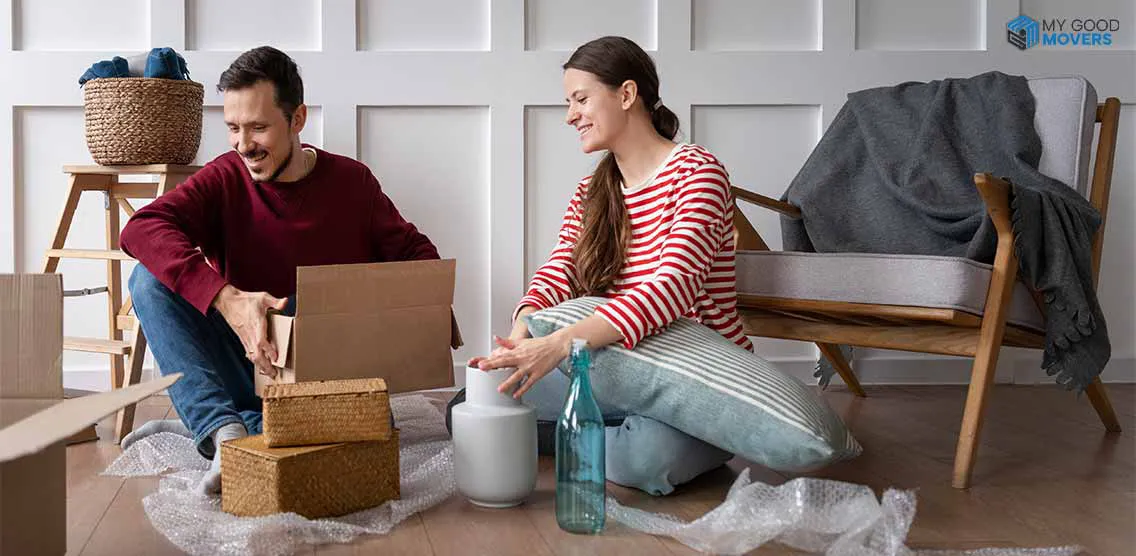
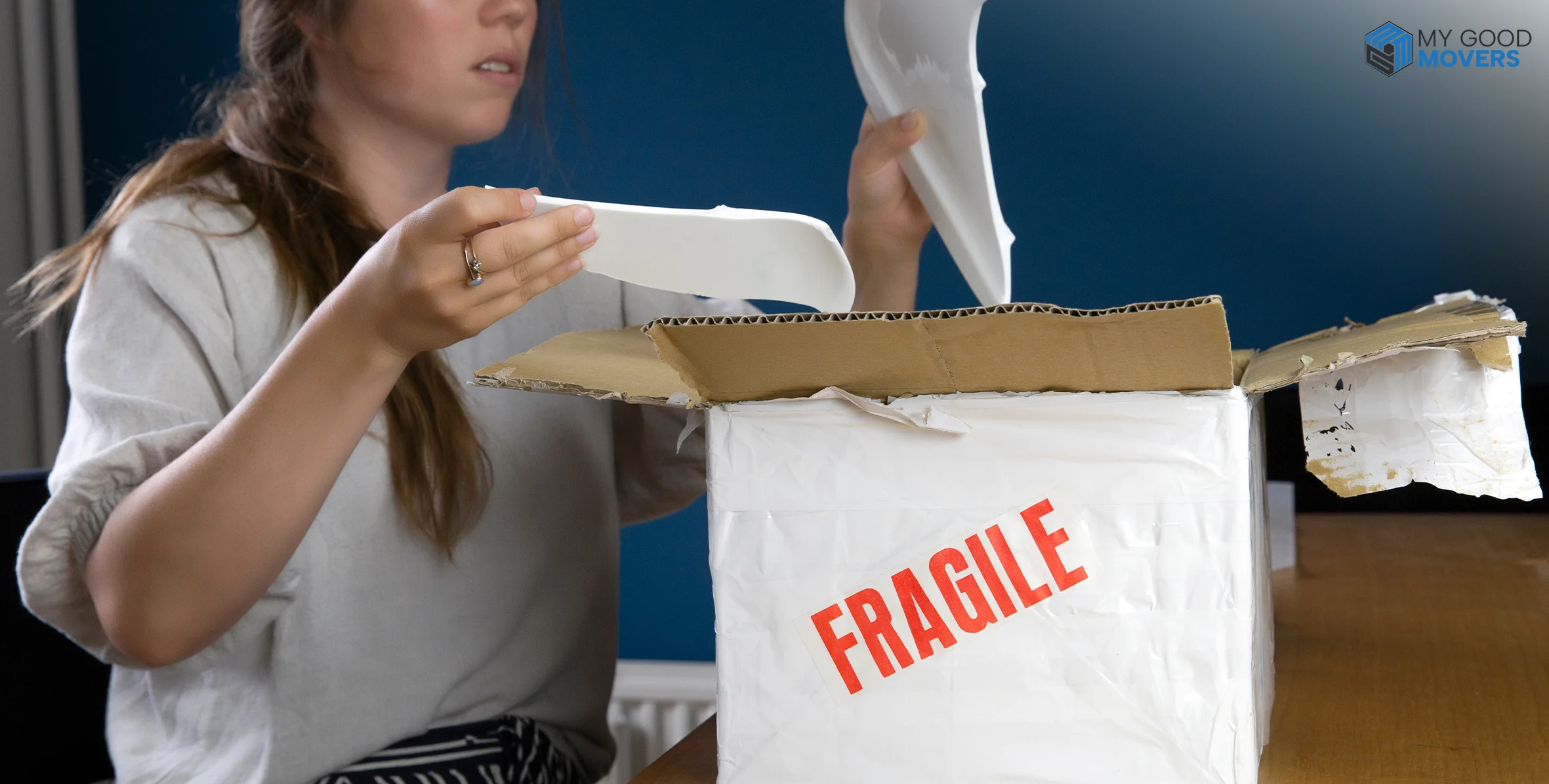
Fragile items should never be packed loose or wrapped together in groups. When glass, ceramic, or delicate decor comes into contact with another hard item, it can chip, crack, or scratch during the move.
Pack each fragile item separately before placing it in the box.
Fragile Items Include:
- Plates
- Glasses
- Bowls
- Vases
- Lamps
- Picture frames
- Mirrors
- Ceramics
- Collectibles
- Decorative pieces
Use packing paper, bubble wrap, foam sheets, or soft cloth, depending on the item. Add cushioning at the bottom of the box before placing fragile items inside.
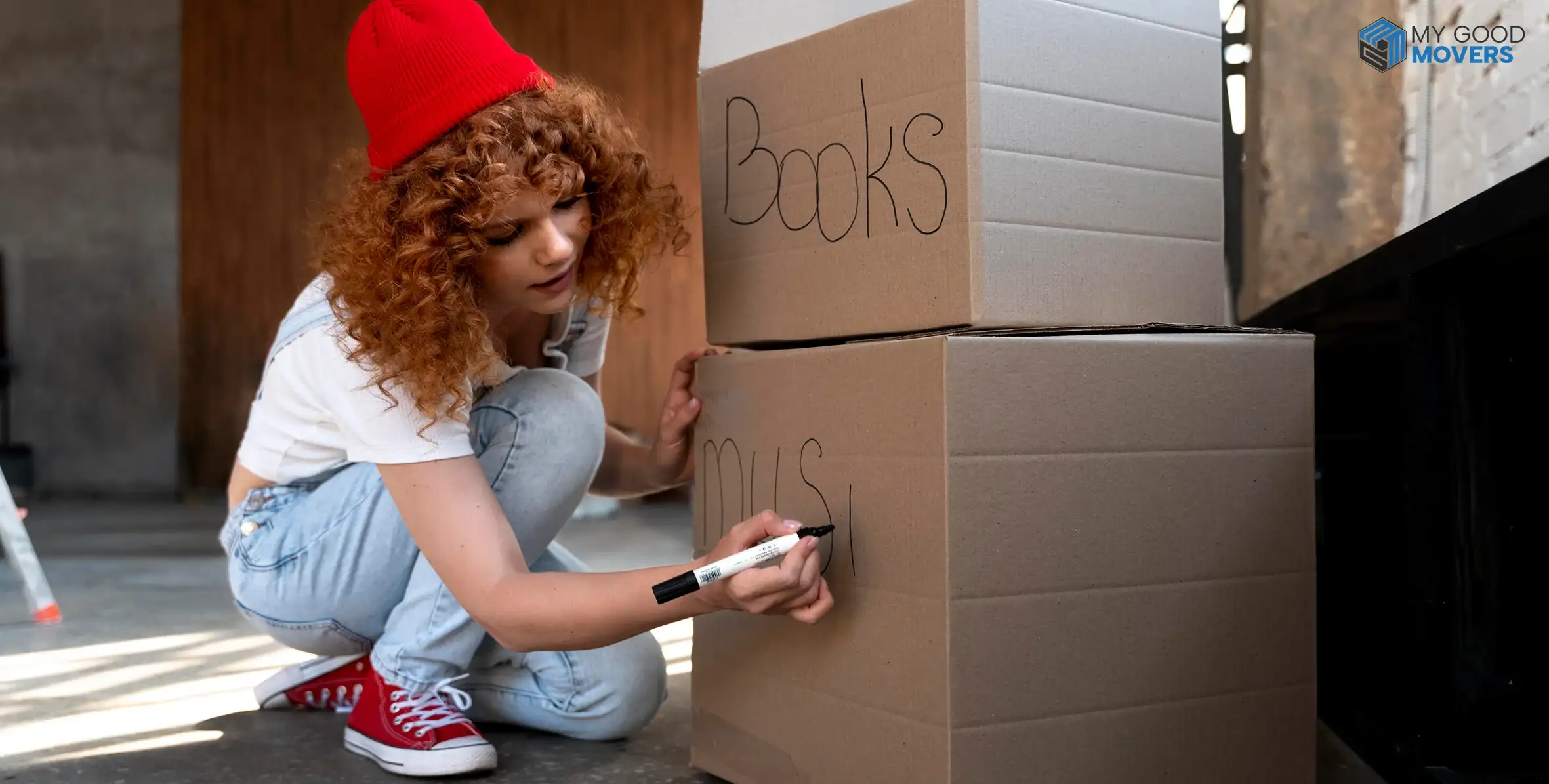
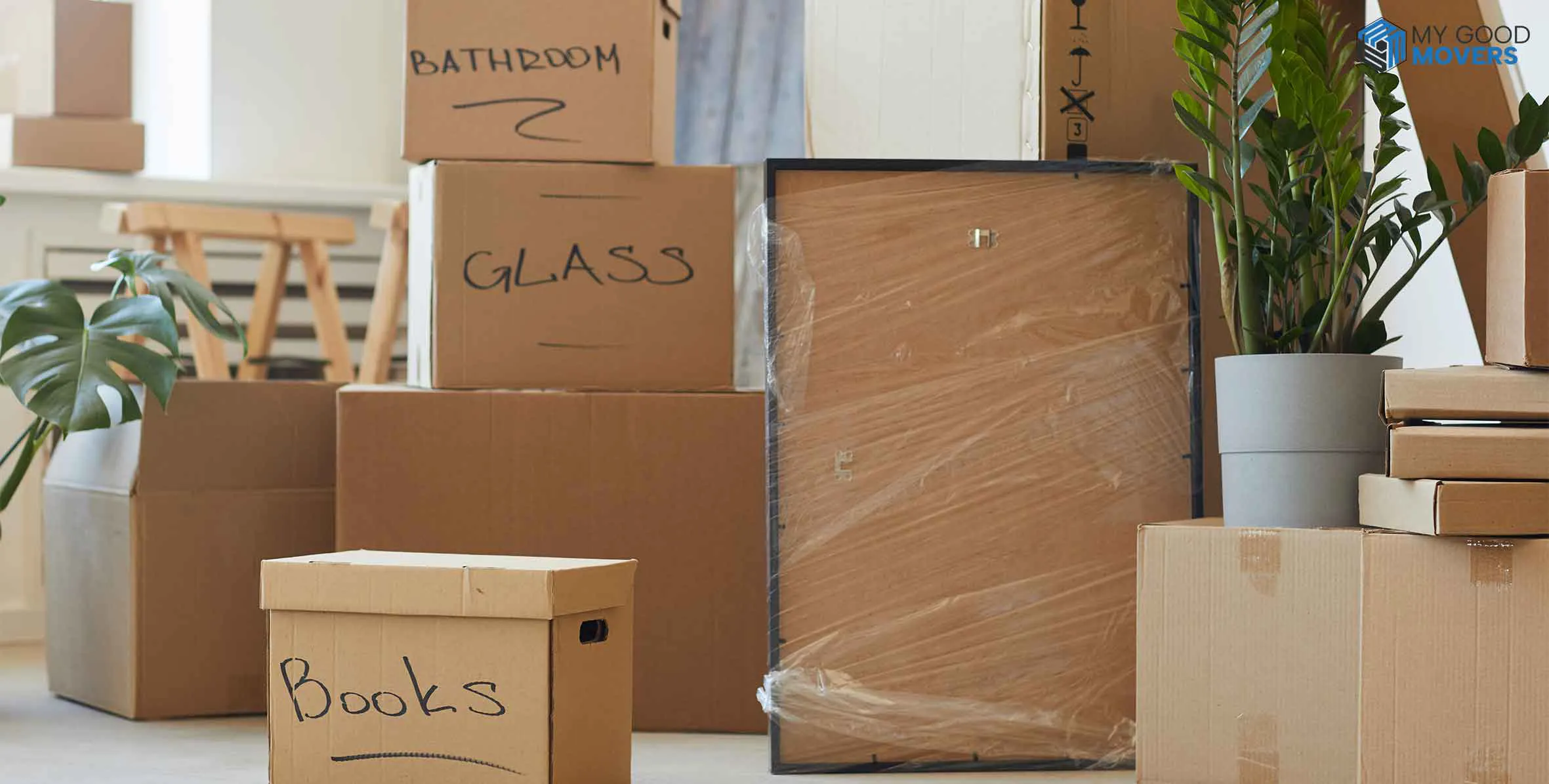
A clear system for labeling moving boxes makes it easier to show which boxes are fragile, heavy, or need to stay upright.
Dishes and glassware need special attention because they are some of the easiest items to break during a move. Plates can crack under pressure, glasses can chip at the rim, and bowls can break if they hit each other inside the box.
A Safe Dish-Packing Method Looks Like This:
| Step | What to Do |
|---|---|
| Step 1 | Add cushioning to the bottom of the box |
| Step 2 | Wrap each dish or glass separately |
| Step 3 | Place plates vertically |
| Step 4 | Fill gaps between items |
| Step 5 | Add padding on top |
| Step 6 | Seal the box and label it “Fragile” |
Electronics can be damaged by impact, pressure, dust, moisture, or missing cables. Original packaging works best when packing electronics for moving because it is already designed to support the device and limit movement.
Before Packing Electronics:
- Back up important files
- Take photos of cable connections
- Remove batteries or loose parts
- Wrap devices with bubble wrap or soft padding
- Put cords and remotes in labeled zip bags
- Keep electronics away from liquids
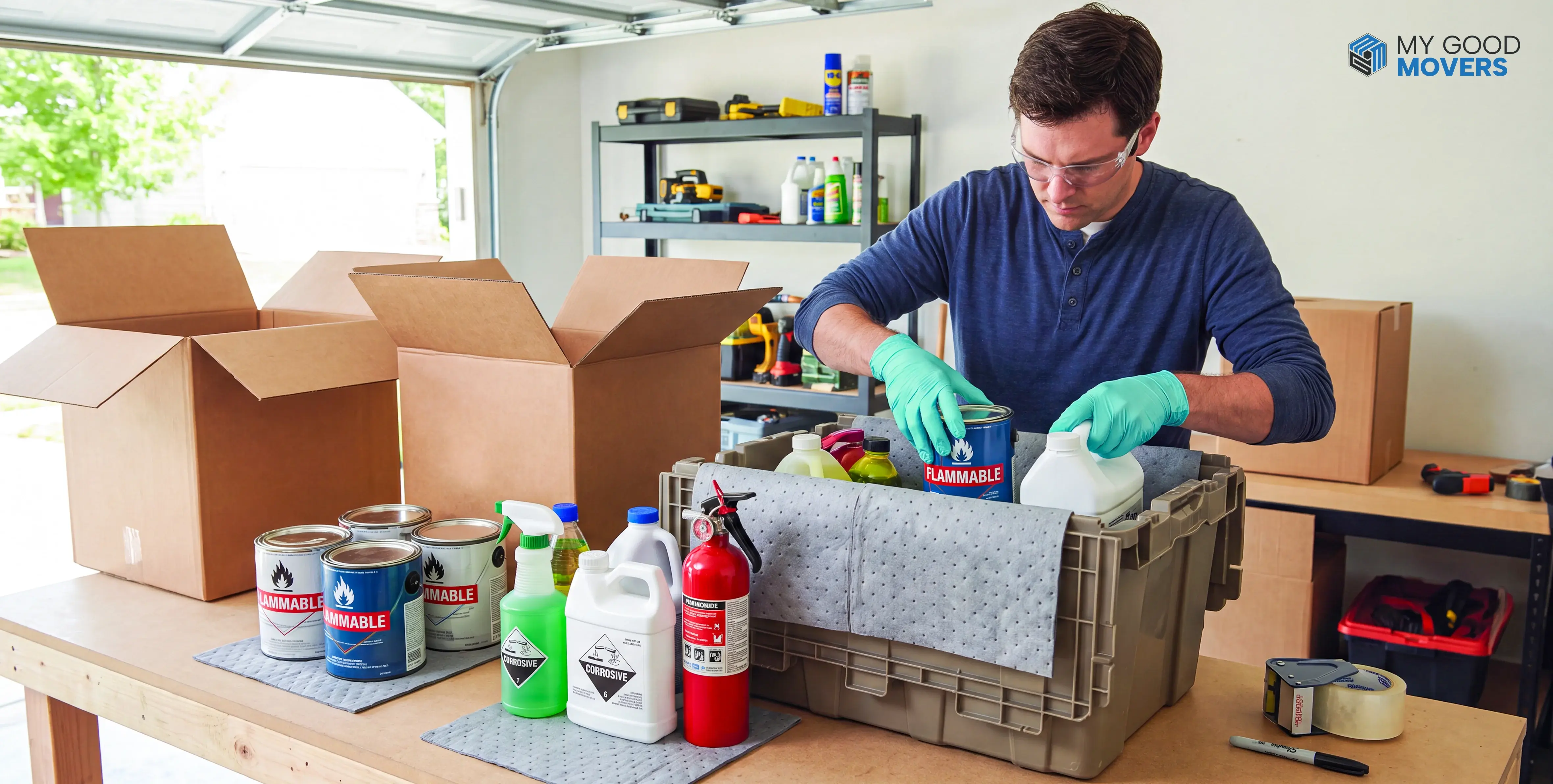
Liquids can leak and damage clothes, books, documents, electronics, or other boxes. Extra care is needed when packing toiletries because shampoos, oils, lotions, and other liquids can leak into nearby boxes.
Before Packing Any Bottle:
- Remove the cap
- Cover the opening with plastic wrap
- Tighten the cap again
- Place the bottle inside a zip bag
- Keep bottles upright in the box
Knives, scissors, tools, and other sharp items should never go loose inside a moving box.
An exposed blade or pointed edge can cut through wrapping, damage nearby belongings, tear the box, or injure someone who reaches inside.
Cover every sharp edge before you pack it.
Pack Sharp Items Like This:
| Item | Safer Way to Pack It |
|---|---|
| Kitchen knives | Use blade guards or cardboard sleeves, then wrap securely |
| Scissors | Close them fully and cover the pointed end |
| Hand tools | Wrap sharp or pointed ends before boxing |
| Garden tools | Cover blades, teeth, or pointed sections |
| Skewers or similar items | Bundle them together and cover both ends |
Some items are too important to place in regular moving boxes. Even if you hire trusted movers, personal documents and valuable items should stay with you.
Keep These Items in a Personal Bag or Folder:
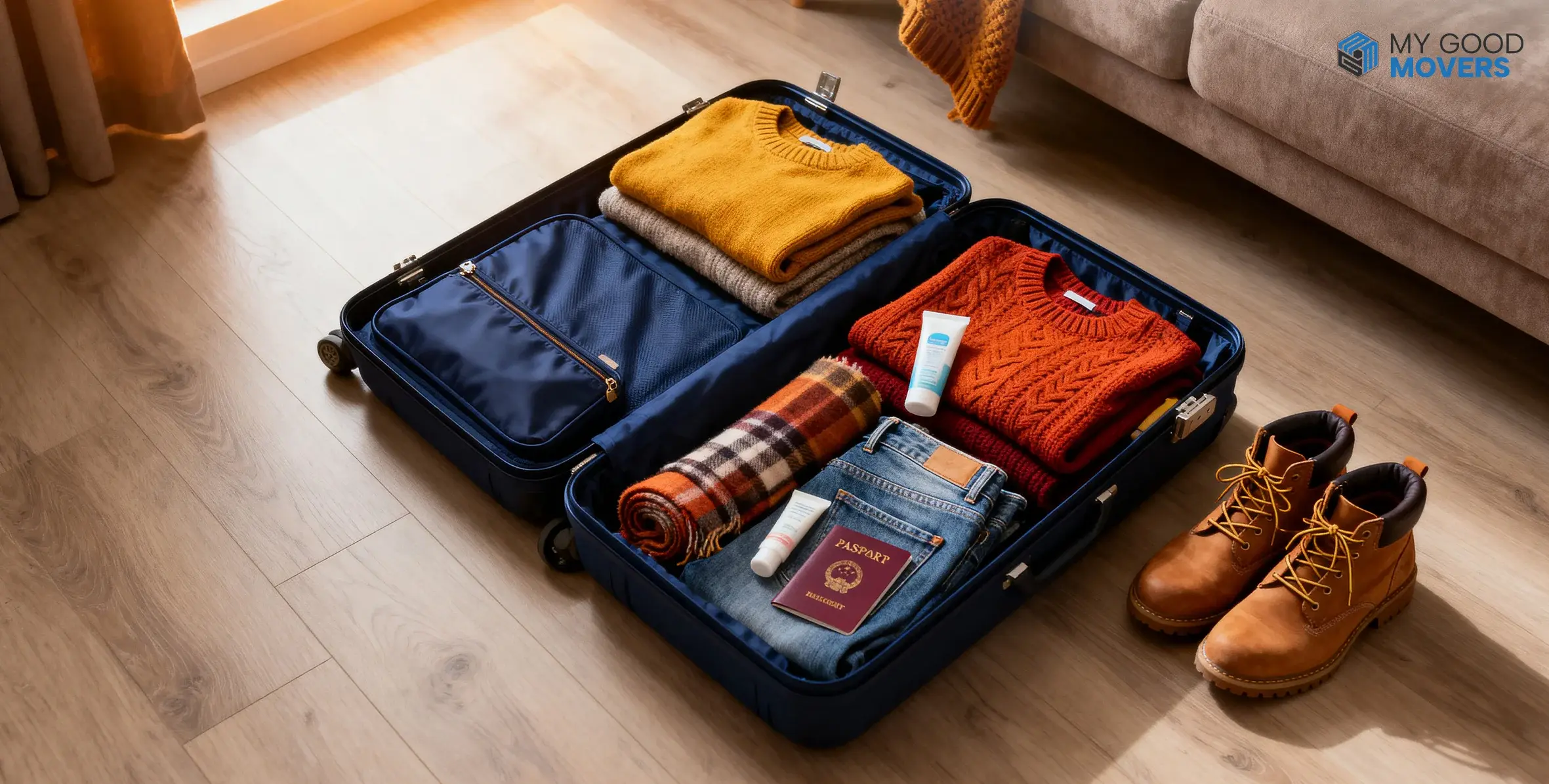
- Passports
- IDs
- Birth certificates
- Medical records
- Bank documents
- Jewelry
- Cash
- Prescription medications
- Moving contracts
- Insurance papers
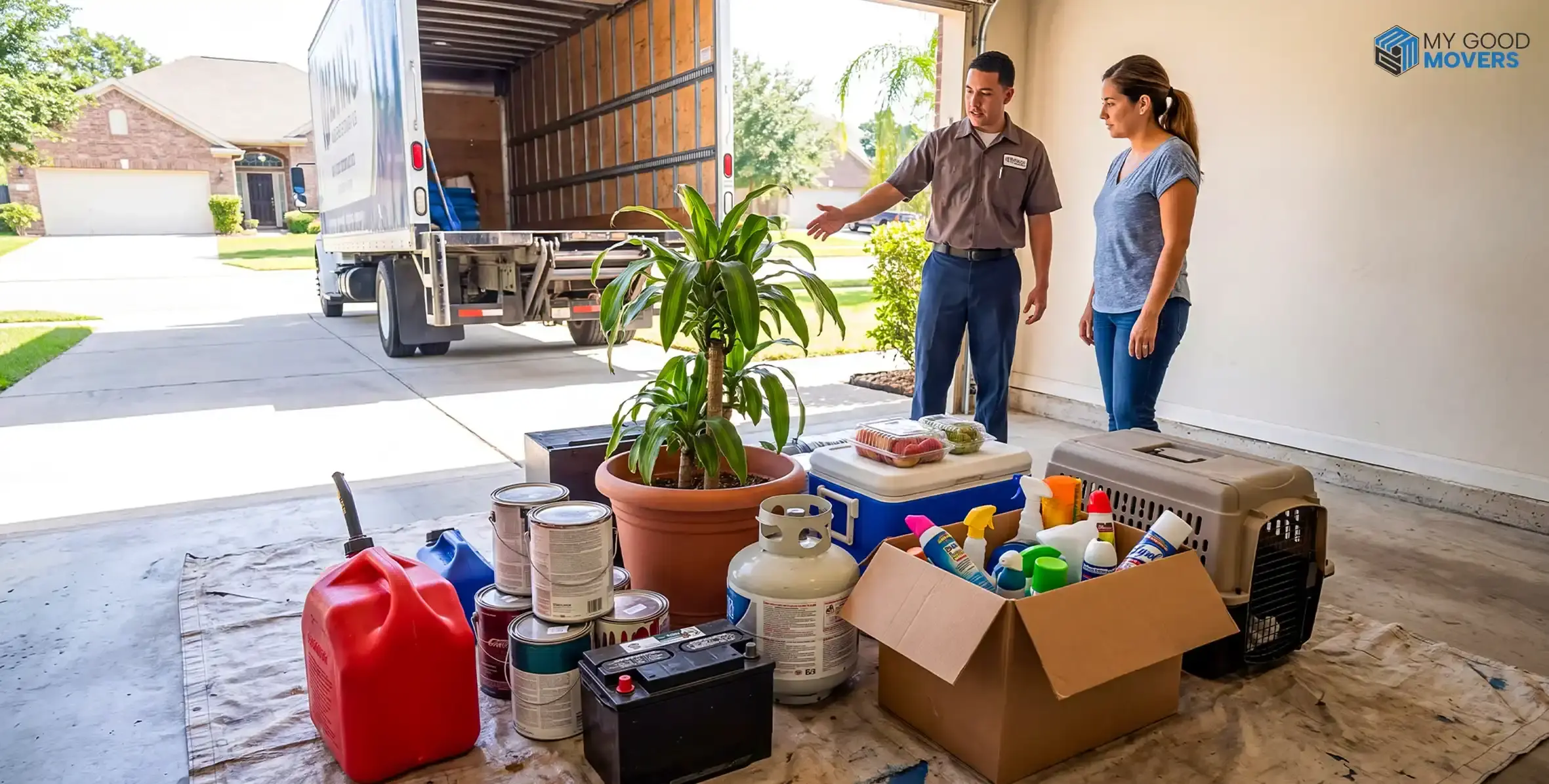
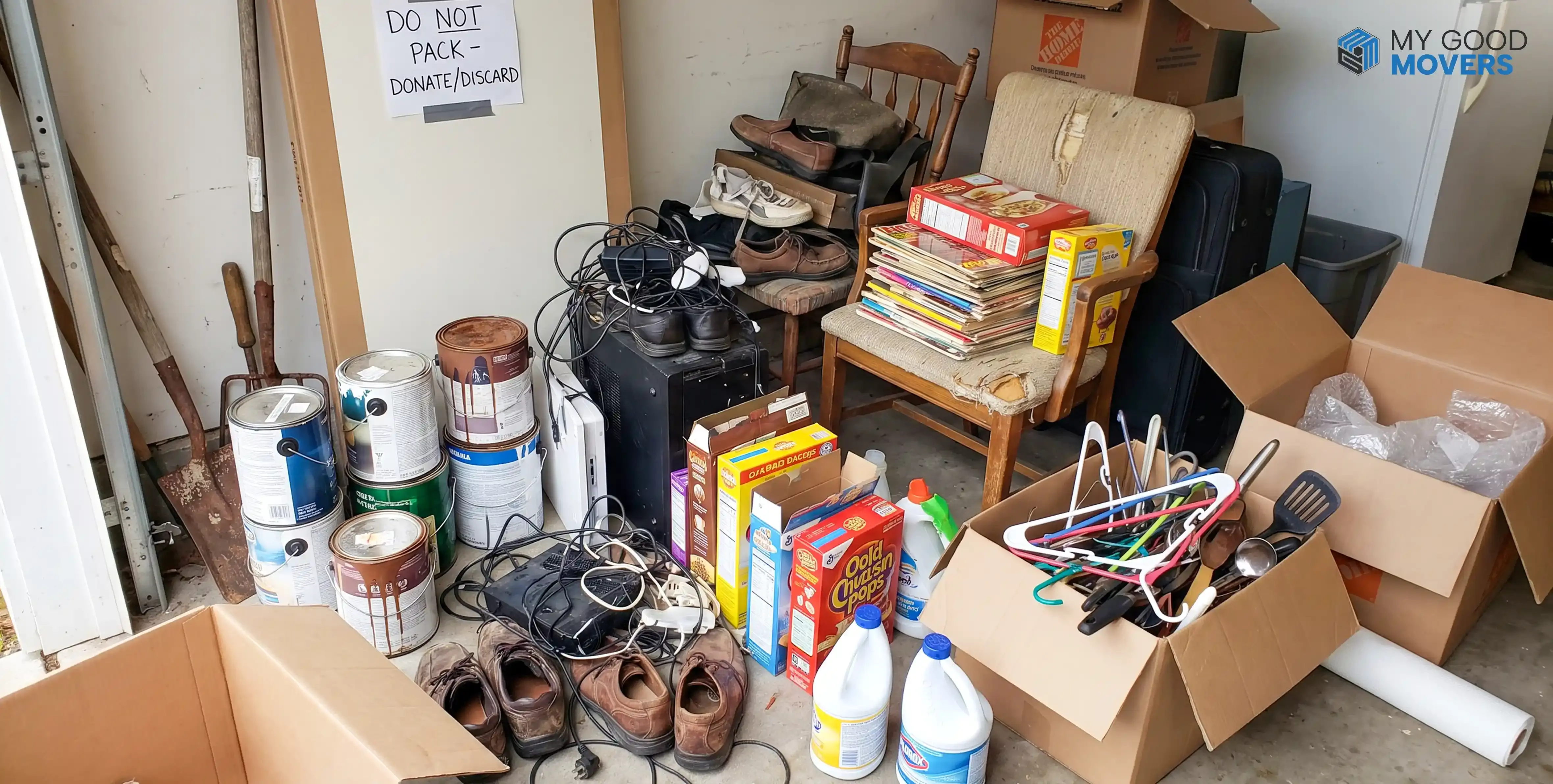
Not every item should go inside a moving truck. Some items are unsafe, restricted, perishable, or too valuable to risk. That’s why it’s important to know what not to pack when moving.
Avoid Packing:
- Gasoline
- Propane tanks
- Paint thinner
- Fireworks
- Aerosols
- Open food
- Frozen or refrigerated food
- Important documents
- Jewelry
- Cash
- Medications
- Leaking bottles
Before a packed box leaves the room, give it one last check. This is not the time to repack everything. It is simply a quick way to catch a problem before the box is stacked, lifted, or loaded onto the truck
Use This Final Check:
| Check | What You Want to See |
|---|---|
| Box shape | Sides are not badly bulging |
| Top | Closes flat without forcing it |
| Bottom | Feels firm when the box is lifted |
| Weight | Manageable for safe handling |
| Contents | Nothing poking through the cardboard |
| Liquids | Sealed and kept upright |
| Label | Room name and special handling notes are easy to see |
| Outside | No loose tape, torn areas, or exposed edges |
Lift the box a few inches before it goes into the loading area. If the bottom starts to bend or the box feels unstable, fix it.
Also look at the top. Boxes with rounded or bulging tops are harder to stack safely and can put pressure on nearby boxes.
Want a Complete Packing Plan?
Stop guessing what to pack next. Follow a clear packing plan that helps you move room by room without the usual last-minute chaos.
Read How to Pack for a MoveWhen Should You Hire Professional Packers?
The best packing and moving companies can help when your move is large, involves fragile items, is rushed, or feels stressful.
They’re also helpful for long-distance and interstate moves, where your belongings need extra protection along the way.
Hiring Professional Packers Only If:
- You have many fragile items
- You own antiques, artwork, or collectibles
- You are moving on a short timeline
- You have a large home
- You have health or mobility limits
- You want less stress before moving day
- You are moving across state lines
- Your mover offers clear packing service pricing