


One badly packed box is all it takes to ruin books you’ve owned for years.
If you are wondering how to pack books for moving without damaging them, the safest approach is to use small, sturdy boxes, pack books based on their condition and size, and prevent movement inside the box during transport.
Sounds simple, but this is where most people make mistakes.
Books may sit quietly on shelves for years, yet moving them is completely different. A single box can become too heavy within minutes, hardcover corners can start rubbing against each other, pages can bend under pressure, and weak boxes can suddenly split from the bottom while being carried.
That is why books need a different packing approach than most household items.
The good news is that a few smart packing decisions can prevent almost all of these problems before moving day even begins.
So before you start packing books into random boxes and hoping they survive the move, let’s discuss the steps that actually keep your books protected, organized, and damage-free.
Why Books Need Special Packing During a Move
Books may seem easy to pack, but they can get damaged quickly if you do not handle them the right way. That is why packing books for moving needs a little more care than packing regular household items.
1. They Get Heavy Fast
Books become heavy before you even realize it. A box that looks half full can still be hard to lift. This is why you should use small, strong boxes instead of filling large boxes with books.
2. Spines and Corners Can Bend
Books can move around inside the box during the move. When that happens, their corners can bend, pages can fold, and spines can crack.
3. Moisture Can Damage Pages
Books do not handle moisture well. If they sit in a damp place or a humid moving truck, pages can warp, and covers can curl. A little protection can save them from long-term damage
4. Bad Stacking Can Ruin Their Shape
If books are packed unevenly, the pressure can bend covers and pages. This is why the main goal is to place them in a way that keeps them straight and stable.
5. Valuable Books Need Extra Care
Some books are rare, old, signed, or personally important. These books should not be packed with everything else. It is better to keep special books separate and give them extra protection.
Important Tip: Place a silica gel packet inside boxes with rare or antique books. Use acid-free packing paper instead of newspaper. Line the interior of the box with a plastic bag as a moisture barrier during long-distance moves.
Essential Supplies for Packing Books
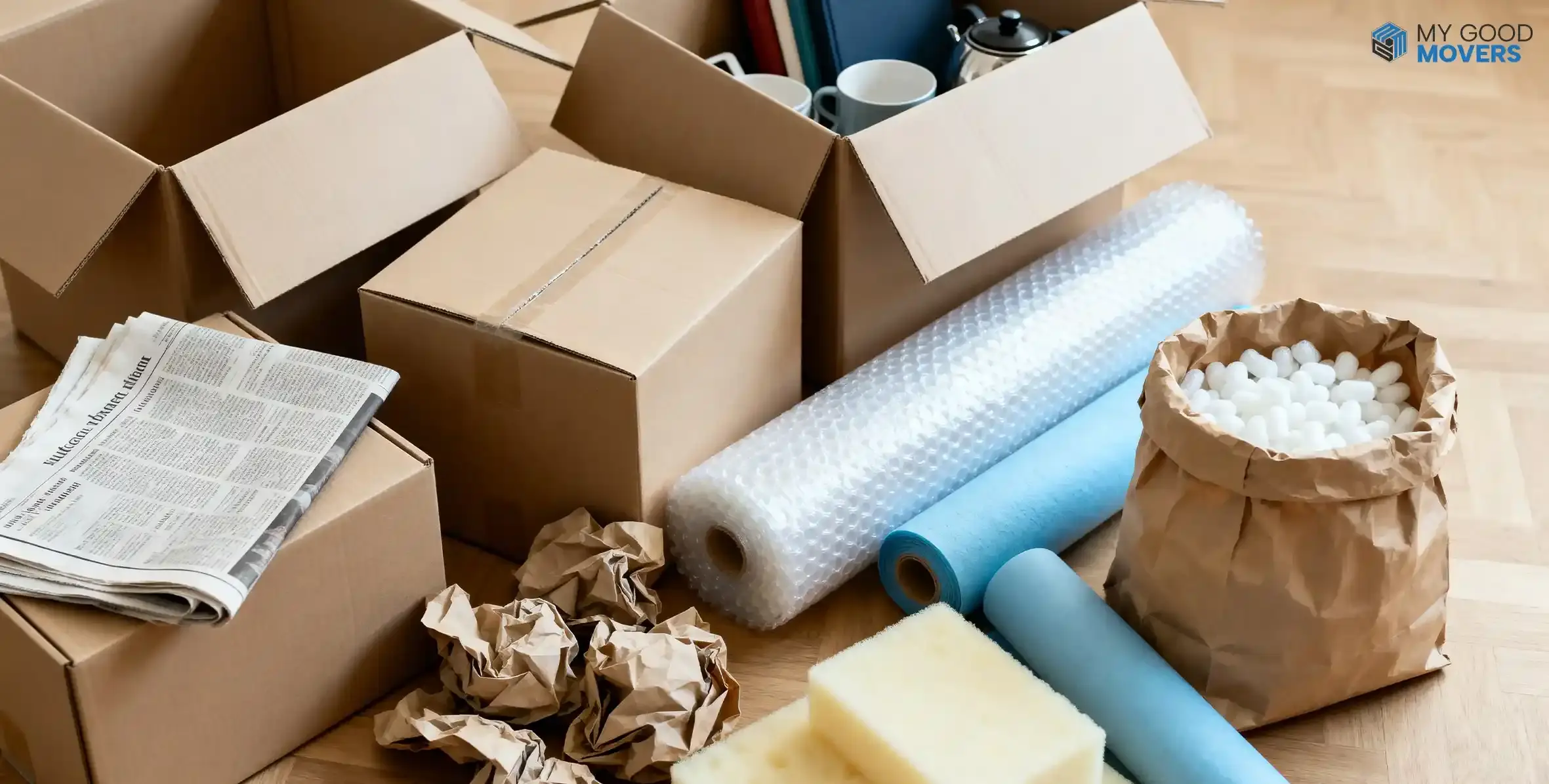
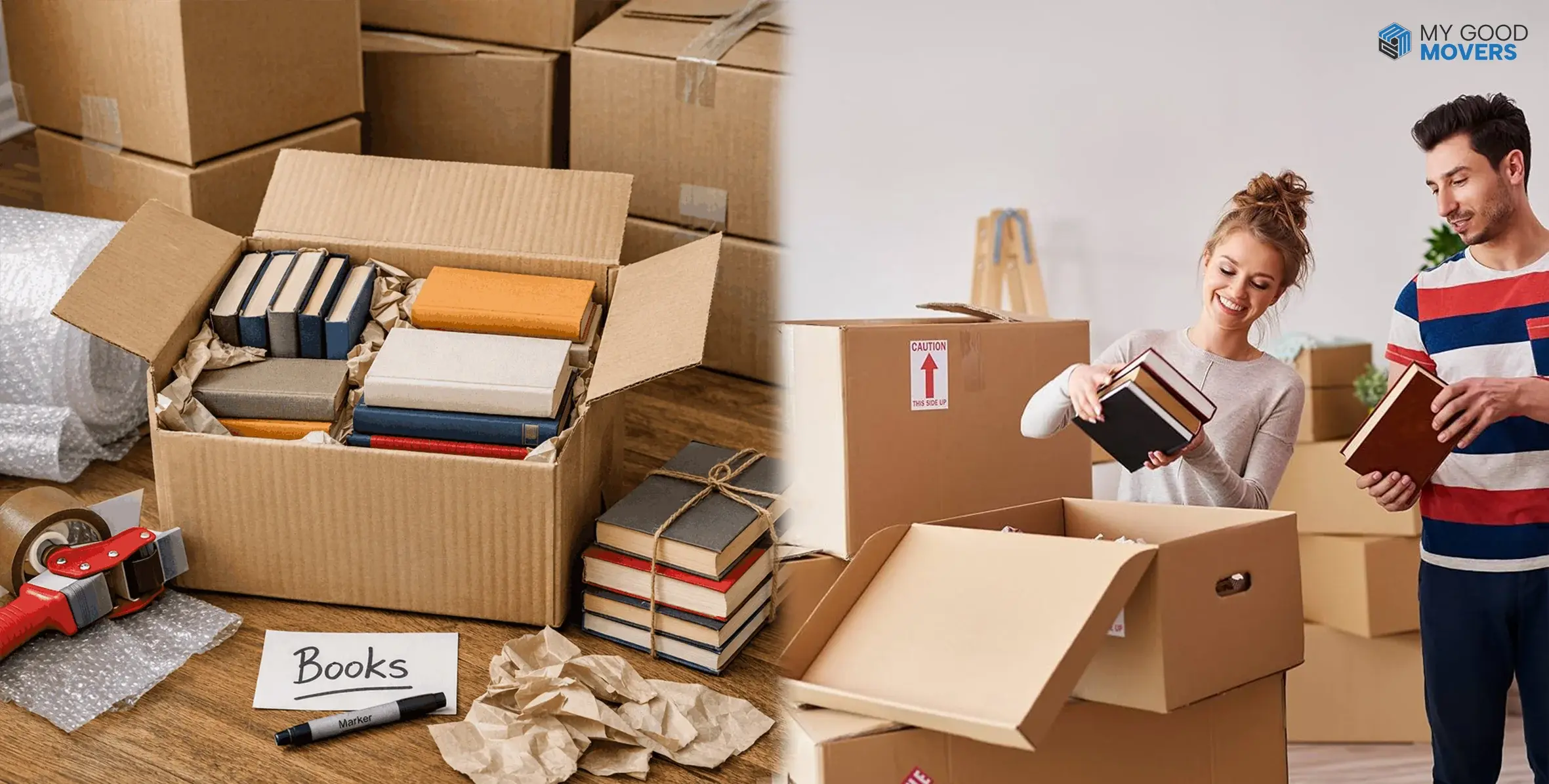
Before you start packing, keep everything in one place. It saves time and stops you from rushing later. When you are packing books for moving, the right supplies help protect your books from weight, moisture, and movement inside the box.
For a normal home collection of around 50 to 100 books, this is a good estimate:
| Supply | How Much You May Need | Why You Need It |
|---|---|---|
| Small sturdy moving boxes | 5 to 10 boxes | Small boxes are the best boxes for packing books because they do not become too heavy. |
| Packing paper | 40 to 80 sheets | Use it to wrap delicate books and fill empty gaps inside the box. |
| Bubble wrap | 1 small roll | Good for rare, expensive, or hardcover books that need extra care. |
| Packing tape | 1 to 2 rolls | Books are heavy, so tape the bottom of each box properly before filling it. |
| Labels and markers | 1 marker and 10 labels | Label each box by room, book type, or priority so unpacking feels easier. |
| Acid-free paper | 10 to 20 sheets | Use this for rare, antique, or signed books because regular paper may not be safe for long contact. |
| Silica gel packets | 1 to 2 packets per box | These help control moisture, especially if the move is long or the weather is humid. |
| Plastic bags | 5 to 10 bags | Useful for adding moisture protection around special books, but avoid sealing damp books inside. |
| Box cutter or scissors | 1 | You will need this for cutting tape, paper, and wrap while packing. |
| Corner protectors | 4 per valuable book | These help protect sharp corners on expensive or collectible books. |
Not Sure How Many Boxes You Need?
Use our moving box calculator to quickly estimate how many boxes you need for your move.
Calculate Your Moving BoxesThe Right Way to Pack Every Type of Book
Different books need different packing methods to stay protected during a move.
| Book Type | Box Type | Weight Limit | Key Precaution |
|---|---|---|---|
| Hardcover Books | Small sturdy cardboard | 30–40 lbs | Avoid over stacking spines |
| Paperbacks | Medium reinforced box | 35–45 lbs | Prevent bent covers and folded pages |
| Rare / Antique Books | Double-wall reinforced | 25–35 lbs | Add silica gel and acid-free paper |
| Coffee Table Books | Wide shallow box | 30 lbs max | No vertical pressure or stacking |
| Textbooks / Academic | Small heavy-duty box | 40 lbs max | Distribute weight evenly |
| Comics / Magazines | Plastic storage bin | 20–30 lbs | Prevent humidity and corner bending |
| Damaged / Old Books | Small reinforced box | 25–30 lbs | Pack flat to reduce binding stress |
| Mixed Collections | Small moving box | 35–40 lbs | Heavier books are always at the bottom |
How to Pack Books for Moving (Step by Step)
Packing books may seem simple at first, but doing it correctly can save your collection from damaged covers, bent pages, and broken boxes.
Follow these practical steps to keep your books safe and organized during moving.
Step 1: Sort Your Books Before Packing
Start by going through your collection and separating books by size, weight, and condition. This makes packing easier and prevents heavy books from crushing delicate ones.
If you find books you no longer need, donate or sell them before moving day to reduce extra weight and save space.
Quick Tip: Keep valuable, signed, or antique books in a separate pile for extra protection.
Step 2: Clean Dust and Debris
Books sitting on shelves for years usually collect dust along the edges and covers. Wipe them gently with a dry microfiber cloth before packing.
This step keeps boxes cleaner and prevents dirt from spreading onto delicate pages during transit.
Step 3: Gather the Right Packing Supplies
Using proper packing materials makes a huge difference when moving books safely. Small sturdy boxes work best because books become heavy very quickly.
You may also need:
- Packing paper
- Bubble wrap
- Strong packing tape
- Labels and markers
- Silica gel packets for moisture protection
Step 4: Choose Small, Strong Boxes
Avoid using large moving boxes for books. Even a medium-sized box can become too heavy to lift safely once filled.
Small boxes distribute weight better and reduce the risk of boxes tearing or collapsing during the move.
Avoid This Mistake: Never overfill a box just to save space.
Step 5: Wrap Fragile or Valuable Books Separately
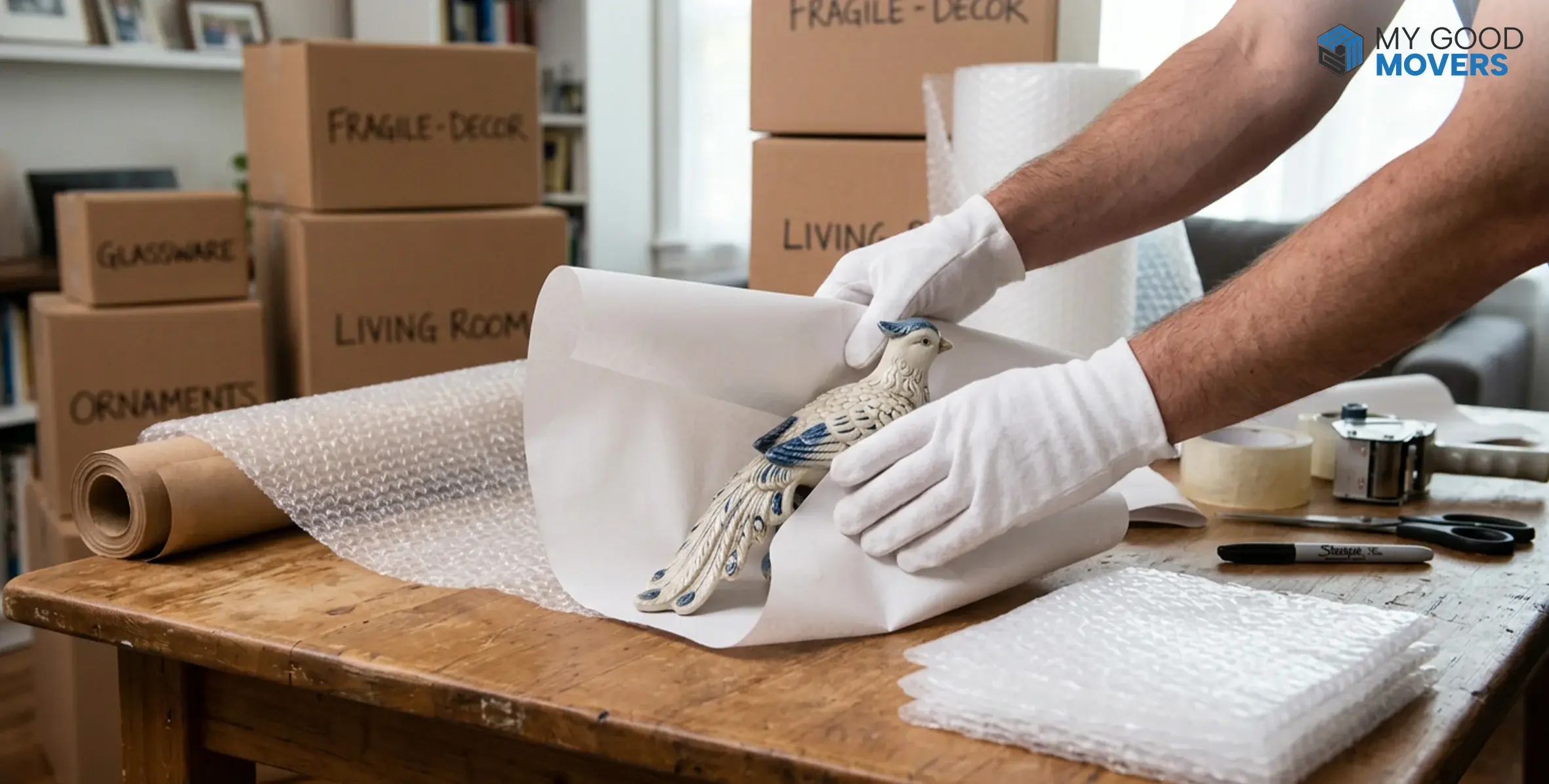
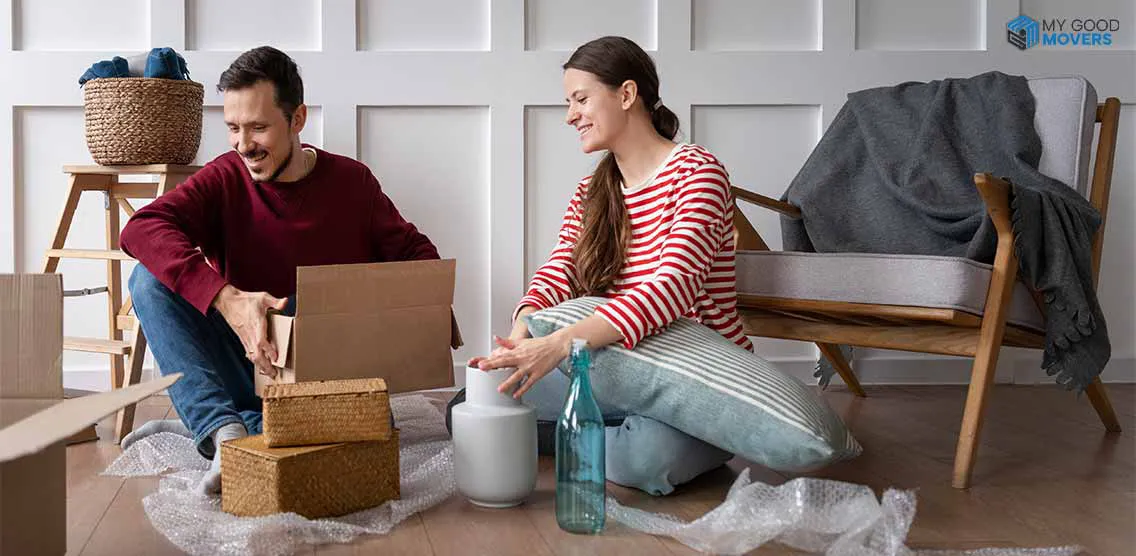
Rare, antique, or hardcover books deserve extra protection. Wrap them individually using packing paper or bubble wrap to protect the covers and bindings.
For collectible books, avoid newspapers because the ink can transfer onto pages and covers.
Step 6: Pack Books the Right Way
Place heavier books at the bottom of the box and lighter ones on top. You can pack books:
- Flat
- Upright like on a shelf
- Spine-down for extra support
Avoid packing books with the spine facing upward because it can damage the binding over time.
Step 7: Fill Empty Gaps Inside the Box
Empty spaces allow books to shift during transportation. Use packing paper, towels, or soft materials to fill gaps and keep everything secure.
A tightly packed box helps prevent bent corners and damaged pages while the truck is moving.
Step 8: Seal Boxes Securely
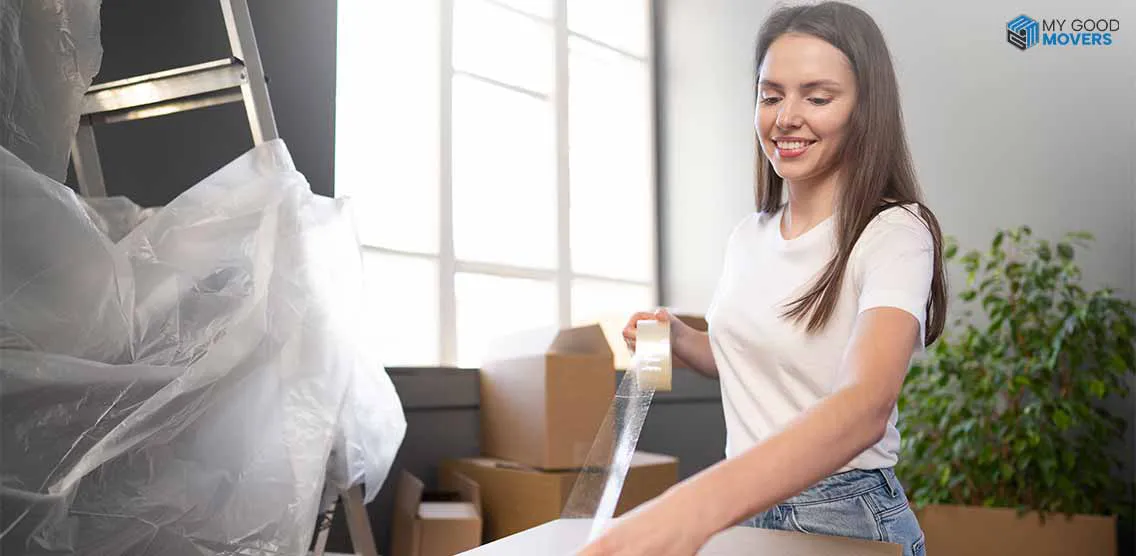
Once the box is packed, seal the bottom and top with strong packing tape. Reinforce the edges if the box feels heavy.
Give the box a gentle shake. If books move around inside, add more padding before sealing completely.
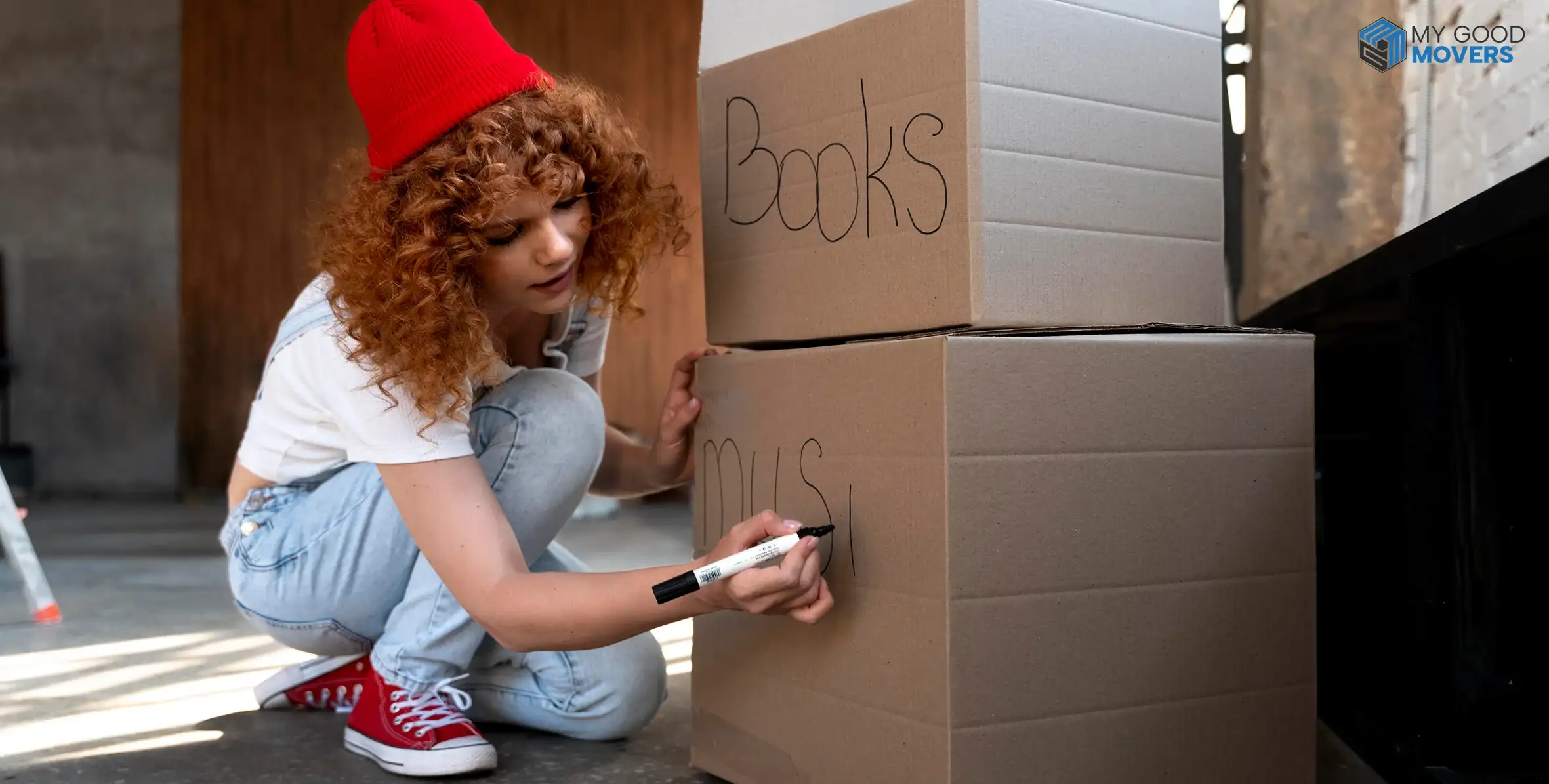
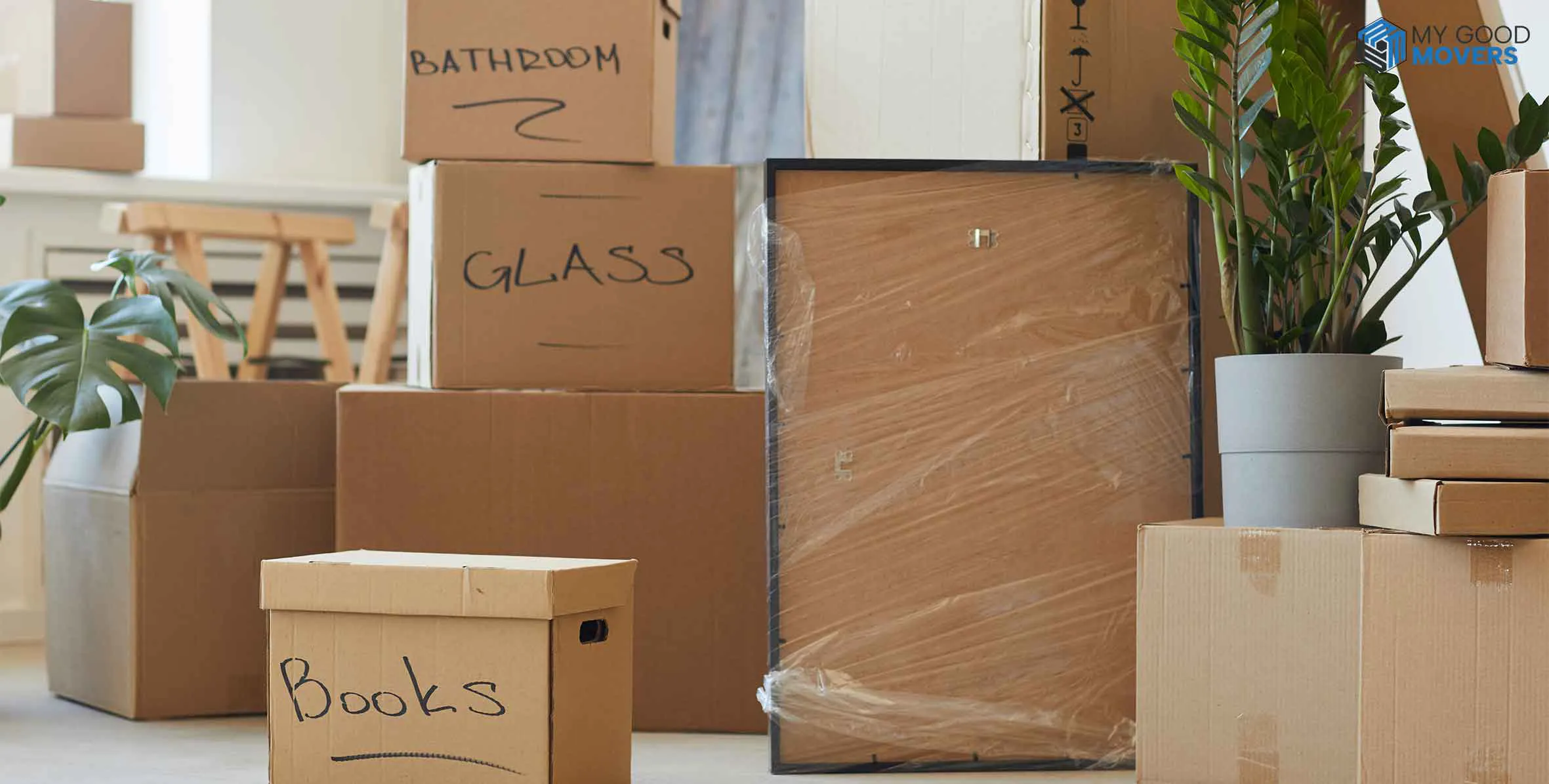
Step 9: Label Every Box Clearly
Label each box with categories like:
- Books
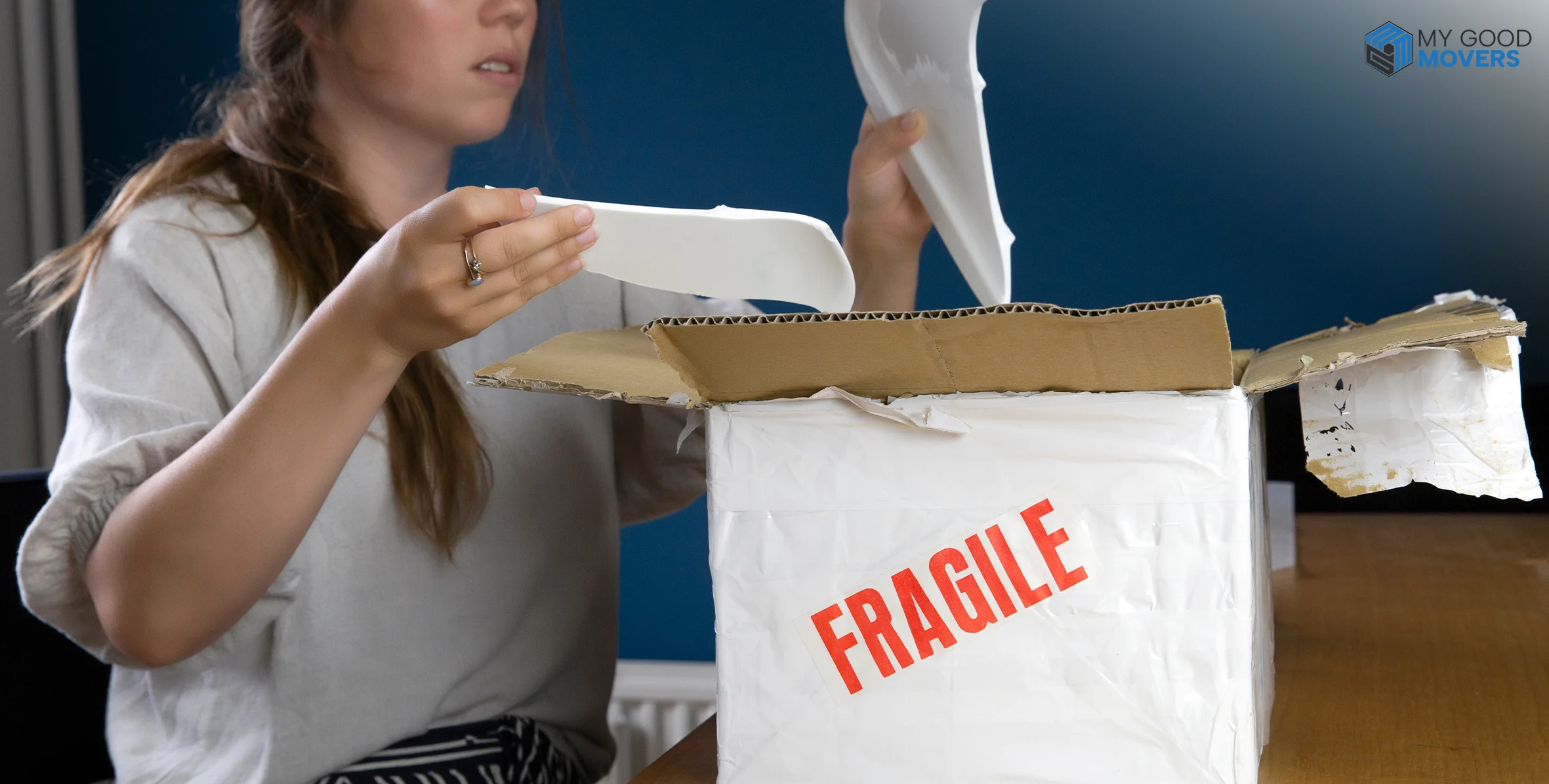
- Fragile
- Heavy
- Office Books
- Kids’ Books
Clear labels make unpacking faster and help movers handle the boxes more carefully.
Pro Labeling Habit
Numbering boxes and logging contents makes unpacking 60% faster. Use a thick permanent marker; labels need to be readable from a distance when the truck is half-unloaded.
Step 10: Store Boxes in a Dry Spot During the Move
Keep packed books away from damp areas, direct sunlight, or excessive heat while moving. Moisture and high temperatures can damage pages, covers, and glue bindings surprisingly fast.
If possible, place book boxes in climate-safe areas during long-distance moves.
Packing More Than Just Books?
Once your books are ready, learn the best way to pack the rest of your belongings safely, neatly, and without last-minute stress.
Read How to Pack for a MoveIdeal Book Packing Positions
| Book Condition | Best Position | Why It Works |
|---|---|---|
| New Hardcovers | Upright, spine to side wall | Even weight, spine stays aligned |
| Fragile Old Books | Flat, cushioning between layers | Reduces binding pressure |
| Oversized / Coffee Table | Flat, max 3–4 per stack | Prevents cover warping |
| Paperbacks | Upright, similar heights together | Stops page folding and leaning |
| Damaged / Loose Binding | Individually wrapped, flat | No further page separation |
Alternative Ways to Pack and Transport Books
Cardboard boxes are useful, but they are not always the only choice. If you have heavy books, valuable books, or a short move, these options can make the job easier.
This is also helpful when you want to know how to move books without boxes.
Plastic Bins
Plastic bins are good for valuable books, comics, and long-distance moves. They have stronger walls than cardboard boxes and protect books better from moisture. Keep the weight under 30 to 35 lbs so the bin stays easy to lift.
Rolling Suitcases
Rolling suitcases are a smart option for heavy books because you do not have to carry all the weight by hand. Place heavier books at the bottom, pack them flat, and fill empty spaces with clothes or towels so the books do not move around.
Eco-Friendly Options
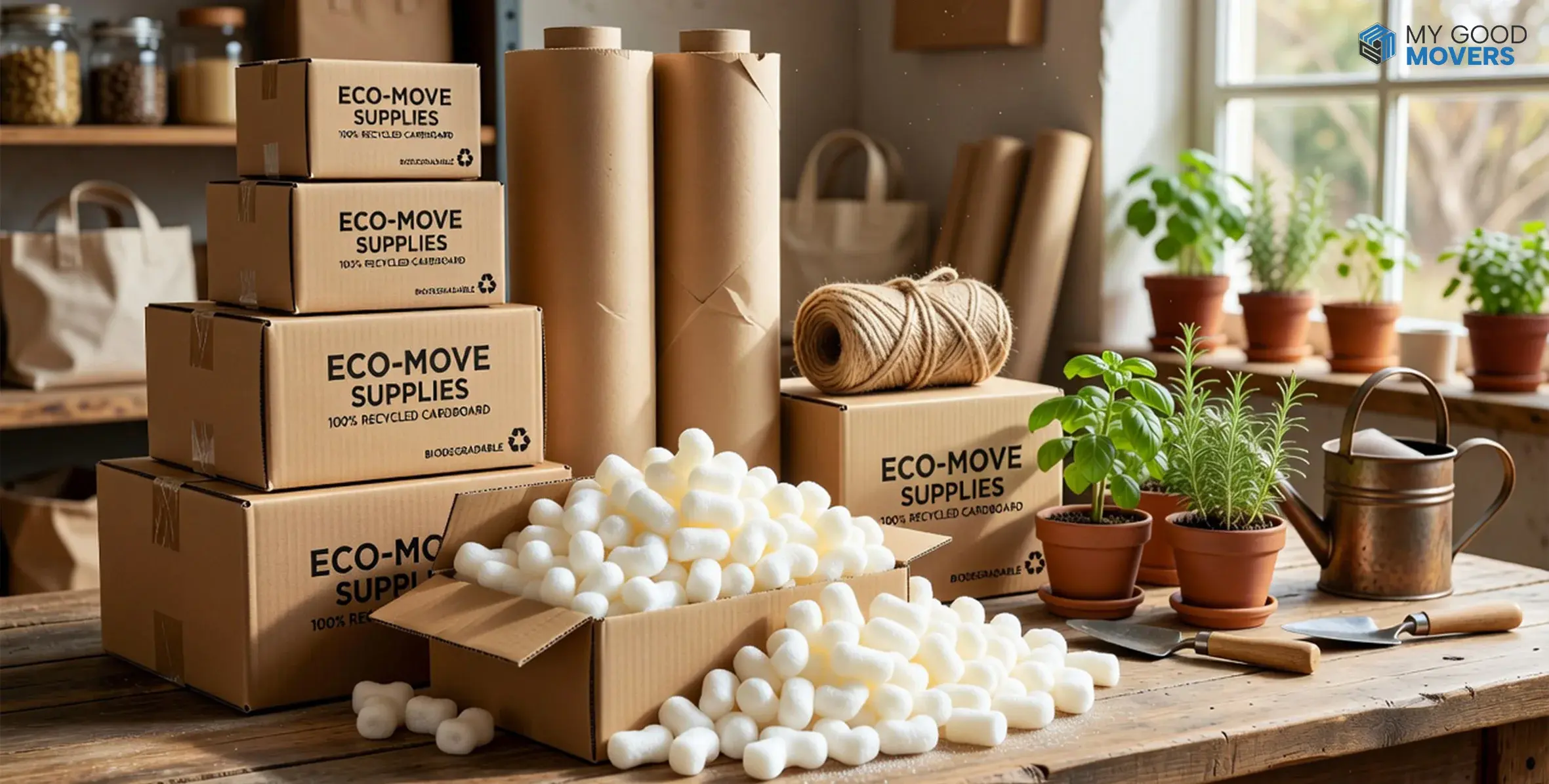
Reusable fabric bins, cotton totes, towels, blankets, and recycled packing paper can work well for short moves. These are practical if you already have them at home and want to reduce waste. Just use them for lighter books because soft materials do not protect corners as well.
USPS Media Mail
USPS Media Mail can help when you want to ship books separately during a long-distance move. It is useful if delivery speed is not your main concern and you want to reduce the weight in your moving truck.
Common Mistakes That Damage Books During Moving
Most book damage stems from predictable errors. Avoid these, and you are already ahead of most people packing a move.
- Overpacking beyond weight limits: If a box hits 50 lbs, the seams will fail before the mover does.
- Using large boxes for books: Large boxes are built for pillows, not hardcovers; half-filled is already too heavy.
- Leaving space inside: Even one inch of gap lets books shift, slide, and collide the entire journey.
- Using newspaper as packing paper: Ink transfers permanently, and newspaper holds moisture against the cover.
- Packing spine-down or pages-up: The binding absorbs the full book weight and loosens with every road bump.
- Skipping the pre-pack dust wipe: Dust traps moisture in sealed boxes, accelerating paper damage on long hauls.