



The safest way to pack toiletries for moving is to remove any expired or damaged items, separate the products you will need during the trip, seal all liquids twice, and place the bottles upright in a small box or plastic bin.
Just imagine opening a bathroom box after a long moving day. Your shampoo has spilled, your mouthwash has leaked onto the towels, and you can't find your toothbrush because it's buried somewhere in the other boxes.
One unsecured bottle can create a much bigger mess than its size suggests.
A little preparation prevents most of these problems. You need the right supplies, a sensible sorting system, and a clear plan for liquids, glass bottles, makeup, grooming tools, medication, and products your mover may not accept.
Key Takeaways
✓ Remove expired, damaged, nearly empty, and easily replaceable products before packing.
✓ Keep medication and daily toiletries in a personal moving-day bag.
✓ Double-seal shampoo, lotion, mouthwash, and other liquids.
✓ Pack glass bottles separately with cushioning on every side.
✓ Ask your mover for a written prohibited-items list.
✓ Use several small containers instead of one heavy bathroom box.
What You Need to Pack Toiletries Safely
Gather these supplies before emptying the bathroom cabinets, and if you're buying boxes for the whole move, use our moving box calculator to estimate how many you'll need.
| Supply | Why You Need It |
|---|---|
| Small moving boxes | Keep toiletries at a manageable weight so nothing becomes too heavy to lift safely |
| A plastic storage bin with a secure lid | Resists moisture and contains leaks far better than plain cardboard |
| Resealable plastic bags (various sizes) | Isolates each liquid so one leak can’t spread to everything else in the box |
| Plastic wrap | Creates an extra seal beneath bottle caps, stopping leaks before they start |
| Packing tape | Secures caps, pumps, and box seams so nothing pops open in transit |
| Bubble wrap | Cushion glass bottles, perfume, and skincare jars against cracks and impact |
| Clean towels and washcloths | Fill gaps and cushion sturdy products while doubling as extra padding |
| Packing paper | Wraps dry or fragile products without adding bulk or weight |
| Cardboard dividers | Keep bottles upright and stop them from knocking against each other |
| Absorbent liners | Catch small spills before they reach the bottom of the box |
| Labels and a permanent marker | Identify contents and handling needs at a glance, before you have to open the box |
| A separate toiletry or travel bag | Holds what you need during the trip, kept separate from the sealed moving boxes. |
How to Pack Toiletries for Moving (Step by Step)
Here's how to pack your toiletries safely and keep everything organized.
Step 1: Sort and Declutter Your Toiletries
Moving half-empty bottles across the country rarely makes sense.
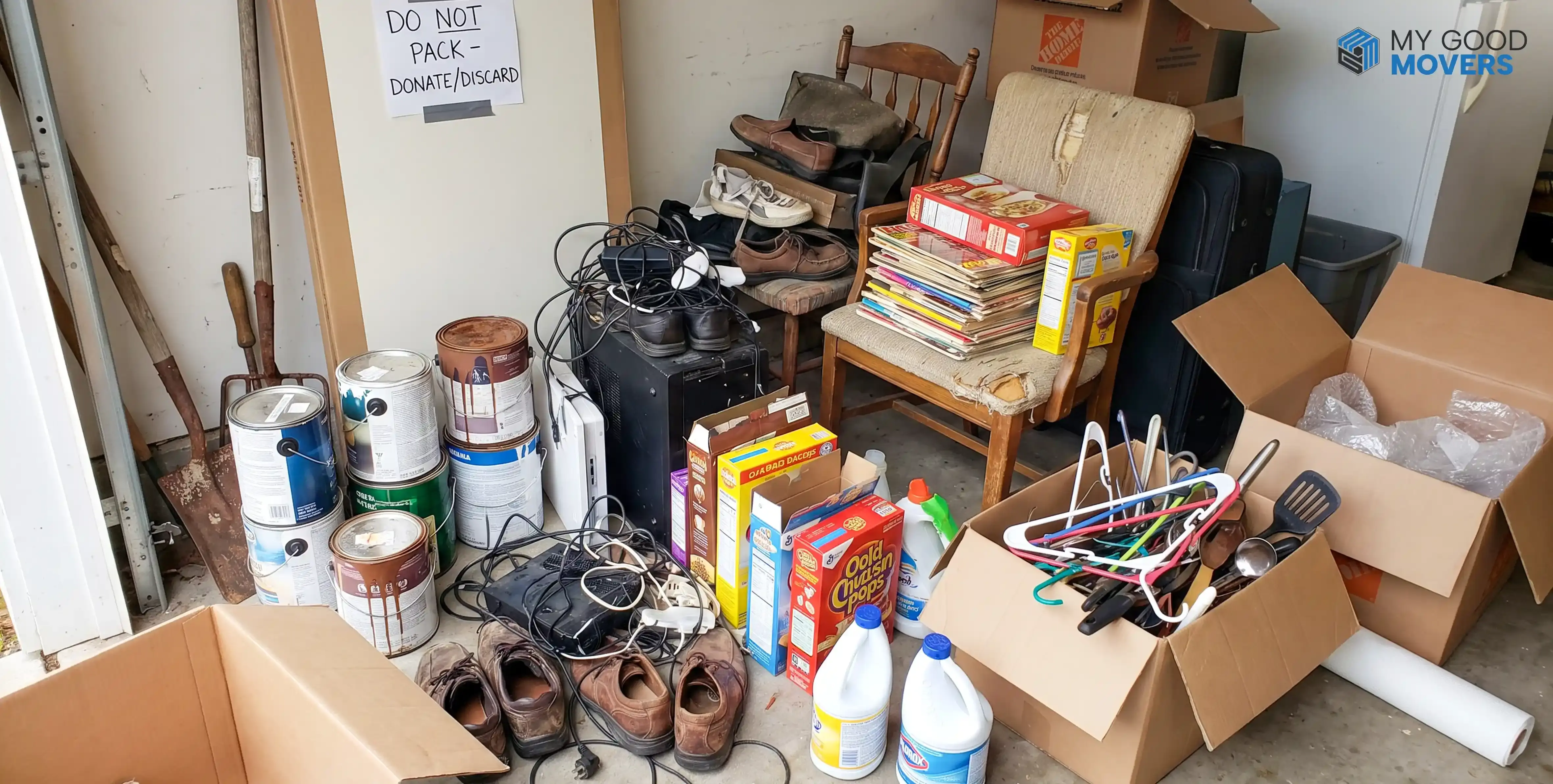
Start two or three days before packing the bathroom. Place every product on a clean counter, then separate the items into four groups:
- Keep
- Use before moving
- Donate, when unopened products are accepted
- Discard safely
Separate What to Keep, Use, Donate, or Discard
Keep expensive products, unopened backups, daily necessities, and items that will be difficult to replace after arrival.
Move nearly empty shampoo, soap, and lotion bottles into a “use first” basket. Finish them before moving day rather than spending time wrapping a few ounces of replaceable product.
Unopened toiletries may be suitable for donation, but confirm that the organization accepts them. Shelters, community programs, and food banks have their own hygiene-product policies.
Do not donate opened personal-care products unless the recipient organization explicitly accepts them.
Step 2: Prepare the Packing Supplies
Good bathroom packing involves the supplies that control leaks, protect fragile products, and keep the final box light enough to carry.
Gather Leak-Proof and Protective Materials
Each packing material solves a different problem.
| Packing Supply | Primary Use |
|---|---|
| Small moving box | Keeps toiletries at a manageable weight |
| Plastic storage bin | Contains leaks and protects against moisture |
| Resealable plastic bags | Separates liquids and possible leaks |
| Plastic wrap | Creates a seal beneath bottle caps |
| Packing tape | Secures caps, pumps, and box seams |
| Bubble wrap | Cushions perfume, skincare jars, and glass bottles |
| Towels or washcloths | Fills gaps and cushions sturdy products |
| Packing paper | Wraps dry or fragile products |
| Labels and markers | Identifies contents and handling needs |
Step 3: Set Aside Essential Toiletries
Not everything belongs in the moving truck.
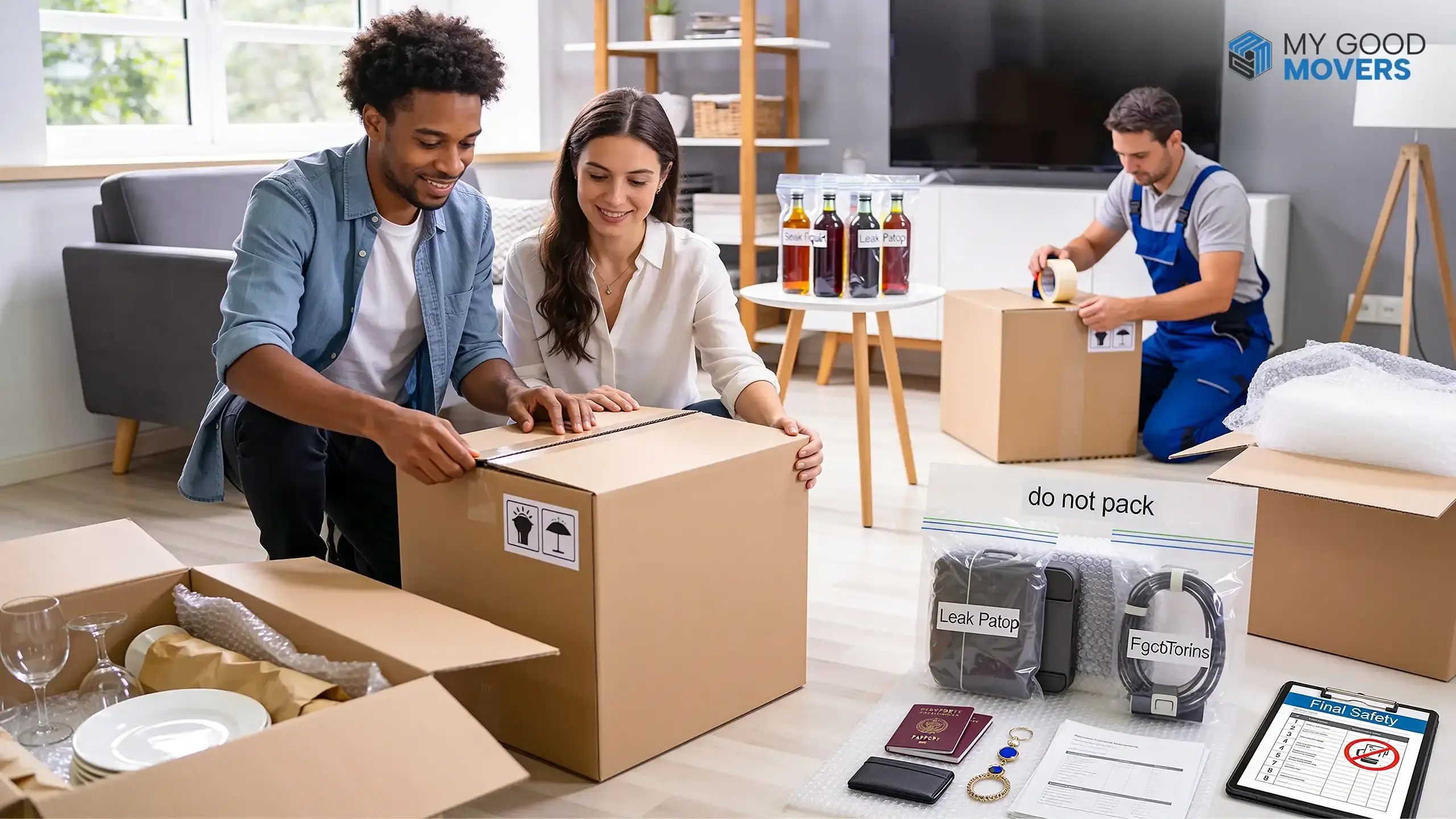
Before sealing the main bathroom boxes, prepare a toiletries essentials box by separating items into two smaller groups:
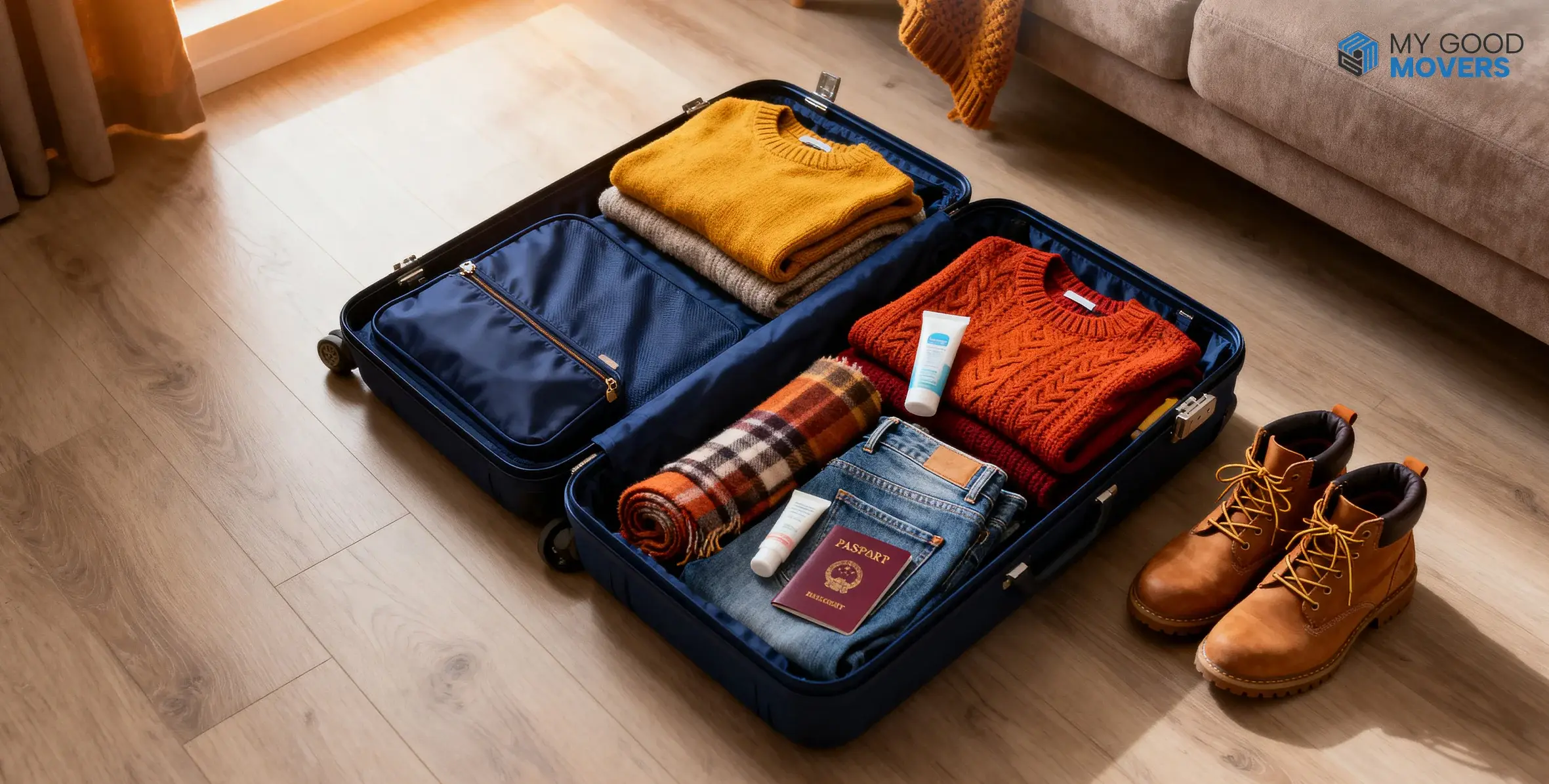
- A moving-day toiletry bag that stays with you
- A first-night bathroom box that is loaded last and opened early
Prepare a Moving-Day Toiletry Bag
A family may need one shared bag plus a separate medication pouch, while an individual may fit everything into a compact toiletry case.
Include:
- Toothbrush and toothpaste
- Soap or hand sanitizer
- Deodorant
- Toilet paper or tissues
- Basic skincare
- Contact-lens supplies
- Feminine hygiene products
- Shaving items
- A small towel
- Necessary medication
- Child, senior-care, or accessibility products
Prepare a First-Night Bathroom Box
The first-night bathroom box is different from the bag that stays with you. It's the bathroom part of your first-night moving essentials box.
It includes full-size shampoo, conditioner, body wash, towels, hand soap, toilet paper, and other items you will need once you reach the new home.
Label it clearly: “Bathroom: Open First.”
Do not bury it behind furniture or place it at the front of a tightly loaded truck. Ask for it to be loaded where it can be retrieved without unloading the entire vehicle.
Step 4: Seal Liquid Toiletries to Prevent Leaks
The safest way to pack liquids for moving is to use multiple protective barriers. A tight cap alone is not enough. Bottles get squeezed, tilted, shaken, and stacked during transportation.
Inspect and Tighten Every Cap
Wipe each bottle before packing it. A product around the neck or cap can make it difficult to see whether the container is properly closed.
Check for:
- Cracked caps
- Loose threads
- Damaged seals
- Weak flip-top lids
- Product buildup
- Pumps that will not lock
- Nozzles that spray when touched
Seal Bottle Openings With Plastic Wrap
- Remove the cap.
- Place a small piece of plastic wrap over the bottle opening.
- Replace and tighten the cap.
- Wipe the outside of the bottle.
- Put the bottle in a sealed plastic bag.
Step 5: Pack Each Product According to Its Risk
Not all bathroom products need the same type of protection. Shampoo can leak, powder makeup can crack, perfume bottles can break, and a loose razor can puncture nearby bags.
Pack each item according to the problem it is most likely to cause.
| Items | How to Pack Them |
|---|---|
| Shampoo, Conditioner, Lotion & Body Wash | Put plastic wrap under each cap to prevent leaks. Place the bottles in resealable bags and keep them upright. Pack heavy bottles at the bottom of the box, away from fragile items. |
| Hair Oils & Dark-Colored Liquids | Pack these items in separate plastic bags. This will help protect towels, labels, and other items from stains if a bottle leaks. |
| Bar Soap, Loofahs & Washcloths | Make sure everything is completely dry before packing. Wet or damp items cause bad smells inside the box. |
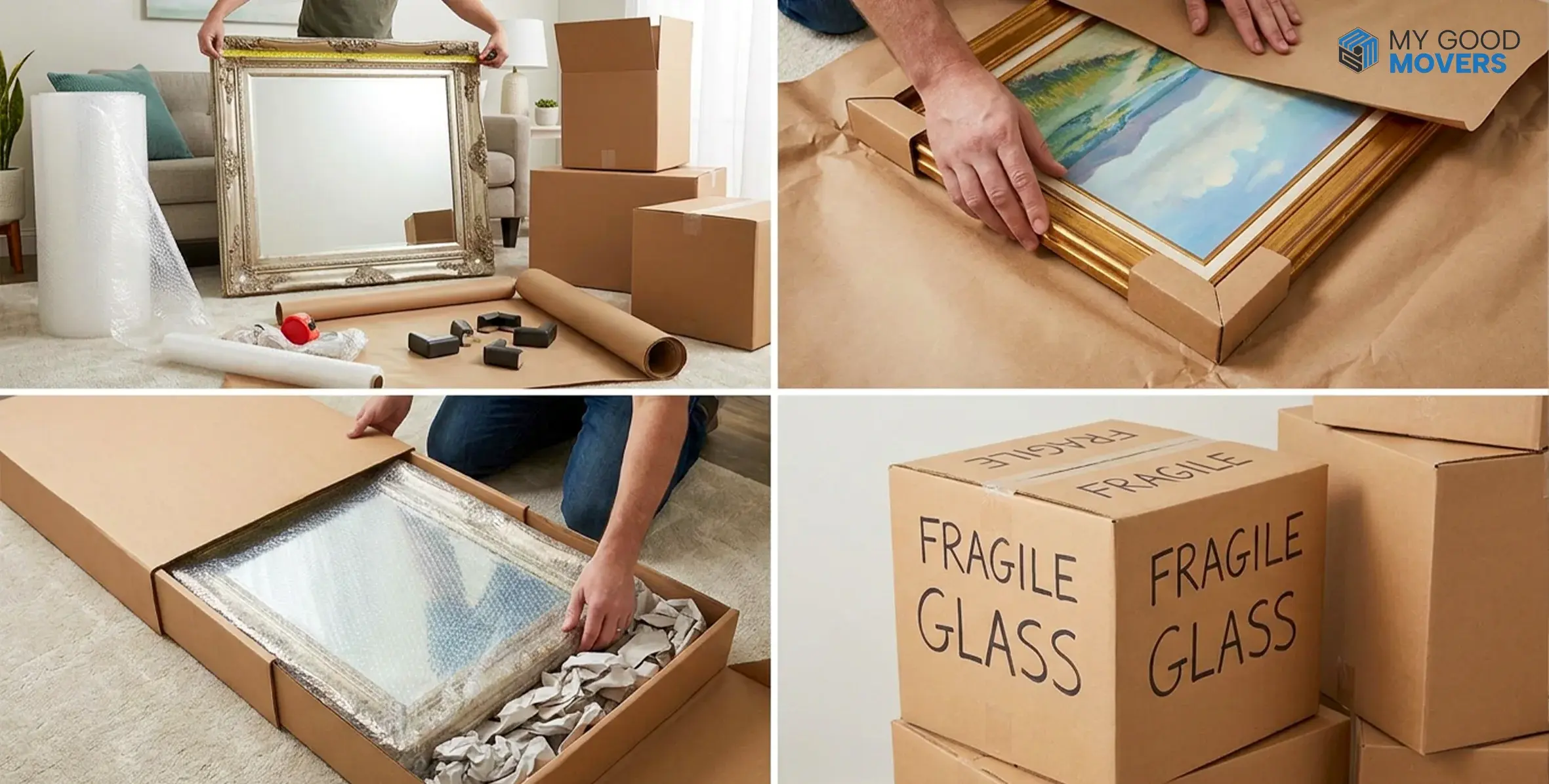
| Skincare Jars & Glass Containers | Close the lids tightly and wrap each jar in bubble wrap. Use packing paper to fill empty spaces so the glass containers do not touch each other. |
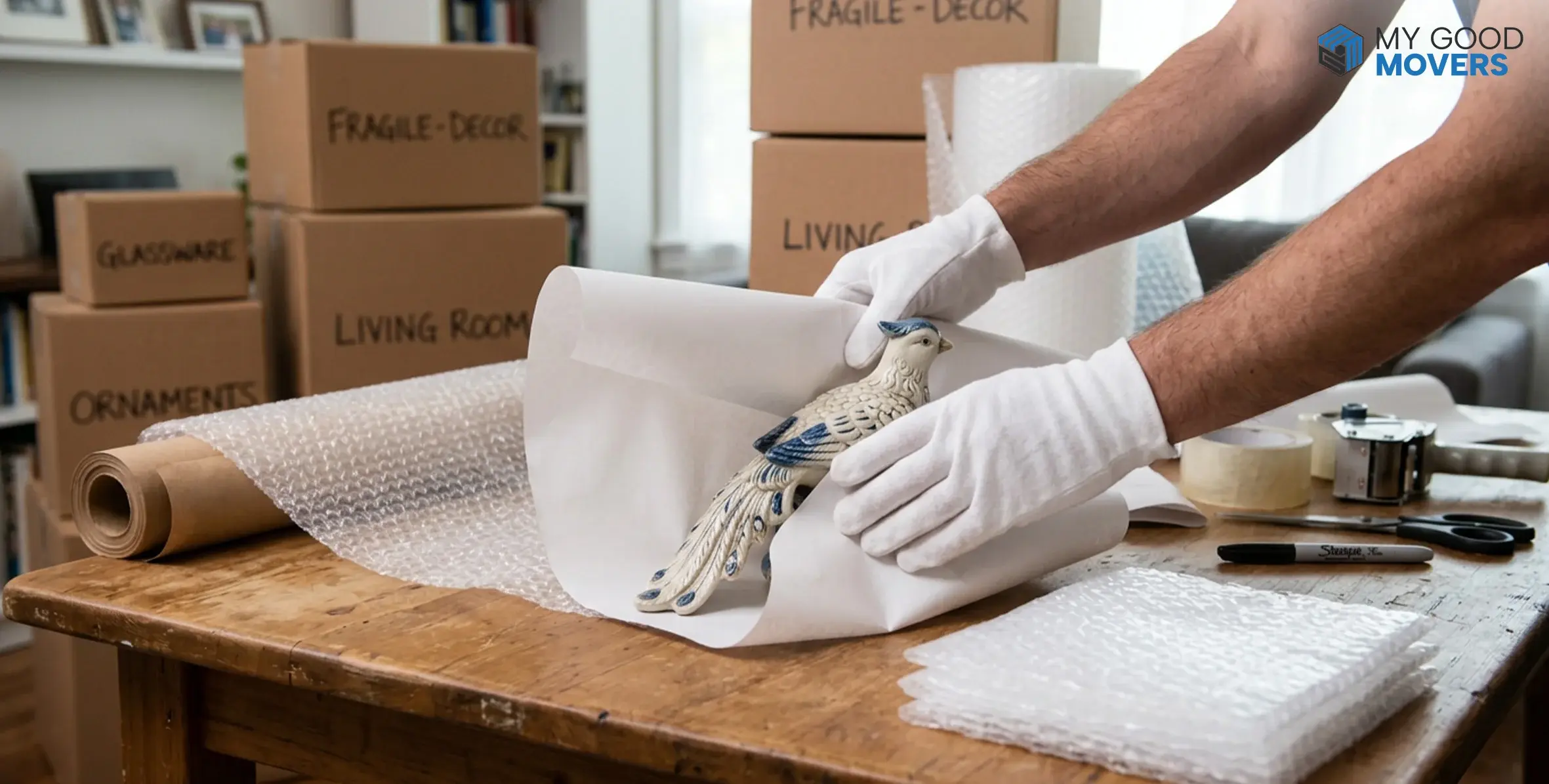
| Perfume & Cologne Bottles | Wrap each bottle separately and place it near the top of the box with soft padding around it. Check whether your moving company allows alcohol-based perfumes. |
| Liquid Makeup | Put foundation, concealer, mascara, and other liquid or cream makeup in sealed plastic bags. Wrap glass bottles carefully to prevent them from breaking. |
| Powder Makeup | Keep makeup palettes and compacts flat in a padded case or wrap them in bubble wrap. Do not place heavy bottles or jars on top of them. |
| Makeup Brushes | Wash and dry your brushes completely before packing. Keep them in a brush pouch, roll, or hard case to protect their shape and prevent bad smells. |
| Razors, Scissors & Sharp Tools | Cover sharp blades with their original caps or protective guards. Keep these items in a hard container so they do not damage other packed items. |
| Hair Dryers & Heated Tools | Let hair dryers, straighteners, and curling irons cool completely before packing. Loosely wrap their cords and place them in a dry, protective bag. |
| Electric Razors & Toothbrushes | Clean and dry each device before packing. Secure any loose parts and follow the manufacturer's instructions for battery safety. |
Step 6: Check Which Toiletries Your Movers May Refuse
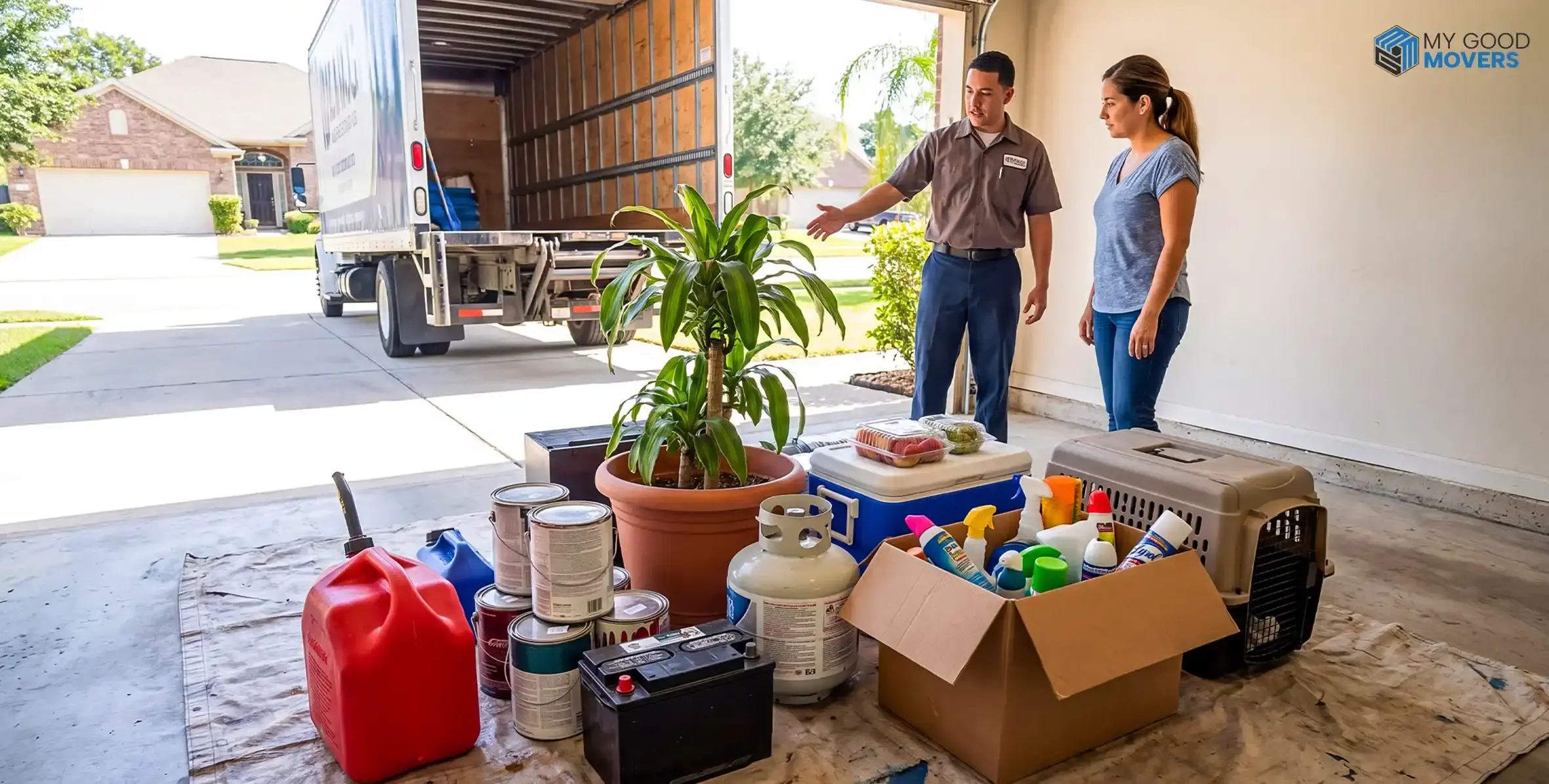
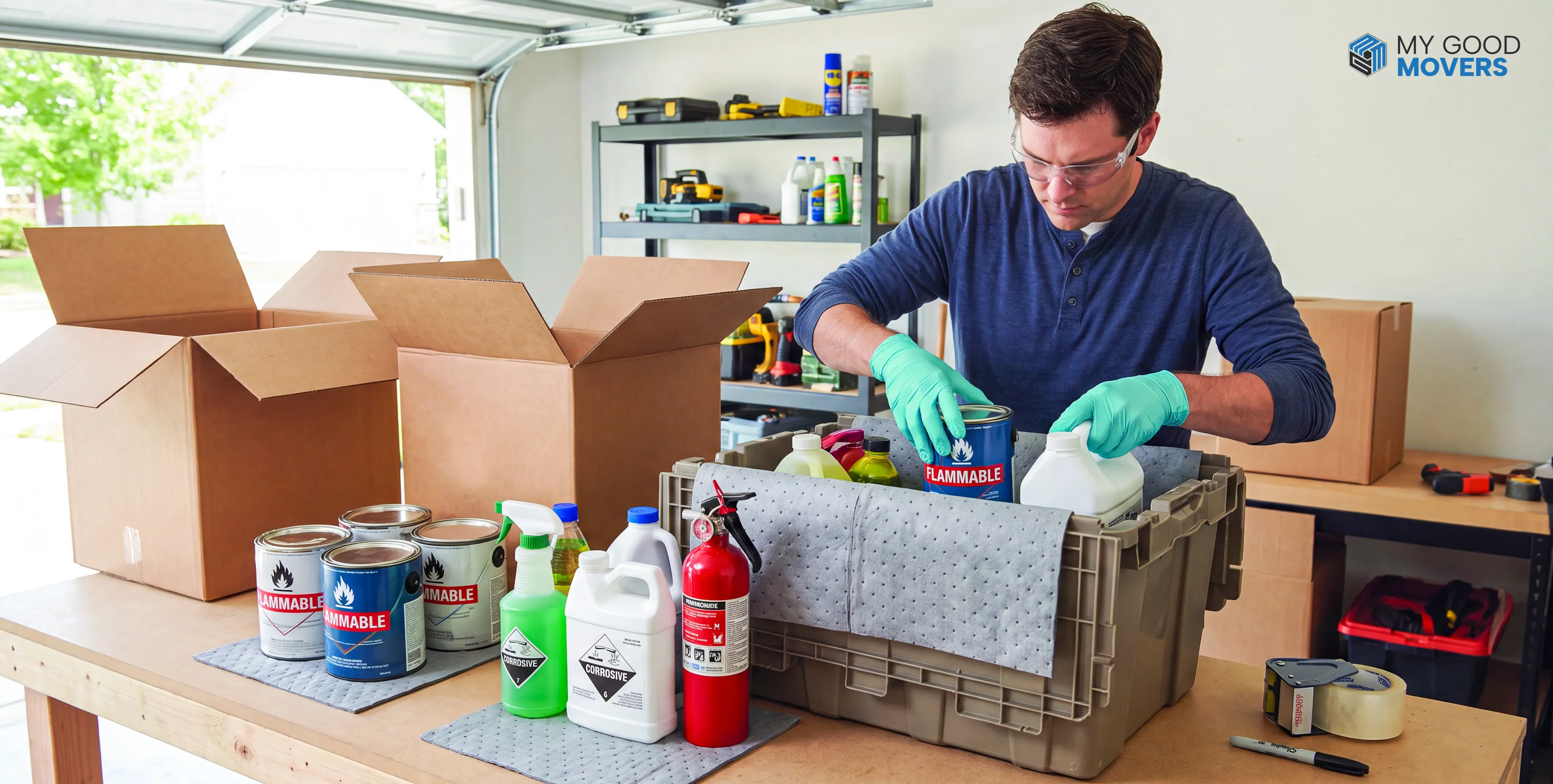
Moving companies may restrict aerosols, flammable liquids, pressurized containers, strong chemicals, and other hazardous materials.
The exact policy depends on the mover, route, equipment, and applicable safety requirements.
Request the Prohibited-Items List in Writing
Ask your mover for a written list before packing the bathroom.
Do not rely on a casual phone comment such as “liquids should be fine.” Ask whether the company accepts specific products, including:
- Hairspray
- Shaving foam
- Aerosol deodorant
- Nail polish
- Nail-polish remover
- Rubbing alcohol
- Perfume
- Cleaning chemicals
- Pressurized cans
Step 7: Arrange Toiletries Inside the Box or Bin
The way you arrange them determines how much they move, how much they press against each other, and how many reach the bottom safely.
Start by placing a clean, dry towel or packing paper at the bottom. Then arrange your items like this:
- At the bottom: Keep heavy bottles, such as shampoo, conditioner, and body wash, upright.
- Near the top: Place wrapped perfume bottles, glass jars, and delicate makeup where heavy items won't press against them.
- In empty spaces: Add packing paper, bubble wrap, or clean washcloths to keep everything in place.
Before closing the box, gently move it to see if anything shifts or knocks against another item. If it does, add a little more padding. The items should fit securely without being squeezed together.
One more thing: Keep toiletries separate from clothing, bedding, books, food, and electronics. It can prevent damage during a move.
Step 8: Seal and Label the Container
Before closing the box, check that all bottles are dry, caps are tight, pumps are locked, and nothing is leaking.
Once everything is secure:
- Seal the box: Use strong packing tape and reinforce the bottom if it contains heavy bottles. For plastic bins, make sure the lid closes properly.
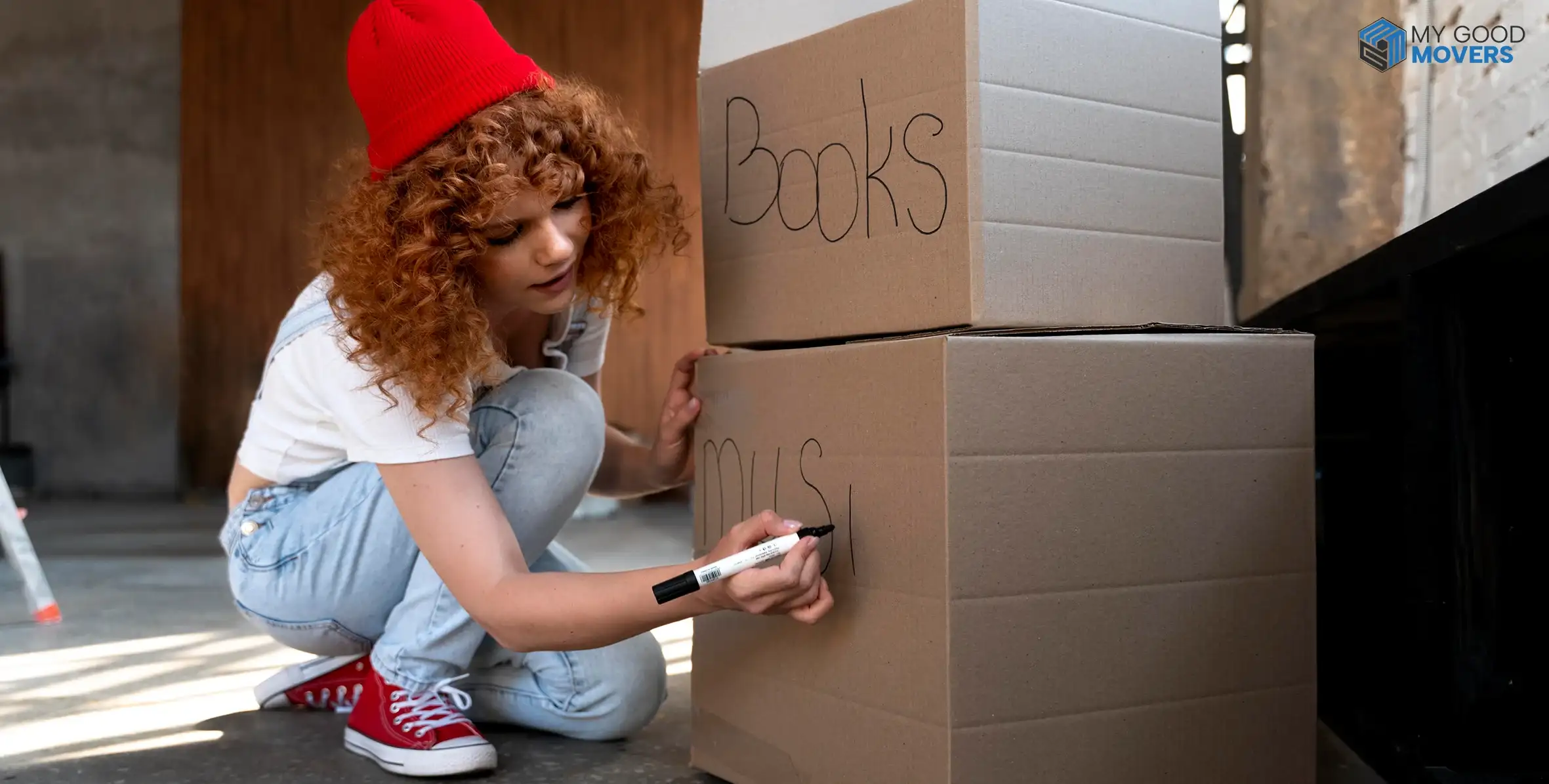
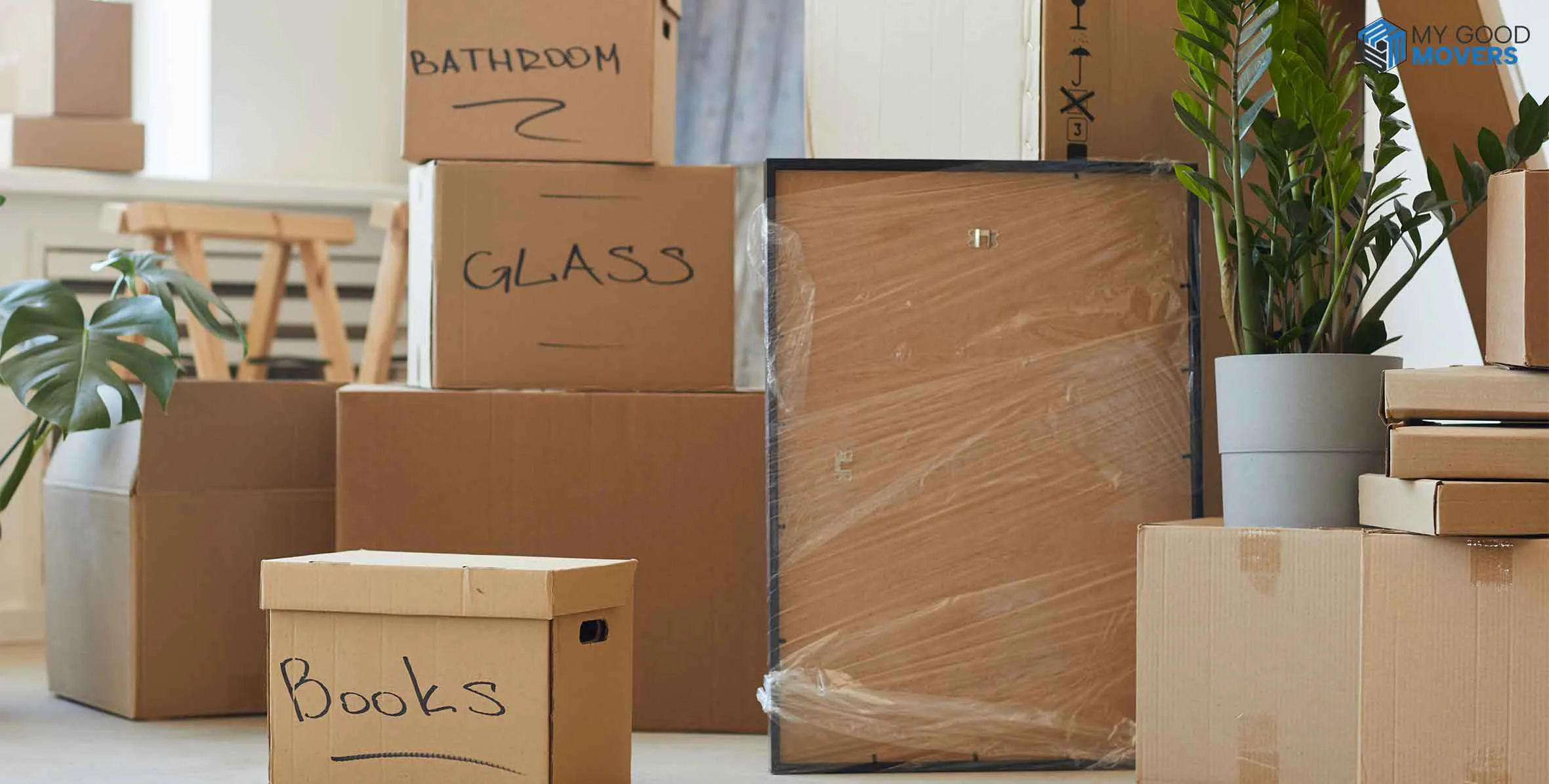
- Label it clearly: Write "Bathroom Toiletries" and add "Fragile," "Liquids," or "This Side Up" where needed, just as you would when labeling moving boxes.
- Mark it "Open First": If you'll need the box soon after moving, label it so it's easy to find.
If you need help packing fragile bathroom products, you can compare the best packing and moving companies based on their services, costs, and customer feedback.
Want a Complete Packing Plan?
Stop guessing what to pack next. Follow a clear packing plan that helps you move room by room without the usual last-minute chaos.
Read How to Pack for a MoveCommon Mistakes to Avoid When Packing Toiletries
| Mistake | Why It’s a Problem | The Fix |
|---|---|---|
| Packing liquids without sealing them | A tightened cap can loosen when a bottle shifts | Add plastic wrap beneath the cap, secure the closure, and bag the product |
| Leaving pumps and spray nozzles unsecured | Only a small amount of pressure releases the product | Lock it, use the original clip, or secure gently with tape |
| Putting the necessary medication in the truck | Medication becomes difficult to access once loaded | Keep daily, emergency, and temperature-sensitive medicine with you |
| Mixing toiletries with clothing or electronics | A single leak can damage far more than the bathroom products | Give liquids their own box or plastic bin |
| Using an oversized box | Large bottles become heavy when combined | Split toiletries into smaller containers by type, weight, and access |
| Packing wet soap, loofahs, or towels | Moisture becomes trapped inside a sealed box | Clean these items early and let them dry completely |
| Ignoring mover restrictions | A product may be wrapped well and still be prohibited | Ask for the written policy before moving day |
| Forgetting the moving-day toiletry bag | The bathroom box may be the last thing you see after arrival | Keep soap, toothbrushes, medication, and daily care items beside you |