


Packing for a move usually starts with good intentions. You grab a few boxes, open a cabinet, and think, “I’ll just pack everything and sort it later.” But that is where many moves become heavier, messier, and more expensive than they need to be.
One drawer has old chargers. The bathroom has expired products. The garage has paint cans, cleaners, and things you have not touched in years. Before you know it, half your boxes are filled with items that may never be used again.
A smoother move is not about packing more. It is about packing smarter.
That is why it is important to understand what not to pack when moving. It helps you avoid useless boxes, unsafe items, last-minute mover issues, and clutter in your new home.
So before you start taping every box shut, let’s sort out what should actually come with you and what is better left behind.
Why You Should Not Pack Everything Before Moving
Packing everything may feel faster, but it usually creates more boxes, more clutter, and more work after the move. Here are some reasons why you should not pack everything before moving.
It Adds Unnecessary Boxes
Unused items, duplicate kitchenware, old papers, and random drawer clutter can quickly turn into extra boxes.
More Boxes Can Mean:
- More packing supplies
- More tape and labels
- More loading time
- More truck space
- More items to unpack later
It Brings Old Clutter Into the New Home
A new home should feel fresh, not crowded with things you already stopped using. When you pack without sorting, old clutter follows you.
This Usually Leads To:
- Crowded closets
- Messy drawers
- Slower unpacking
- Less storage space
- More items to organize later
It Can Waste Time, Space, and Money
Every item you pack must be wrapped, lifted, moved, unloaded, and stored again. If the item is broken, unused, low-value, or easy to replace, it may not be worth moving.
Before Packing, Ask Yourself:
- Do I still use this?
- Is it in good condition?
- Is it worth the moving effort?
- Will it fit my new home?
- Would I buy it again today?
Items You Should Not Pack When Moving
Most people search this topic because they do not want to waste time packing the wrong things. They want a clear answer: what should stay, what should go, and what can create problems on moving day?
Honestly, it is easy to decide. If an item is expired, broken, unsafe, duplicated, rarely used, or not worth the cost of moving, it should not go into a box. You do not need to move every item you own. You only need to move what still has real value in your next home.
Expired Items
Expired items should be the first things you remove before packing. They are common in kitchens, bathrooms, medicine cabinets, laundry rooms, and garages.
Broken or Damaged Items
Broken items are easy to justify. You may think, “I’ll fix this after the move.” But if it has been sitting broken for months, it will likely stay broken in the new home as well.
Duplicate Items
Duplicate items quietly create extra boxes. You may not notice them while they are spread across drawers and cabinets, but once you start packing, they add up fast.
Clothes and Shoes
Clothes and shoes take up more space than people expect. A full closet can turn into several boxes, bags, and wardrobe cartons.
Kitchen Items
The kitchen is one of the most common places where people overpack. It has food, gadgets, dishes, containers, and small appliances that may not all be useful.
Here is a quick kitchen sorting guide:
| Kitchen Item | Why Not Pack It |
|---|---|
| Old or expired pantry items | They can spoil, smell, or attract pests. |
| Open food packages that may spill | They can leak and create a mess. |
| Unused small appliances | They take up space and may never be used. |
| Worn-out pots and pans | They add weight and may need to be replaced anyway. |
| Extra plates, bowls, and glasses | They create unnecessary boxes. |
| Plastic containers without lids | They are incomplete and usually not useful. |
Bathroom and Personal Care Items
Bathroom items look small, but they can be messy during a move. Bottles can leak, makeup can break, and old products can spread into towels or clothes.
Furniture
Furniture should be judged by size, condition, value, and fit. A piece may be useful in your current home but wrong for the next one.
Electronics and Cords
Old electronics and random cords are common in almost every home. They sit in drawers because people think they might need them someday.
Review these items before packing:
| Electronic Item | Why Not Pack It |
|---|---|
| Old phones, tablets, and devices you no longer use | They usually stay unused after the move. |
| Broken electronics | They need repair or recycling, not another box. |
| Random cords with no matching device | They create clutter and confusion. |
| Outdated chargers | They may not work with current devices. |
| Old remote controls | They are useless without the matching device. |
| Electronics that cost less to replace than to move | They may not be worth the effort of packing. |
Garage, Storage, and Outdoor Items
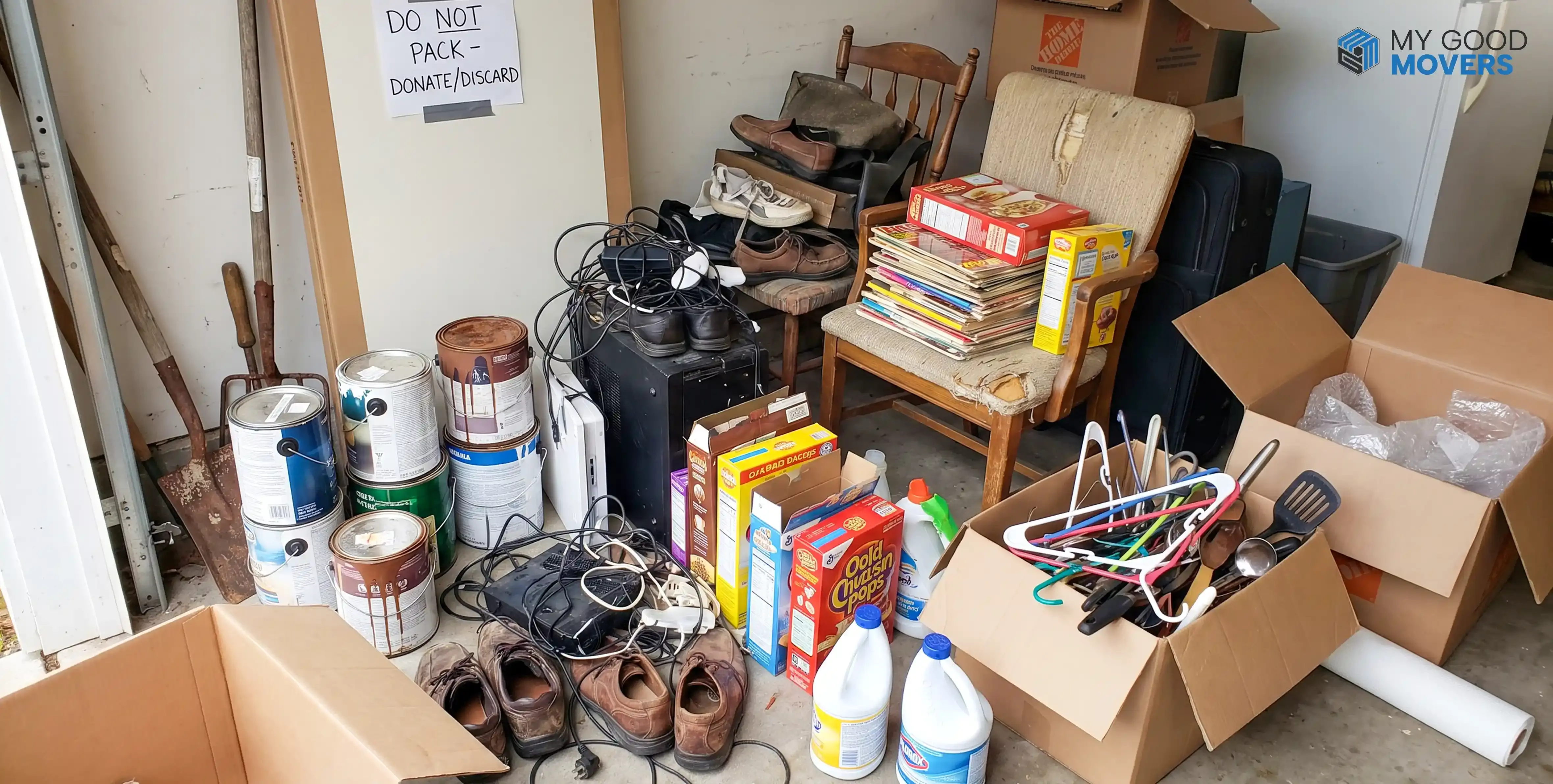
Garages and storage areas hold the most forgotten items in the home. This is where people find old paint, rusty tools, sports gear, broken bins, and project leftovers.
Items Movers Won’t Move
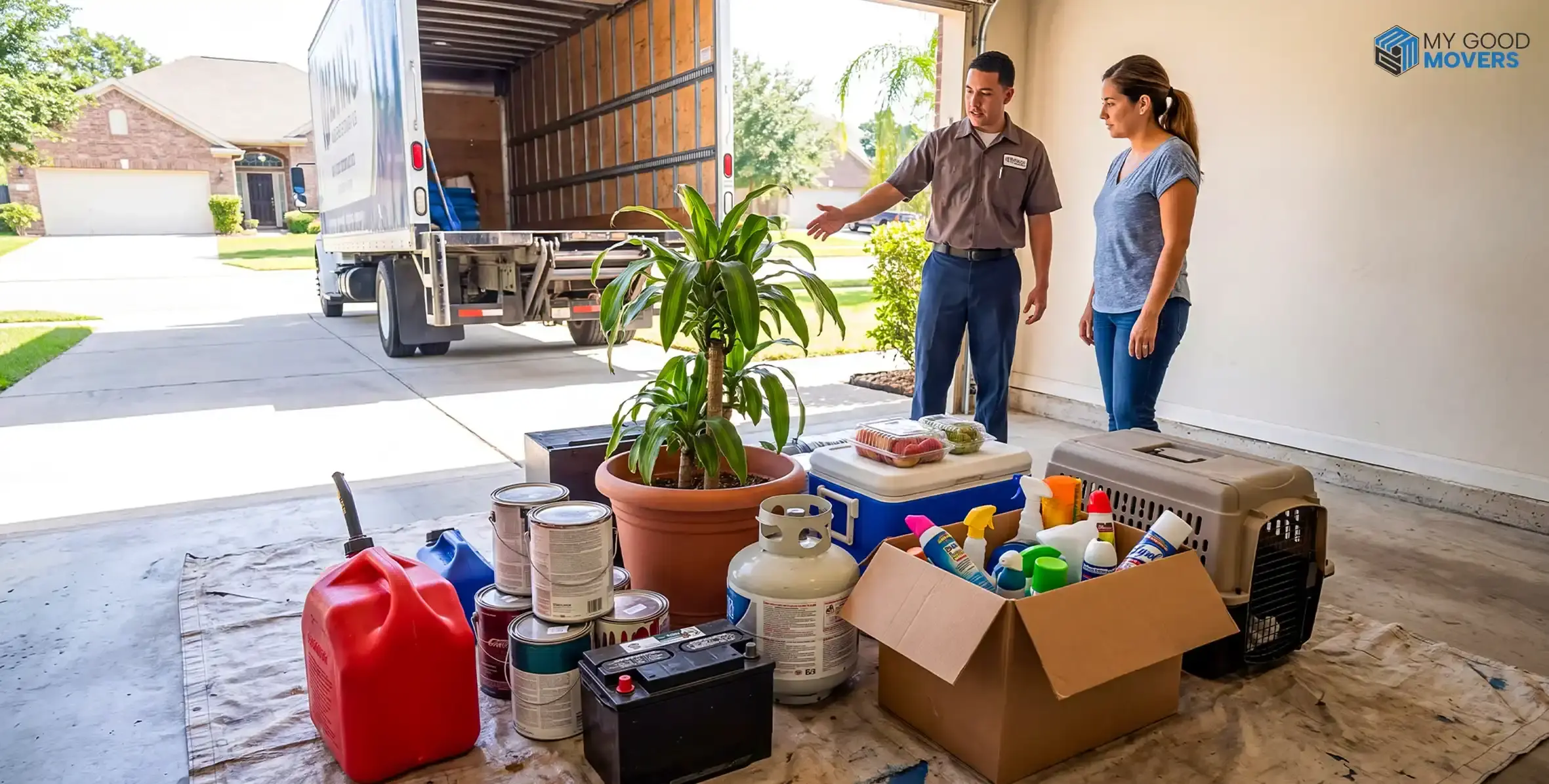
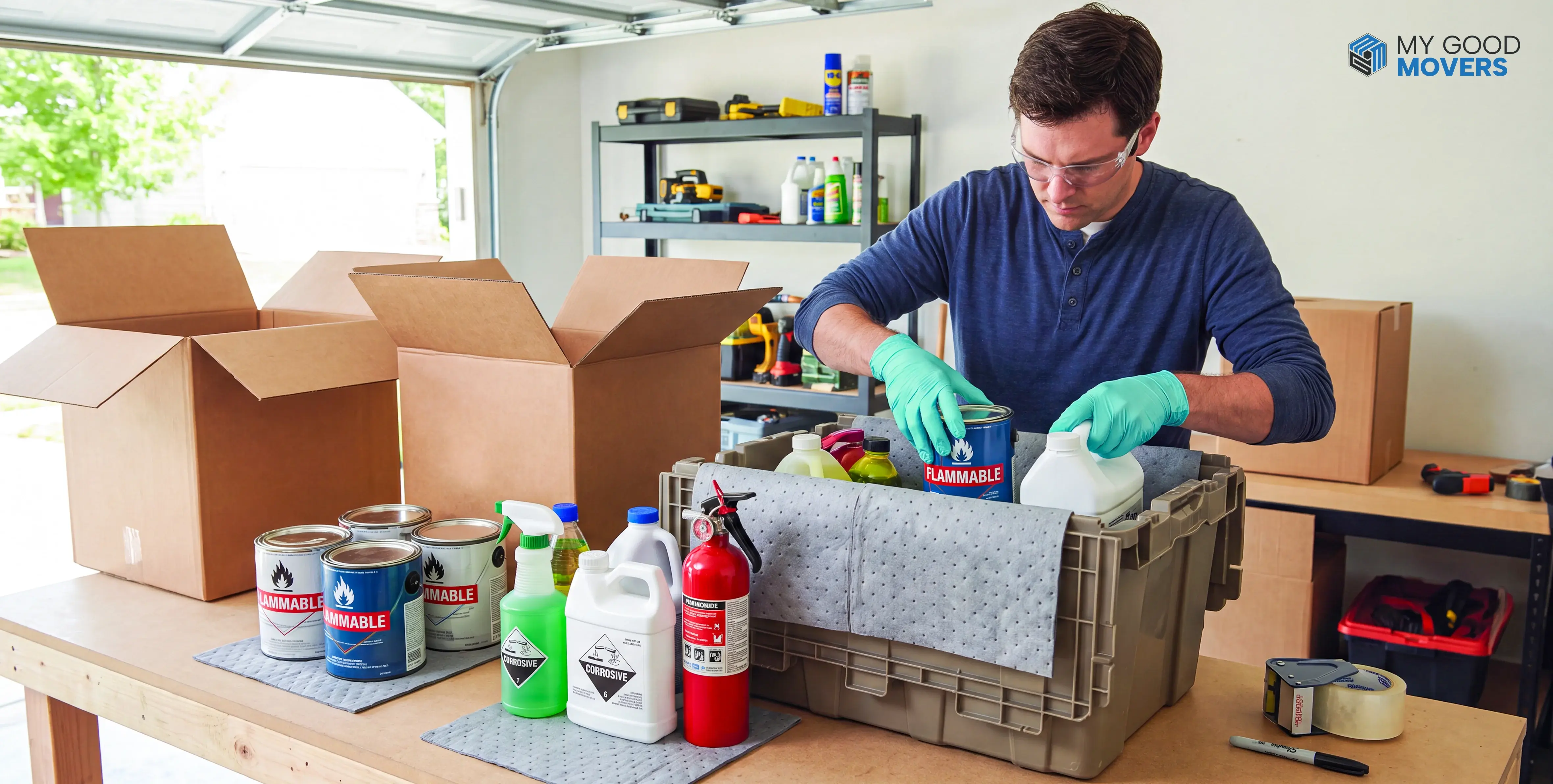
Some items should not be packed because the best packing and moving companies may refuse to transport them. These are unsafe, perishable, restricted, or too valuable to place in a moving truck.
Ask your mover for a list of non-allowable moving items before packing.
| Hazardous & Flammable | Chemicals & Cleaners | Pressurized & Explosive |
|---|---|---|
|
|
|
| Perishable Food | Plants & Living Things | Valuables & Records |
|---|---|---|
|
|
|
Want a Complete Packing Plan?
Stop guessing what to pack next. Follow a clear packing plan that helps you move room by room without the usual last-minute chaos.
Read How to Pack for a MoveWhat to Do With Items You Should Not Pack
Once you know what not to pack, the next step is deciding where each item should go.
Some items can help another family. Some can bring in a little cash before the move. Others need safe recycling or proper disposal, especially if they are expired, electronic, or hazardous.
| If the Item Is | Best Action | Examples |
|---|---|---|
| Still useful but not needed | Donate it | Clothes, dishes, books, toys, extra towels |
| Valuable but not worth moving | Sell it | Furniture, electronics, exercise equipment |
| Broken but recyclable | Recycle it | Electronics, cardboard, paper, textiles |
| Expired or unsafe | Dispose of it properly | Expired food, medicine and old products |
| Duplicate | Keep the best one | Mugs, tools, chargers, bedding |
| Almost empty | Use it up or discard it | Toiletries, cleaners, pantry items |
| Too bulky for its value | Sell, donate, or replace later | Cheap furniture, old mattresses, worn storage bins |
Room-by-Room What Not to Pack Audit
A room-by-room audit makes this process much easier because you are not trying to sort the whole house at once. You look at one area, remove what does not belong in the move, and then pack only what is useful.
Use this table before packing each room.
| Area | What Not to Pack |
|---|---|
| Kitchen | Expired food, open packages, chipped dishes, unused gadgets, duplicate utensils, containers without lids |
| Bedroom | Clothes that do not fit, damaged shoes, old bedding, unused bags, worn-out seasonal items |
| Bathroom | Expired skincare, old makeup, almost-empty bottles, dried-out products, and personal care tools you no longer use |
| Living Room | Broken decor, outdated magazines, damaged cushions, unused accessories, items that do not fit your new style |
| Garage | Old paint, broken tools, rusty equipment, leftover chemicals, damaged storage bins, forgotten project items |
| Home Office | Old papers, dead cables, broken electronics, outdated files, duplicate office supplies |
| Kids' Room | Broken toys, outgrown clothes, unused school items, duplicate supplies, damaged books or games |
| Storage Area | Forgotten boxes, empty packaging, damaged holiday decor, unused seasonal items, bulky items with low value |
Questions to Ask Before Packing Any Item
When you pick up an item and are unsure whether to pack it, ask these questions. You do not need to ask all of them every time. One honest answer is usually enough.
Usefulness
- Have I used this in the past 12 months?
- Will I realistically use this in the new home?
- Does this item still match where I am in life?
Condition
- Is it broken, stained, expired, or unsafe to use?
- Would I buy this again if I saw it in a store today?
- Is it worth paying someone to repair?
Value
- Is this item worth more than it would cost me to move it?
- Could I sell this before the move and use that money instead?
- Could I donate it and buy a better version once I am settled?
New Home Fit
- Will this actually fit in the new space?
- Does this suit the new climate, layout, or lifestyle?
- Am I keeping it because I need it or because letting go feels hard?