


To understand how to pack hazardous household items, start with the basics: keep them away from regular boxes, seal them properly, place them upright in leak-proof containers, label everything clearly, and ask the best packing and moving companies what is allowed before moving day.
Some hazardous household items should not be packed at all. They need safe disposal instead.
Most people do not think about these products until they start clearing the garage, laundry room, or cleaning cabinet. Then they find a half-used paint thinner, an old propane tank, a few aerosol sprays, or mystery bottles with faded labels, and suddenly packing feels a little more serious.
THE PART NOBODY WARNS YOU ABOUT!
One small leak in the hazardous box can turn moving day into a disastrous problem.
Let's discuss this properly, so you know what to pack, what to skip, and what to get rid of before the truck arrives.
What Counts as Hazardous Household Items?
Hazardous household items are everyday products that can become dangerous because they are flammable, toxic, corrosive, reactive, pressurized, or harmful if spilt.
Many people do not consider these items hazardous because they use them at home all the time. The problem starts when they are sealed inside a hot, moving truck, packed beside other chemicals, or left unlabeled.
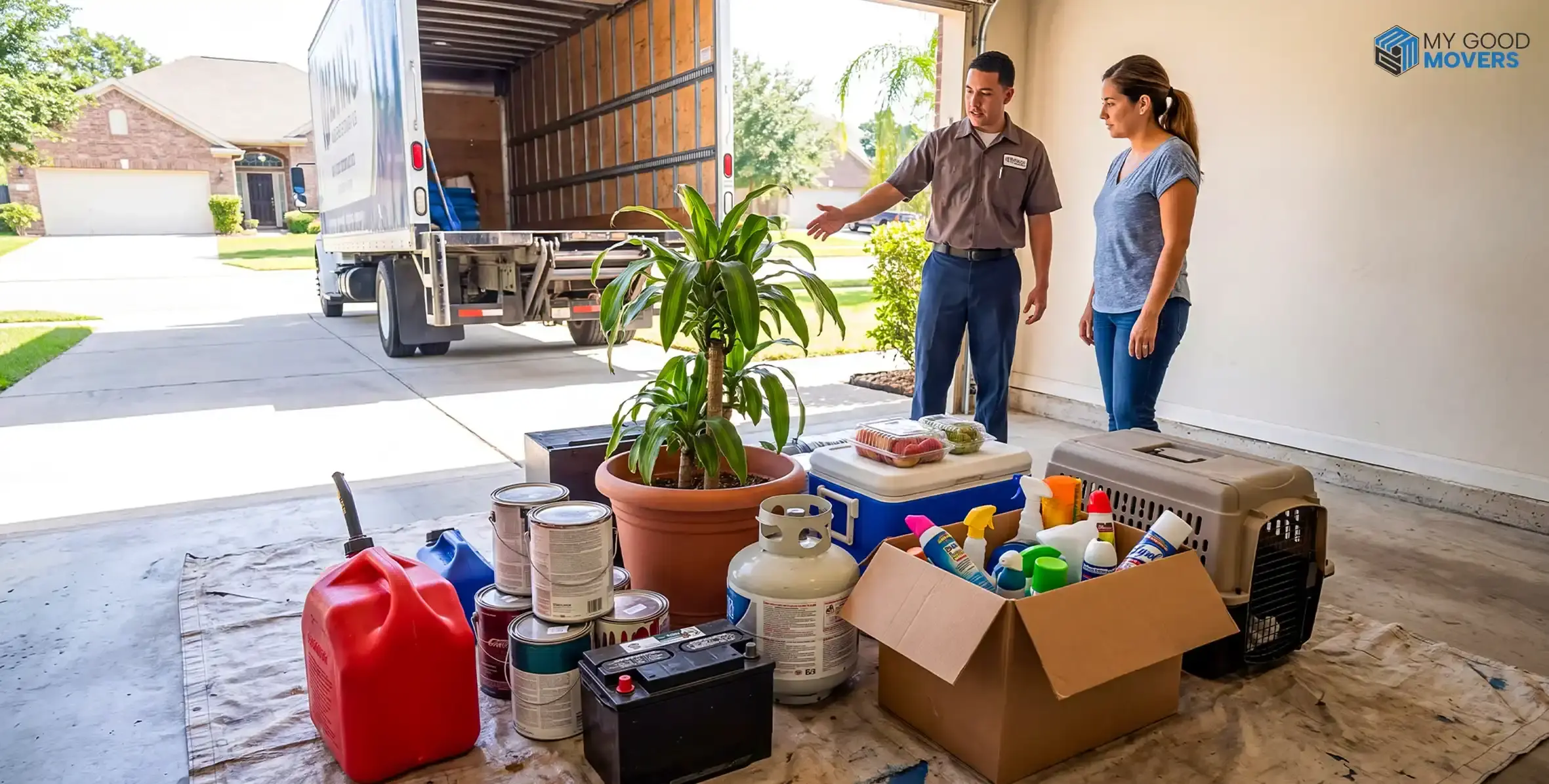
Common hazardous household items include:
| • Paint and paint thinner | • Bleach | • Ammonia |
| • Drain cleaners | • Oven cleaners | • Pesticides |
| • Fertilizers | • Pool chemicals | • Aerosol cans |
| • Propane tanks | • Gasoline | • Kerosene |
| • Motor oil | • Fireworks | • Matches |
| • Fire extinguishers | • Nail polish remover | • Lithium-ion batteries |
| • Car batteries | • Cleaning chemicals | • Car fluids |
| • Weed killers | • Solvents | • Unknown or unlabeled chemicals |
QUICK CHECK
A simple rule is: if the label says flammable, corrosive, toxic, poison, explosive, combustible, warning, danger, or caution, treat it as a hazardous item until you confirm otherwise.
Why These Items Require Special Handling During a Move
During transport, these items can:
- Leak onto boxes, clothes, furniture, or floors
- Release toxic fumes in a closed truck or storage unit
- Create fire risks if they are flammable
- Cause burns if they are corrosive
- Build pressure inside aerosol cans or propane tanks
- React dangerously if mixed with other chemicals
- Delay moving day if the movers refuse to load them
Note: Most movers have a list of prohibited items from their moving company. It includes flammable, corrosive, pressurized, explosive, or toxic products.
Before packing, ask your mover what they can and cannot transport.
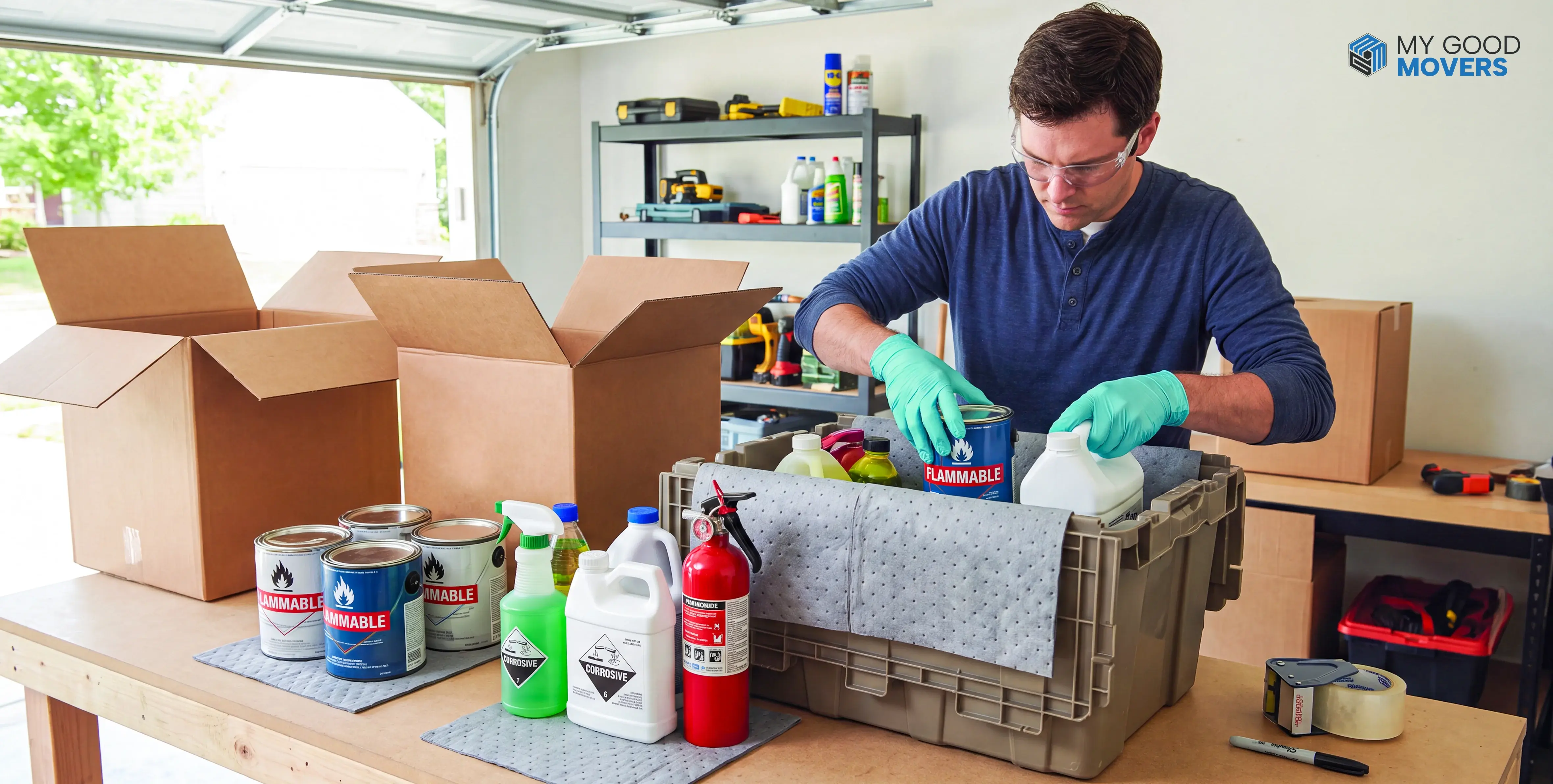
Supplies You Need to Pack Hazardous Household Items Safely
Not every hazardous item should be packed. Some should be used up, donated if allowed, recycled, or taken to a household hazardous waste collection site.
| Supply | How It Helps During Packing |
|---|---|
| Leak-proof containers | Prevent liquids from spilling during handling or transport |
| Plastic bins | Keep hazardous items separate from regular moving boxes |
| Secondary containment trays | Catch leaks before they spread to floors, boxes, or other items |
| Absorbent materials | Help control minor leaks from sealed containers |
| Labels and warning markers | Make hazardous items easy to identify during packing and unpacking |
| Protective gloves | Protect your hands from chemicals, dust, or residue |
| Eye protection | Helps prevent splashes from reaching your eyes |
| Sealable plastic bags | Add an extra layer around small containers or bottles |
| Paper towels or spill pads | Useful for quick cleanup of minor surface spills |
| Original product containers | Keep safety labels, warnings, and product instructions visible |
How to Pack Hazardous Household Items (Step-by-Step)
START EARLY
The safest process starts before moving day. Try to sort hazardous products at least 2 to 3 weeks before your move. That gives you time to use up safe products and schedule hazardous waste disposal, if needed.
Step 1: Identify and Sort Hazardous Household Items
Start with the areas where hazardous items usually hide:
| • Garage | • Laundry room | • Bathroom |
| • Kitchen | • Basement | • Storage shed |
| • Cleaning cabinet | • Workshop | • Garden area |
Look at every label. If you see words like flammable, poison, corrosive, warning, explosive, or combustible, set the item aside.
Group Items by Risk Type
| Risk Category | Common Household Items | Main Risk During Moving |
|---|---|---|
| Flammable items | Paint thinner, gasoline, lighter fluid, nail polish remover | Fire or explosion risk |
| Corrosive items | Drain cleaner, bleach, strong acids, pool chemicals | Burns, leaks, surface damage |
| Toxic items | Pesticides, weed killers, rodent poison | Harmful exposure to people and pets |
| Pressurized items | Aerosol sprays, propane tanks and fire extinguishers | Pressure release or explosion risk |
| Reactive items | Pool chemicals, mixed cleaners and unknown chemicals | Dangerous chemical reactions |
| Battery-related items | Lithium-ion batteries, car batteries and power tools | Fire, acid leaks, overheating |
Separate Hazardous Items From Regular Household Goods
Do not place hazardous items near:
| • Clothes | • Bedding | • Dishes |
| • Food | • Pet supplies | • Children's toys |
| • Electronics | • Important documents | • Upholstered furniture |
A small leak from bleach, oil, pesticide, or paint thinner can ruin an entire box. It can also create fumes or skin exposure when someone opens the box later:
What Can Be Moved and What Should Be Disposed Of?
A good decision flow looks like this:
| Item Condition | Best Action |
|---|---|
| Safe, sealed and allowed by the mover | Pack according to the mover's instructions |
| Safe, but not allowed by the mover | Transport personally only if legal and safe |
| Old but usable | Use it, donate it if allowed, or give it away locally |
| Leaking, damaged, or unlabeled | Do not move it. Contact a hazardous waste program |
| Flammable, explosive, or pressurized | Do not pack in a moving truck |
| Unknown chemical | Treat as hazardous and seek disposal guidance |
Step 2: Prepare Items for Safe Packing
Once you separate everything, inspect each container before deciding whether it is safe to keep.
Look for:
- Loose lids
- Leaks or stains
- Missing labels
- Strong smells
- Damaged containers
Keep items in their original containers, tighten caps, and keep labels visible.
Step 3: Pack Hazardous Liquids and Chemicals
Hazardous liquids need the most attention because they can leak, spill, stain, or react with other materials.
Prevent Leaks and Spills
Use these steps:
- Keep containers upright at all times.
- Do not overpack bins or boxes.
- Do not mix chemicals.
- Do not pack damaged or leaking containers.
- Keep incompatible products separate.
- Add absorbent material around sealed liquids.
- Avoid placing liquids near heat or direct sunlight.
- Keep hazardous liquids away from food, clothes, and bedding.
If you are unsure whether a liquid is safe to transport, check the product label and your local waste authority guidance.
Use Secondary Containment
Secondary containment means placing the original container inside another container, such as a plastic bin, tray, or sealed tub.
This is helpful for:
| • Cleaning products | • Paint cans | • Automotive fluids |
| • Garden chemicals | • Pool chemicals | • Small chemical bottles |
A cardboard box is not enough for liquids. Cardboard absorbs spills quickly and can collapse when wet.
Step 4: Pack Dry Chemicals, Batteries, and Pressurized Containers
When packing hazardous materials, dry chemicals, batteries, and pressurized items, extra care is needed, too.
- Keep powders, fertilizers, and pool chemicals in original containers.
- Do not pack damp, damaged, clumped, or unlabeled chemicals.
- Remove batteries from devices when possible.
- Keep lithium-ion batteries dry and away from heat.
- Do not pack swollen, leaking, or damaged batteries.
- Keep aerosols and propane tanks away from heat or puncture.
Many movers refuse aerosols, propane tanks, fuel, and damaged batteries. If an item is not allowed, dispose of or recycle it before moving day.
Step 5: Organize and Transport Packed Hazardous Items
Some hazardous products require personal transport rather than a moving truck. Even then, only move items that are safe, sealed, labeled, and legal to transport.
| Item Category | How to Store and Transport It Safely |
|---|---|
| Cleaning chemicals | Keep upright, sealed, labeled, and separated from food or fabric items |
| Paint cans | Keep sealed, upright, and away from heat. Dispose of old or leaking paint properly |
| Batteries | Protect terminals, keep dry, and avoid heat or crushing |
| Aerosols | Keep cool, upright, and away from puncture or pressure |
| Pool chemicals | Keep in original containers and never mix with other chemicals |
| Pesticides and fertilizers | Keep sealed, labeled, and away from children, pets, and food |
| Propane tanks and fuel | Do not pack in a moving truck. Follow local disposal, exchange, or transport rules |
Common Transport Mistakes to Avoid
- Mixing chemicals
- Packing leaking or unlabeled items
- Using plain cardboard boxes for liquids
- Hiding prohibited items from movers
- Keeping chemicals near food, bedding, or pets
- Moving gasoline, propane tanks, or fuel
Step 6: Dispose of Hazardous Items That Cannot Be Moved
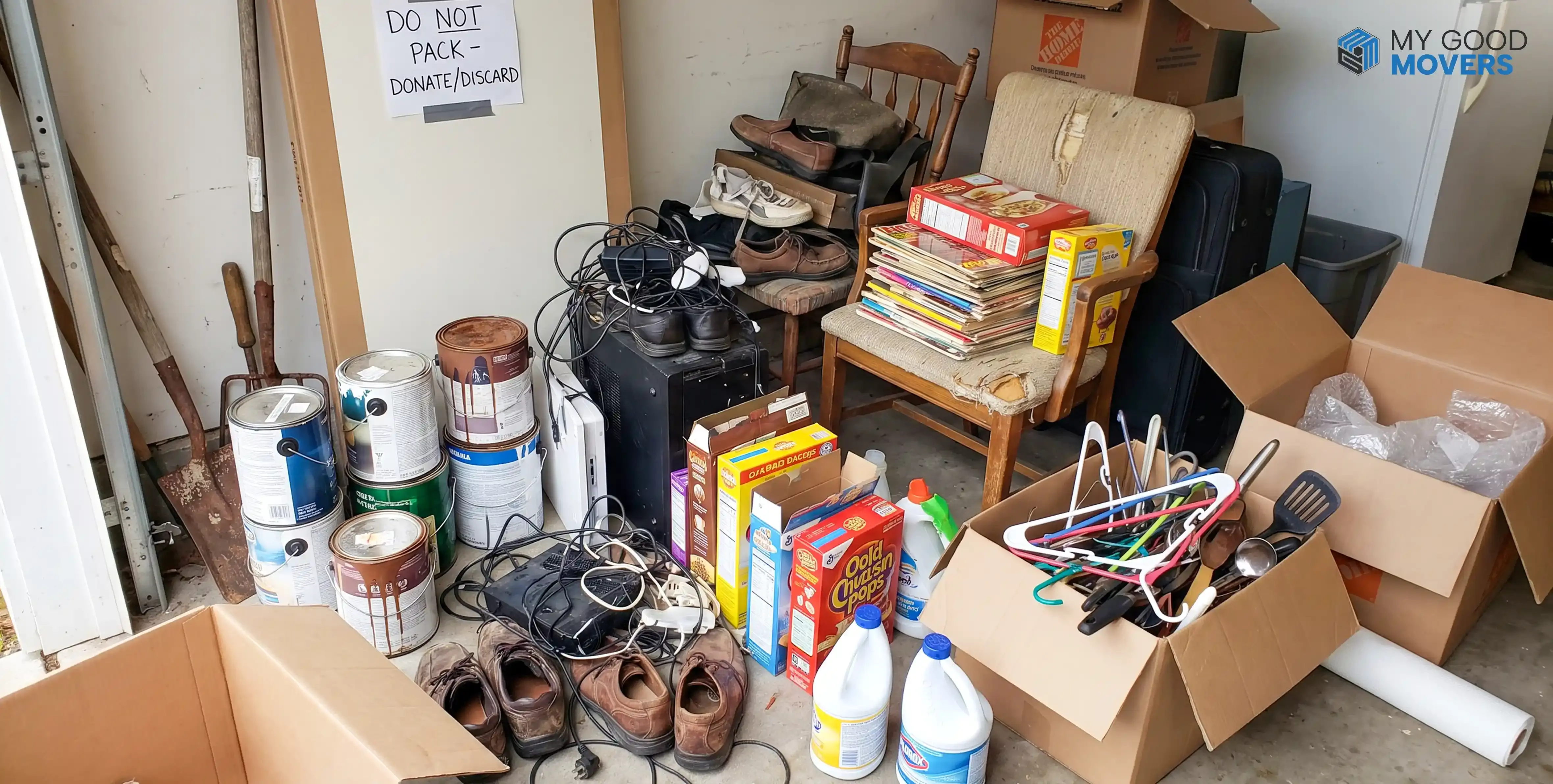
Some items should not be packed at all. They should be disposed of before the move.
This includes:
| • Old paint | • Paint thinner | • Gasoline |
| • Kerosene | • Propane tanks | • Fireworks |
| • Pool chemicals | • Pesticides | • Weed killers |
| • Unlabeled chemicals | • Damaged batteries | • Leaking containers |
| • Strong corrosive cleaners |
Safe disposal options include:
- Local household hazardous waste collection sites
- City or county waste programs
- Scheduled hazardous waste collection events
- Battery recycling drop-off locations
- Paint recycling programs were available
- Auto parts stores for certain automotive fluids or batteries
- Propane tank exchange or return programs
- Local fire department or waste authority
Note: Never pour chemicals down the drain unless the product label or your local authority clearly says it is safe. Do not dump chemicals outside or into regular trash when they require special disposal.
Step 7: Complete a Final Safety Check Before Moving Day
Do this 24 to 48 hours before moving day, especially if movers are coming to load your household goods.
| Final Check | What to Do |
|---|---|
| Check mover rules | Ask your mover for their prohibited items list |
| Review labels | Make sure every item is clearly identified |
| Inspect for leaks | Remove damaged, leaking, or bulging containers |
| Separate risky items | Keep hazardous items away from regular boxes |
| Plan disposal | Take prohibited items to a hazardous waste collection site |
| Protect people and pets | Store items away from children, pets, food, and heat |
| Keep emergency info | Save product labels or emergency instructions when possible |
Want a Complete Packing Plan?
Stop guessing what to pack next. Follow a clear packing plan that helps you move room by room without the usual last-minute chaos.
Read How to Pack for a MoveSafety Protocol
What to Do If a Hazardous Item Leaks or Spills While Packing
Even when you do everything right, accidents happen: a bottle tips, a cap fails, or a cracked container creates a puddle.
To prevent a small mess from becoming a dangerous situation, you need to act immediately and methodically. Here is the exact step-by-step process to handle a hazardous household spill safely: